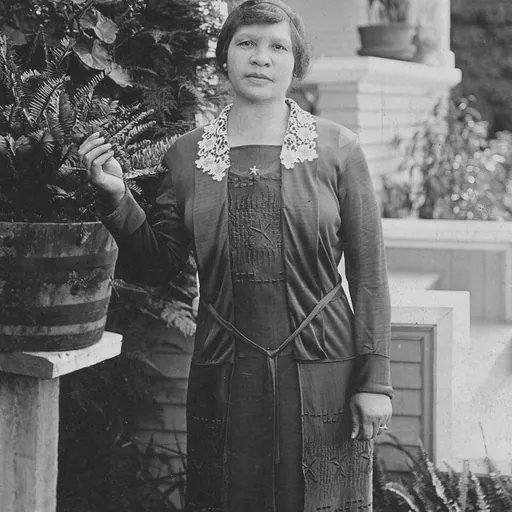
Charlotta Bass
American newspaper publisher
About Charlotta Bass
Lived 1874 – 1969 (aged 95). Charlotta Bass was an American teacher, civil rights advocate, newspaper editor, publisher, politician and suffragist.
Charlotta Amanda Spears Bass (February 14, 1874 – April 12, 1969) was an American educator, newspaper publisher-editor, and civil rights activist. She also focused on various other issues such as housing rights, voting rights, and labor rights, as well as police brutality and harassment. Bass is believed to be the first African-American woman to own and operate a newspaper in the United States; she published the California Eagle from 1912 until 1951. In 1952, Bass became the first African-American woman nominated for Vice President, as a candidate of the Progressive Party.
Due to her activities, Bass was repeatedly accused of being part of the Communist Party, for which there was no evidence and which Bass herself repeatedly denied. She was monitored by the FBI, who continued to view her as a potential security threat until she was in her nineties.
Background
Charlotta Amanda Spears was born on February 14, 1874, to Hiram and Kate Spears. Some sources give her birthplace as in Sumter, South Carolina, She was the sixth child of eleven. Her sister was Victorine Spears Kinloch. She received an education from public schools and one semester at Pembroke College in Brown University. When she was twenty years old, she moved to live with her brother Ellis in Providence, Rhode Island, where she worked selling subscriptions for the Providence Watchman, a local Black newspaper.
Spears married Joseph Bass and they ran the Eagle together. She had no children.
California Eagle
Charlotta Bass lived in the 52nd Place Historic District during the 1930s.
The Eagle, as it was first called, developed a large black readership. By 1925, the Eagle employed a staff of twelve and published twenty pages a week. The Eagles circulation of 60,000 made it the largest African-American newspaper on the West Coast.
When the editor John J. Neimore became ill, he turned the operations of the Eagle over to Spears. After Neimore's death, "it turned out, this Black-founded newspaper was owned by a white man, who offered his support only if [Spears] would become his 'sweetheart.' 'Get out, you dirty dog!' she told him. She borrowed $50 from a local store owner to purchase the deed." As publisher, Bass was committed to producing a quality periodical. In her weekly column "On the Sidewalk", begun in 1927, she drew attention to unjust social and political conditions for all Los Angeles minority communities and campaigned vigorously for reform.
The Eagle is credited as pioneering multi-ethnic politics, advocating Asian-American and Mexican-American civil rights in the 1940s, especially during World War II. Most Japanese Americans were relocated from the West Coast to interior detention camps after the attack on Pearl Harbor and fears about security. The California Eagle, along with other African-American presses, were under investigation by the Office of the Secretary of War, who viewed it as a threat to national security. The Department of Justice interrogated Bass in 1942 over claims that the paper was funded by Japan and Germany, fearing that criticism of the US was motivated by enemy alliances. She was unsuccessfully sued for libel by Klan leader G.W. Price after Bass published a letter from the Klan which detailed its plans to exterminate black leaders.
Bass continued to run the California Eagle on her own until selling it in 1951 and moving to New York City. There she focused on politics. Bass formed the Home Protective Association to defeat housing covenants in all-white neighborhoods. She helped found the Industrial Business Council, which fought discrimination in employment practices and encouraged black people to go into business. As editor and publisher of the California Eagle, the oldest black newspaper on the West Coast, Bass fought against restrictive covenants in housing and segregated schools in Los Angeles. She campaigned to end job discrimination at the Los Angeles General Hospital, the Los Angeles Rapid Transit Company, the Southern Telephone Company, and the Boulder Canyon Project.
During the Great Depression of the 1930s, she continued to encourage black businesses with the campaign known as "Don't Buy Where You Can't Work". A longtime Republican, she voted for President Franklin D. Roosevelt, a Democrat, in 1936.
In 1940, the Republican Party chose Bass as western regional director for Wendell Willkie's presidential campaign. Three years later, she became the first African-American grand jury member for the Los Angeles County Court. Also in 1943, Bass led a group of black leaders to the office of the Mayor of Los Angeles, Fletcher Bowron. They demanded an expansion of the Mayor's Committee on American Unity, more public mass meetings to promote interracial unity, and an end to the discriminatory hiring practices of the privately owned Los Angeles Railway Company. The mayor listened, but agreed to do no more than to expand his committee. Then later in the 1940s, Bass left the Republican Party and joined the Progressive Party because she believed neither of the major parties was committed to civil rights.
Bass also ran for the Los Angeles City Council in the 1940s using the song-title slogan “Don't Fence Me In” to highlight her condemnation of housing discrimination. That year, she was nominated for vice president of the United States by the Progressive Party. She was the running mate of lawyer Vincent Hallinan. Bass became the first African-American woman to run for vice president of the United States. Her platform called for civil rights, women's rights, an end to the Korean War, and peace with the Soviet Union. Bass's slogan during the vice presidential campaign was, "Win or lose, we win by raising the issues." She was endorsed by Paul Robeson, W.E.B. DuBois and Ada B. Jackson in campaign material during her run. She began the campaign on her own as Hallinan served out a six-month contempt of court sentence arising from his legal defense of union leader Harry Bridges.
Bass worked on issues that also attracted Luisa Moreno, who was active in Afro-Chicano politics in Los Angeles during the 1930s-1950. No record shows that the two women ever met, but in 1943 both served on the Sleepy Lagoon Defense Committee, a multiracial group that fought for the release of several Chicanos convicted of murder by an all-white jury making Bass and Moreno part of the same "constellation" of struggle.
Bass wrote her last column for the California Eagle on April 26, 1951, and sold the paper soon after. Considering the sum of her career as she was completing her autobiography, Forty Years (1960), Bass wrote:
In 1966, Bass had a stroke and afterwards retired to a Los Angeles nursing home.
Inter-racial political activities Gaye Johnson's essay Constellations of Struggle (2008) examines Charlotta Bass and Luisa Moreno's significance on political activism and how it relates to the history of struggle communities of color have faced. Both Bass and Moreno shared a "mutual struggle" and were active in fighting for civil rights through organizations together and through their own pursuits. The work of Charlotta Bass and Luisa Moreno represents an interracial struggle and moments of solidarity. She was the first African American woman to be a jury member in the Los Angeles County Court and to run for Vice President of the United States.
Don’t just read it —
keep it.
Full-length biographies made to live with: read them, listen on the way to work, watch them tonight.
- E-book
- Audio
- Video
Instant download · yours to keep · every purchase keeps this site free
Important facts
People in Charlotta Bass's life
Named in this biography and alive at the same time




Related people
Same field, nearest in time

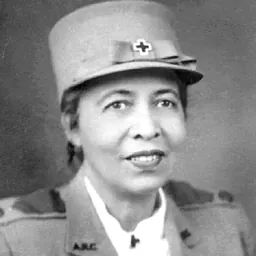
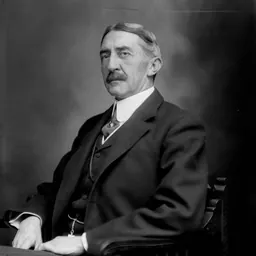
Contemporaries
People whose lives overlapped Charlotta Bass's
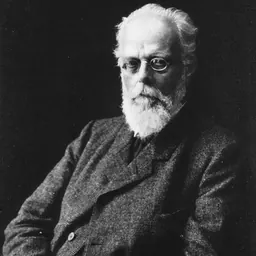
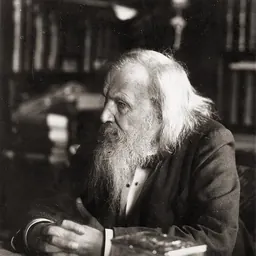

Frequently asked questions
Who was Charlotta Bass?
American newspaper publisher
When was Charlotta Bass born?
Charlotta Bass was born on 14 February 1874 in Sumter.
When did Charlotta Bass die?
Charlotta Bass died on 12 April 1969 in Los Angeles.
What was Charlotta Bass's occupation?
Charlotta Bass was a teacher, civil rights advocate, newspaper editor, publisher, politician and suffragist.
What nationality was Charlotta Bass?
Charlotta Bass was American.
Sources & further reading
Cite this page
APA: Biography.guide. (2026). Charlotta Bass. https://biography.guide/charlotta-bass/
MLA: "Charlotta Bass." Biography.guide, https://biography.guide/charlotta-bass/.
Chicago: "Charlotta Bass." Biography.guide. https://biography.guide/charlotta-bass/.
Data last updated: 2026-09-22 · Spot an error? Report a correction.
Portrait: Wikimedia Commons · author & licence
Page generated 2026-09-27 05:04 UTC