
About Charlie Llewellyn
Lived 1876 – 1964 (aged 87). Charlie Llewellyn was a South African cricketer.
Charles Bennett "Buck" Llewellyn (29 September 1876 – 7 June 1964) was a South African cricketer who played in fifteen Test matches for South Africa and had an extensive domestic career in English county cricket with Hampshire, and later in club cricket in the North of England. Born in Pietermaritzburg to a Welsh father and a mother, reputedly of colour, from Saint Helena, Llewellyn's racial status and later allegations of racial discrimination would become a contentious subject both during and after his career. An all-rounder, he began his first-class career in South Africa with Natal in the 1894–95 Currie Cup. His subsequent performances as a slow left-arm wrist-spinner led to his Test selection for South Africa in March 1896. His Test career was sporadic, spanning fifteen matches to 1912. He was one of the first bowlers in international cricket to bowl slow left-arm wrist spin, and is credited with being the inventor of the chinaman, a delivery equivalent to a leg spinners googly.
With the encouragement of the Hampshire cricketer Robert Poore, Llewellyn left South Africa in 1899 to play county cricket in England for Hampshire. After completing his two-year residential qualification period he established himself as an all-rounder in the Hampshire side, forming a successful bowling partnership with Hesketh Hesketh-Prichard and later with Jack Newman. In 1910 he was chosen as one of five Wisden Cricketers of the Year. He played for Hampshire until 1910, when he left to pursue a career in club cricket with Accrington in the Lancashire League. For Hampshire, he made 196 first-class appearances, scoring 8,772 runs and taking 711 wickets. He achieved the double of a thousand runs and a hundred wickets in a season on three occasions in first-class cricket. He continued to play club cricket in northern England until 1938. In retirement, he moved to Chertsey, where he died following a gas explosion at his residence in June 1964.
Cricket career Career in South Africa Llewellyn was born out of wedlock in Pietermaritzburg on 29 September 1876 to a Welsh father, Thomas Buck Llewellyn, from Pembroke and a Saint Helenan mother, Ann Elizabeth Rich, who was reputedly coloured. The ethnicity of his mother has variously been described as black, Madagascan, or Indian; the latter two would categorise her as a Cape Malay. His father was employed as a painter and decorator, later forming his own successful business. Despite his reputed mixed-race heritage, his fair skin colour saw him regarded as a "white man" (Wilfred Rhodes described Llewellyn as looking "like a rather sunburned English player") by the South African Cricket Board of Control (SACBOC), thus helping to clear a racial hurdle to him progressing in the game; this contrasted with other coloured players of the time, where the racism of late nineteenth-century South Africa had led to leading non-white players being prevented from pursuing the sport as a career. Before coming to prominence as a cricketer, Llewellyn was employed in Durban by the father of the cricketer Herbie Taylor as a "coloured clerk", an employment he maintained as his early cricket career developed.
Aged 18, Llewellyn made his debut in first-class cricket for Natal against Transvaal at Pietermaritzburg in the 1894–95 Currie Cup, taking match figures of 4 for 71 with his slow left-arm wrist-spin bowling. His performance did not equate immediate success to the Natal selectors, and it was not be until the following season that he played for Natal again. On this occasion, he was chosen to play for a Natal XV against Lord Hawke's touring England XI; his steady bowling performance in the match led to his selection in the South African team for the Second Test against England at Johannesburg in March 1896. and was not retained for the Third Test. He began the following season by playing in a first-class match for Natal against Abe Bailey's Transvaal XI, before making three appearances in the 1897–98 Currie Cup. but despite taking five wickets in the match, he was not retained for the Second Test. As a result of his performance against the Australians, He played in five matches during the touring, including two first-class matches against the Gentlemen of Philadelphia, He did not feature in any first-class matches for Hampshire in 1900, but did play a minor match against the touring West Indians, taking 13 wickets across the match and scoring 93 runs in Hampshire's first innings.
By the following season, Llewellyn had successfully completed his two-year residential qualification period. He made his County Championship debut in 1901 against Lancashire at Portsmouth. His best bowling figures during the season of 8 for 72 led Hampshire to a 121 runs victory against Leicestershire. Against Somerset in August, he scored 153 runs in just over 90 minutes and took match figures of 10 for 183. His maiden first-class century came at Southampton against the touring South Africans, when he made 216 runs in three hours. His performance subsequently led to him being asked to assist the South Africans in two tour matches against London County and Liverpool and District, where he took 25 wickets and scored two half-centuries. He spent the early part of the season playing for W. G. Grace's London County, which included three wickets in four balls. Despite his bowling efforts, London County lost the match by 5 wickets. Such was his form in 1902, that he was selected in Englands fourteen-man squad for the First Test of the 1902 Ashes Series against Australia at Edgbaston, but did not make the starting eleven. Toward the end of the Australians tour, he played against them for the Players at Harrogate; as a paid professional he was eligible to represent the Players, in contrast to unpaid amateurs who played for the Gentlemen.
Returning to Test cricket and loss of form Llewellyn returned to South Africa in the winter of 1902, where he was selected in the South African team to play Australia on their maiden tour of South Africa, that followed their tour of England. In the drawn First Test at Johannesburg, he batted at batted at number three, scoring 90 runs, his highest Test score, in South Africa's first innings, whilst sharing in a partnership of 173 runs for the second wicket with Louis Tancred. Their partnership was a South African record for the second wicket against Australia, He took 6 for 92 in Australia's first innings, with overall match figures of 9 for 216. In the Second Test, also played at Johannesburg, he played an important role with the ball, taking figures of 5 for 43 and 5 for 73 in the Australian's innings', In the Third Test, played at Cape Town, Llewellyn took figures of 6 for 97 in the Australian's first innings, but was unable to stop South Africa succumbing to defeat by ten wickets. He led the South African bowling with 25 wickets at an average of 17.92; the next highest South African wicket-taker was Jimmy Sinclair with nine. Llewellyn tried to resume his domestic career in South Africa with Transvaal, but his status as a professional was deemed unacceptable by some in South African cricket. Put to a vote by the SACBOC, his inclusion in the Transvaal side was voted down by the three Cape unions, and with the absentation of the Natal union, he was debarred from participating in domestic cricket by the SACBOC.
Returning to England for the 1903 season, Llewellyn played four first-class matches for the Marylebone Cricket Club at Lord's in May, followed by another in June. His 542 runs placed him second behind Edward Sprot's 835 runs in Hampshire's batting aggregates. His best performance for Hampshire during the season came against the touring Gentlemen of Philadelphia, when he scored an unbeaten century (136 runs) and took figures of 6 for 109 in the Philadelphian's only innings. During the season, he also played one match each for London County against Gloucestershire and for the Players of the South against the Gentlemen of the South at the end of the season. He scored 411 runs at an average of 14.94 from seventeen Championship appearances. He was utilised by the touring South Africans during the 1904 season, where his performances contrasted with those for Hampshire. He was again selected to play for the Players of the South against the Gentlemen of the South at the conclusion of the season. In the season concluding Players of the South versus Gentlemen of the South match at Bournemouth, he made 186 runs in the Players of the South first innings; in their total of 496 all out, the next highest score was 73 runs, made by opening batsman Frederick Bowley. prior to the match, he had represented an England XI against the touring Australians, He returned to form as a bowler whilst playing exclusively for Hampshire in first-class cricket in 1906,
Wisden Cricketer of the Year
His return to form with the ball continued into the 1907 season, with Llewellyn taking 45 wickets at an average of 21.28. his benefit raised £500, then a Hampshire record. The 1908 season resulted in better all-round performances by Llewellyn. The remainder of his 27 first-class wickets in 1908 were distributed across appearances for the MCC, Gerry Weigall's personal eleven, and for a Hambledon XII in a commemorative first-class match against an England XI at Broadhalfpenny Down. His overall first-class return from 26 matches in 1910 was 152 wickets at an average of 19.27. At the end of the season, the Hampshire committee disagreed with the terms for a new contract, Thus, he would have been excluded from county cricket until 1913. His inclusion on the tour was controversial in South Africa, with his home province of Natal writing to the SACBOC in protest, opining that "he can no longer be looked upon as a South African player". He played in all five Test matches on the tour, His bowling proved ineffective against the Australian top-order, particularly when bowling to Victor Trumper. making one half-century (80 runs) in the Third Test at Adelaide, which contributed toward their only Test victory on the tour. He had limited success in the first-class tour matches against Australian state sides. He played in five of South Africa's six Test matches in the tournament, His bowling during the tournament was ineffective, with Llewellyn taking 4 wickets at an average of 54.75; as a result, his bowling was described as a "sad failure" by Wisden. These Test matches were to be his final international appearances, in addition to his final appearances in first-class cricket.
Returning to the Lancashire League, he scored an unbeaten 188 against Bacup in 1913, which was the highest individual score in the league until 1939, He left Accrington in 1915, joining Undercliffe in the Bradford League, He left Radcliffe in 1932, returning to the Lancashire League to play for East Lancashire. He ended his club career with East Lancashire in 1938, at the age of 62.
Playing style and records alt=A colour animation showing the trajectory of a left-arm wrist spin delivery Llewellyn developed his bowling under the guidance of Reggie Schwarz. Bowling with a high-arm action, A peer at Accrington remarked that he possessed "an uncanny instinct of being able to assess, almost at a glance, the strengths and weaknesses of opposing batsmen". One of the first left-arm wrist spin bowlers in international cricket, he took 48 Test wickets at an average of 29.60 from fifteen matches, claiming five or more wickets in an innings on four occasions and ten wickets in a match once. In all first-class cricket, he took 1,103 wickets at an average of 23.41 from 267 matches; he took five wickets in an innings on 82 occasions, and ten wickets in a match on twenty. He was the first player to bowl left-arm wrist spin with any regularity in England. in terms of wickets taken for Hampshire, Llewellyn ranks tenth.
As a left-handed batsman, Wisden alluded to Llewellyn's destructive nature as a batsman, proclaiming him in 1911 as "one of the most punishing left-handers". This appraisal of his batting elegance was contrasted by the author Harry Pearson, who described it as "devastatingly stylish". In Tests, he scored 544 runs at an average of 20.14, making four half-centuries with a top-score of 90. In all first-class cricket, he scored 11,425 runs at an average of 26.75, making eighteen centuries and 52 half-centuries. His abilities as an all-rounder drew praise from Plum Warner, who termed him a "fine all-rounder", whilst Wisden affirmed that he was "in the fullest sense of the words an all-rounder". Llewellyn achieved the double of a thousand runs and a hundred wickets in a season on three occasions, doing so in 1901, 1908 and 1910. In later life, he continued to take a keen interest in Hampshire cricket. affecting his movement for the remainder of his life. He died, aged 87, on 7 June 1964, He was survived by his wife and their four daughters. Llewellyn was buried in Chertsey.
Alleged racial discrimination Llewellyn was subject to conflicting reports of discrimination on account of his ethnicity by cricketing authorities in South Africa and his South African teammates alike. There are anecdotal claims of racial prejudice during the 1910–11 tour of Australia. With South Africa losing the series 4–1, dressing room tensions arose, and it is alleged that the complexion of Llewellyn's skin colour became an issue. It was alleged that he was bullied by his teammates, chiefly Jimmy Sinclair. The cricket historian Rowland Bowen commented that he was bullied to such an effect by his teammates "that he took refuge in the WCs and locked himself in". However, these claims have been contradicted. First, by Llewellyn's own denial that any discrimination of bullying against him took place on the tour, and secondly by Sinclair's prior support for Llewellyn's inclusion in the South African team in 1901, and his encouragement for Llewellyn to pursue a professional career in England. His later opposition to his inclusion in the South African team may have stemmed from a personal opinion that he had spent so long away from South Africa, that he could no longer be considered South African, alongside a belief that in the latter part of his career he was no longer up to the standards required at Test level.
A further suggestion of discrimination came from his erratic Test career – fifteen matches spread over sixteen years. The racial prejudice of the South African selectors at the time has been cited as a reason for his intermittent Test career. The SACBOC had previously omitted players based on their race, as was the case with the Malayan-descended bowler Krom Hendricks, who had been left out of the South African team to tour England in 1894 at the behest of the Cape Colony government. However, Llewellyn's omission from the South African Test side might be more succinctly explained by the fact that he was based in England, making his availability not always possible. Any ambiguity toward Llewellyn by the cricketing authorities in South Africa, whilst possibly being motivated by race, might have come from the hostile attitude toward professional cricketers, at the height of amateurism in the sport.
Twelve years after his death, his daughter Agatha, in a letter to The Cricketer, denied that her father was "coloured", asserting that her grandmother had been an English-born white woman from Essex and that he had come from "white stock". She denied that he had been subject to any form of discrimination in South Africa, by either cricketing authorities or teammates, and that what had been suggested by Bowen was "utter nonsense". She claimed that in his Bradford and Lancashire League years, he was often visited by members of touring South African teams and maintained friendships with them.
Don’t just read it —
keep it.
Full-length biographies made to live with: read them, listen on the way to work, watch them tonight.
- E-book
- Audio
- Video
Instant download · yours to keep · every purchase keeps this site free
Important facts
People in Charlie Llewellyn's life
Named in this biography and alive at the same time

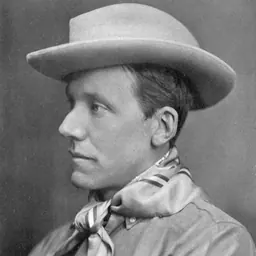

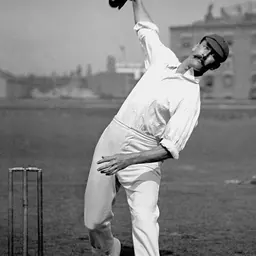
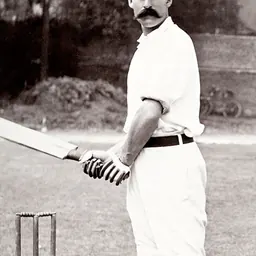
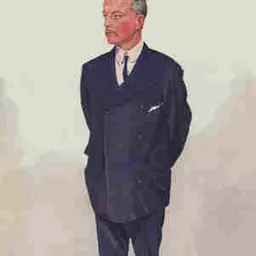

Related people
Same field, nearest in time



Contemporaries
People whose lives overlapped Charlie Llewellyn's
Frequently asked questions
Who was Charlie Llewellyn?
Cricket player of South Africa. (1876-1964)
When was Charlie Llewellyn born?
Charlie Llewellyn was born on 29 September 1876 in Pietermaritzburg.
When did Charlie Llewellyn die?
Charlie Llewellyn died on 7 June 1964 in Chertsey.
What was Charlie Llewellyn's occupation?
Charlie Llewellyn was a cricketer.
What nationality was Charlie Llewellyn?
Charlie Llewellyn was South African.
Sources & further reading
· Wikipedia: Charlie Llewellyn
Cite this page
APA: Biography.guide. (2026). Charlie Llewellyn. https://biography.guide/charlie-llewellyn/
MLA: "Charlie Llewellyn." Biography.guide, https://biography.guide/charlie-llewellyn/.
Chicago: "Charlie Llewellyn." Biography.guide. https://biography.guide/charlie-llewellyn/.
Data last updated: 2026-09-26 · Spot an error? Report a correction.
Page generated 2026-09-27 05:13 UTC