
Charlie Johnstone
Scottish footballer
About Charlie Johnstone
Lived 1911 – 1941 (aged 29–30). Charlie Johnstone was an association football player and association football coach.
Charles Samuel Johnstone (September 1856 – 30 September 1941) was an educator, footballer and Director as well as Vice‐President of Aston Villa. He is notable for playing in Aston Villa's first ever FA Cup tie. He was the son of Scottish publishing agent and Villa vice-president Fergus Johnstone. Fergus was a close friend of William McGregor and became one of the first Vice-Presidents of Aston Villa. Charlie married and his children included a son, also Fergus and a daughter. He would baby-sit taking his grandchild to the school-room and pushing a pram through the streets.
Aston St Mary's Johnstone had played rugby at Montrose Academy and introduced the game to his cricket team-mates of Aston Brook St Mary's.
In 1875, St Mary's were challenged to a match by their friends and cricket opponents from Aston Villa Cricket Club who had newly formed the Aston Villa Football Club. The builder James Wilson allowed the game to be played on his plots at Wilson Road, Birchfield. For Aston Villa Scattergood kept goal; the full-backs were WH Price, William Weis and Fred J. Knight; half-backs were Midgely, Ted Lee, Harry and George Matthews; forwards: Jack Hughes, Mason, William Sothers, William Such, Harry Whately, George Page, and Alfred Robbins.
St Mary's played rugby so a compromise was reached whereby, using the round ball, the teams played rugby in the first half and soccer in the second. In later years Johnstone reminisced "Hack him down - sit on his head, was the cry for one half the game, and You must not collar-charge him, was yelled for the other". Under the Sheffield Rules up to fifteen players were allowed at the time.
Saltley College Floodgate School, Floodgate Street and Milk Street, Deritend, Birmingham. Now Arts & Media Annexe, South Birmingham College From 1876, Johnstone attended St Peter's and played for the Saltley College Football Club.
The Saltley College establishment, played a major but under-recognised role in the founding and rapid growth of association football with teachers spreading enthusiasm and organising school teams and local clubs. Saltley College was considered a nursery of footballing talent, relying on a scientific approach to achievement.
In 1878 Johnstone became an elementary schoolteacher at Jenkins St. Board School. Later he moved to Floodgate St. Board School and in 1900 was appointed headteacher of Burbury St. School, Birmingham. The results were that Burbury St won the Birmingham Schools physical exercises shield for twelve consecutive years.
The 1879–80 football season saw Aston Villa's entry into top flight competitive association football with their first tie in the Football Association Cup. The start of the official record was Saturday 13 December 1879 when Villa faced Stafford Road, of the Stafford Road railway works, Wolverhampton. The match was played before a crowd of 2,000 at Stafford's Half-Way House Ground. Although playing before shirt numbers were introduced in 1926, Goalkeeper John Ball received Legacy Number 1. Half-back Johnstone received Legacy Number #6, Andy Hunter #4 officially became Villa's first goal-scorer in the 1–1 draw. The same season Johnstone played in the Villa team that won the Birmingham Senior Cup.
Johnstone made his second FA Cup appearance in the following season against Wednesbury Strollers. Playing uphill in the first-half Villa were 3–1 down at half-time. In the second-half they had the advantage of the Wellington Road slope and triumphed 5–3 in the end. Johnstone went on to play for Lozells British Constitutionals F.C.
Management Committee Johnstone joined the Aston Villa Management Committee in 1892. He became one of the first four directors of Aston Villa Football Club Limited in 1896 before resigning in 1900. His influence continued both at the Club and through his journalism. He returned as Vice-President in the 1920s together with Tommy Pank.
Charles Johnstone died at Canonbie, Dumfries on 30 September 1941 aged 85.
Don’t just read it —
keep it.
Full-length biographies made to live with: read them, listen on the way to work, watch them tonight.
- E-book
- Audio
- Video
Instant download · yours to keep · every purchase keeps this site free
Important facts
People in Charlie Johnstone's life
Named in this biography and alive at the same time



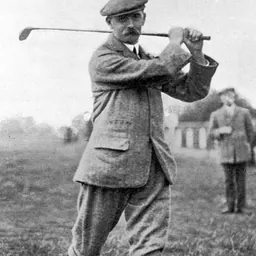
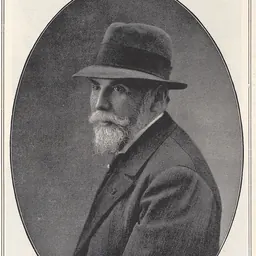

Related people
Same field, nearest in time
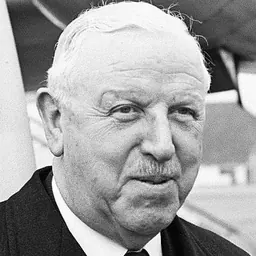
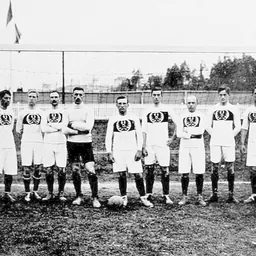



Contemporaries
People whose lives overlapped Charlie Johnstone's





Frequently asked questions
Who was Charlie Johnstone?
Scottish footballer (1856–1941)
When was Charlie Johnstone born?
Charlie Johnstone was born on 6 November 1911.
When did Charlie Johnstone die?
Charlie Johnstone died in 1941.
What was Charlie Johnstone's occupation?
Charlie Johnstone was an association football player and association football coach.
Sources & further reading
· Wikipedia: Charlie Johnstone
Cite this page
APA: Biography.guide. (2026). Charlie Johnstone. https://biography.guide/charlie-johnstone/
MLA: "Charlie Johnstone." Biography.guide, https://biography.guide/charlie-johnstone/.
Chicago: "Charlie Johnstone." Biography.guide. https://biography.guide/charlie-johnstone/.
Data last updated: 2026-09-20 · Spot an error? Report a correction.
Page generated 2026-09-27 05:30 UTC