
Charles Wilson Killam
American Professor of architecture
About Charles Wilson Killam
Lived 1871 – 1961 (aged 89). Charles Wilson Killam was an American civil engineer, architectural theoretician, architect and academic.
Charles Wilson Killam (July 20, 1871 – May 12, 1961) was an American architect, engineer, and professor at Harvard University. He was widely recognized for his technical knowledge, architectural theory, educational views, and publications. He was also known for his consulting work for the Harvard Business School and Baker Library as well as his extensive restoration work at Mount Vernon. He was a key contributor to the development of Harvard's School of Architecture and to collegiate architectural education throughout the United States. Killam also took an active role in the planning and development of Cambridge, Massachusetts and served on numerous boards and committees. Additionally, he was an advocate for low-cost and public housing as well as an early advocate for architectural education for women.
Early life and education Charles Wilson Killam was born in Charlestown, Massachusetts on July 20, 1871, and grew up in the Hyde Park neighborhood of Boston. After graduating from the Grew School, he attended Hyde Park High School. In 1887, during his second year at the high school and at the age of 16, he dropped out to work.
Killam's interest in architecture began at an early age and he pursued his studies at home and while traveling extensively through Europe.
Peabody and Stearns Peabody & Stearns Boston office . Killam center in bow tie. After leaving high school in 1887, Killam went to work at the architectural firm of Peabody & Stearns in Boston where he became a draftsman. Robert Swain Peabody, the co-founder of the firm, was an encouraging mentor to Killam and his architectural career.
To further develop his skills, Killam noted how he visited numerous job sites because that was then "the only way to find out, for instance, how to support a terracotta cornice or how to do flashing." Since he was not on the payroll of these jobs, he was able to spend as much or as little time on various aspects of the construction as he wanted. He valued this experience and spent countless hours examining plans in architectural and engineering offices, copying details and specification provisions. Killam stated that his interest covered the whole field of architecture: While at the firm, Killam also entered various design competitions such as for the new Young Men's Christian Association (YMCA) building in Hyde Park.
Harvard University In 1908, Killam left Peabody & Stearns to begin his academic career as an instructor in architectural construction and engineering at Harvard University. He was appointed to strengthen a recognized weakness in architectural engineering at Harvard and first taught a course in the resistance of materials and elementary structural design to address this weakness. Within a year, Killam was appointed assistant professor of architectural construction and taught at Harvard's new School of Architecture when it was founded by Herbert Langford Warren in 1912. Killam became associate professor in 1915, associate professor of architecture in 1921, and professor in 1924.
Killam taught his students the adaptation of modern construction techniques to the older styles of design. He was critical of designers of the time who misrepresented the structure of their buildings and gave too much power to engineers. He recognized the importance of integrating the teaching of design and construction and was one of the first to advocate for closer collaboration between the two fields. Despite the challenges of the ongoing war and dwindling enrollment, Killam sought to carry forward Warren's principles while placing greater emphasis on construction. Although the curricula in architecture and landscape architecture remained largely unchanged with Killam as Acting Dean, there was a significant shift where landscape architecture students no longer studied the rudiments of architectural design in the same studios with architecture students. Killam held this position until 1922 when George Harold Edgell was appointed as new Dean of the school.
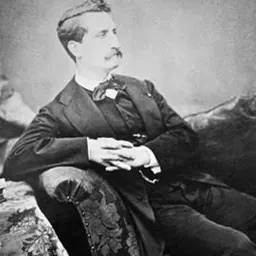
One of Killam's students, Edward Durell Stone, had failed Killam's "Theory of Building Construction" course as a freshman at Harvard. Stone's classmate Walter Harrington Kilham Jr. recalled that Stone "couldn't take it any longer and had decided to quit the school and go over to the rival MIT." another classmate of Stone, commented that Killam's course was "a very 'tough and rough' course, the only one in which anyone learned anything at all." alt=Portrait of Killam in 1912
At the time of Killam's retirement from Harvard, Dean Joseph Hudnut stated that "Professor Killam has conducted the work in his field with great distinction. He has greatly augmented the efficiency of the instruction in architecture and his methods have been widely copied in other American schools of architecture."
Educational views Killam held views on education and the field of architecture that were pioneering for the time. He "welcomed the new styles especially where unusual construction called for applying basic principles of engineering." Killam was determined that each student be thoroughly grounded in all methods of building construction, both old and new. In his "Resistance of Materials and Elementary Structural Design" course, Killam demanded that his students gain a sound knowledge of construction by learning how to derive formulae from theory and how to create their own tables and handbooks.
Charles Killam led his students to understand the responsibilities and challenges in the architectural profession, and to grasp the realities of building in terms of structural design and the techniques of building. By not permitting demands for outside consultation or practice to absorb him, he found time to be a complete teacher—to discuss with each student the relationships between the theory of the lectures and the pragmatic practices of the studios. Such devotion to the School of Architecture contributed much to its reputation.
Killam was dedicated to achieving honest and effective methods of building in architecture. His work helped to combine construction techniques with the art of design in architectural education. Although Killam retired from Harvard before modern architecture was introduced, his goals were eventually recognized within this new approach to teaching architecture. Even after his death, Killam's courses at Harvard were continued to be taught without alteration. His methods were fundamental in the work of the school and was considered one of the most persistent and valuable factors in Harvard's educational system.
With the overwhelming approval of Gropius from the school's faculty, and despite Killam's objections, Conant proceeded to offer Gropius the position in December 1936 and he was commenced the following spring. Killam remained adamantly opposed to the appointment of Gropius as the school's new chairman and professor of design and disliked the prospect of Gropius bringing a new Bauhaus to Harvard. In protest to this new assignment, Killam decided to resign his professorship at Harvard University. In January 1937, after 29 years as Harvard faculty, Killam retired and became professor emeritus.
Being too active to accept full time retirement, Killam continued to serve the School of Design as an advisor while actively participating in the faculty councils. After his resignation in 1937, Killam returned to lecture at the Cambridge School of Architecture and Landscape Architecture, which had formed a partnership with Smith College during his absence. He held this position until the school closed in 1942 and was absorbed by Harvard's Graduate School of Design, at which point he retired for a second time. He was elected as the director of the Cambridge Chamber of commerce and served as the chairman of the Cambridge Housing authority. Additionally, he served as a member, secretary, president, and chairman of the Cambridge Planning Board, where he contributed to the development of the city and played a crucial role in shaping its growth. His leadership roles in these positions demonstrated his commitment to civic engagement and to the betterment of the city of Cambridge. Killam "[knew] more about Cambridge streets and how to improve traffic conditions than any salaried official in the city." He also took an active part in drafting the city's new zoning ordinance and was adamantly opposed to the construction of a bridge at Dartmouth street crossing over the Charles River. In 1929, despite being "one of the city's most efficient commissions," the board resigned as a body. The primary reason being that the board was often ignored on important city planning issues, their recommendations were given little consideration, and they received minimal cooperation and support from city officials.
A year later in 1930, Richard M. Russell was elected mayor of Cambridge and Killam was appointed to Russel's new Planning Board. This board was responsible for work including improving traffic and parking conditions in the city as well as city planning and economic development. Mayor Russell also appointed Killam as first chairman of the newly formed Cambridge Housing Authority in 1935. However, Killam resigned from the Housing Authority in 1936 because of a difference of opinion with other members of the authority regarding plans for the local slum clearance project and that too much money was spent on land rather than economic development.
Plan E charter Killam also played a key role in developing a new council-manager form of charter, known as Plan E by Cambridge, for the city of Cambridge. This charter includes a weak mayor elected by the City Council from among its members addition to an appointed city manager who handles day-to-day city operations. In 1938, Killam traveled throughout the Midwestern United States to research the advantages and disadvantages of this form of charter. He visited cities such as Milwaukee, Cincinnati, and Cleveland which had recently adopted this form of government. He "visited twenty-one cities and interviewed five mayors, ten city managers, twelve editors, twenty past or present city officials, three labor men, and thirteen officers of citizens' organizations." Over 80 years later, Cambridge still operates under this Plan E charter.
Massachusetts state housing and building laws Killam was member of the committee which drafted the Massachusetts town housing law known as the Tenement House Act for Towns (Chapter 635 of 1912) which was passed in amended form into law by the 133rd Massachusetts General Court and adopted and enforced by towns throughout the state. The same committee, with some changes and additions, drafted a law for Massachusetts cities for the following year and was called the Tenement House Act for Cities (Chapter 786 of 1913). It was passed into law by the 134th Massachusetts General Court and adopted and enforced by cities throughout the state. This commission also worked to investigate building laws and fire conditions in the State of Massachusetts. In 1915, this commission submitted a report which laid out a new state-wide building code relating to fireproofing districts to be adopted and enforced throughout Massachusetts. Despite the extensive work by the commission, this state building code failed legislative approval by the 136th Massachusetts General Court.
In 1930, Killam was appointed to the advisory committee which helped the New England Building Officials Conference write a model code for New England. This model code resulted in a new code for Boston.
Public and low-cost housing Killam was also an advocate for public and low-cost housing within the city of Cambridge. He believed that such housing projects should prioritize the improvement of living conditions for many people in the future, rather than providing extravagant accommodations for a select few. He argued that eliminating middlemen's profits was crucial in achieving truly low-cost housing. Additionally, Killam believed that housing progress should not be hindered by the inability to immediately provide for the lowest levels of the low-wage group, as this was a relief problem rather than a housing problem.
According to Killam, large-scale rental projects were the way forward for successful housing policy. However, he acknowledged that managing such projects would require specialized training and expertise beyond that commonly found in the country. In particular, a manager of a large-scale low-cost housing project must possess skills in dealing with diverse races and social problems, as well as the ability to guide without dictation, and manage a complex team of employees with varied duties.
Consulting, design, and restoration work
Killam's consulting services, structural design, and restoration work were sought by many due to his knowledge and thoroughness in the field.
Harvard Business School
During the 1920s, Killam became the consulting architect and professional advisor for the numerous new buildings being constructed during the expansion of the Harvard Business School. Most notably, Killam was professional advisor for the design competition for the school's new library, and the consulting architect for the school's new Baker Library which had been designed by McKim, Mead & White and completed in 1927. Killam additionally served as supervising architect along with Wallace Brett Donham for the construction of many of the school's other new buildings.
Case method classroom
In 1925, in preparation for the Harvard Business School's expansion, Killam and architecture student Harry J. Korslund designed a 177-seat, horseshoe-shaped classroom with 6-inch tiers that would support the case method of teaching. The case method was a new approach to business education that involved a more interactive and participatory format compared to the traditional lecture format. The Harvard Business School played a central role in developing this method and refining the corresponding classroom design. In 1927 when the school moved to Allston, the case method classroom design by Killam and Korslund was built in the basement of the Baker Library. Although primitive with poor acoustics and lighting and wooden tablet-arm chairs, this case method classroom design was the first deliberate design of a space for business education in the country.
Mount Vernon
On several occasions between 1932 and 1935, Killam was contracted to advise and perform extensive restoration and structural strengthening work at George Washington's Mount Vernon estate in Virginia. In correspondence with the Mount Vernon Ladies' Association, which considered him a "renowned structural expert," Killam noted that "too much emphasis has been placed upon keeping the externals looking like a prosperous modern estate and too little care and money have been spent in thorough repairs and strengthening." Killam expressed his devotion to the preservation and restoration of the estate through his exchanges with the estate's resident superintendent Harrison Howell Dodge:
Killam's work included examining the mansion's structural stress and installing necessary reinforcements, termite-proofing the outer walls with copper, and placing steel beams in the mansion's basement to reinforce its structure which "remain strong and reliable today." Upon completion of his work at the main mansion, Killam claimed the building was "thrice as strong as when originally constructed."
Dorchester Heights Monument
In 1934–1935, Killam altered and performed structural rehabilitation to the Dorchester Heights Monument. Under the supervision of the Boston Art Commission, Killam undertook the "first documented program to repair the monument" since its completion in 1902. This monument was originally designed by Peabody & Stearns in 1899 while he was working there. His work to the monument included constructing a new steel and concrete floor below the tower chamber, reinforcing the monument with tie rods and structural framing, and strengthening badly rusted steel beams. In addition he also weatherproofed the structure by adding flashing, protective coatings, and weatherstripping as well as installing windows and doors in the originally open arches.
In 1935, Robert E. Greenwood, mayor of Fitchburg, Massachusetts, hired Killam as consulting architect for a new high school. Killam was recommended to the school and planning boards by Professor Henry Vincent Hubbard who was serving as advisor to the school committee at the time. This new building was to replace the old high school which had burned down in 1934. The new Fitchburg High School was completed in 1937 and designed by Coolidge, Shepley, Bulfinch and Abbott.
Marriage and children
On August 6, 1894, at the First Baptist Church in Hyde Park, Killam married Amy Edna Whittemore (1871–1942), a classmate from his early education in Hyde Park. Whittemore was born in 1871 in Londonderry, New Hampshire, but grew up and went to school in Hyde Park with Killam. She was the youngest daughter of Henry Joshua Whittemore, a music teacher at Hyde Park High School, Boston Architectural Club Boston Society of Architects National Fire Protection Association American Concrete Institute Active member of President Hoover's Conference on Home Building and Home Ownership and the Correlating Committee on Legislation and Administration (1931). Director and President of the Cambridge Taxpayers' League (1932). Harvard Faculty Club Elected to a fellowship in the American Academy of Art and Sciences. AIA Basic Building Code Committee (1916). Special commission to revise the building ordinance of Cambridge (1917). Chairman of the Faculty of Architecture at Harvard (1917). Vice-chairman of the AIA committee on building costs and committee on cost of materials (1940).
Committees Some of the other notable committees Killam was a member of include:
Council and executive committee of the Harvard University School of Engineering (1912–1913). Cambridge Unemployment Relief Committee (1933). American Standards Association committee on methods of testing wood (1940). Represented the AIA on the following committees: U.S. Forest Service and American Society for Testing Materials committee on standardization of methods of testing wood (called the American Engineering Standards Committee) (1922). Committee of technical groups and government agencies engaged in the preparation and promulgation of codes and standards relating to the design and construction of buildings (1933). Joint Committee on Standard Specifications for Concrete and Reinforced Concrete (1940). Judge for the Jordan Marsh Company Architects' Contest along with Helen Storrow and William Emerson (1935). Director of the Program of Cooperation between the Federal Home Loan Bank Board and AIA to construct well-designed, well-built, well-equipped, low-cost housing (1940).
Don’t just read it —
keep it.
Full-length biographies made to live with: read them, listen on the way to work, watch them tonight.
- E-book
- Audio
- Video
Instant download · yours to keep · every purchase keeps this site free
Important facts
People in Charles Wilson Killam's life
Named in this biography and alive at the same time





Related people
Same field, nearest in time


Contemporaries
People whose lives overlapped Charles Wilson Killam's




Frequently asked questions
Who was Charles Wilson Killam?
American Professor of architecture
When was Charles Wilson Killam born?
Charles Wilson Killam was born on 20 July 1871 in Charlestown.
When did Charles Wilson Killam die?
Charles Wilson Killam died on 12 May 1961 in Providence.
What was Charles Wilson Killam's occupation?
Charles Wilson Killam was a civil engineer, architectural theoretician, architect and academic.
What nationality was Charles Wilson Killam?
Charles Wilson Killam was American.
Sources & further reading
· Wikipedia: Charles Wilson Killam
· DBpedia: Charles Wilson Killam
Cite this page
APA: Biography.guide. (2026). Charles Wilson Killam. https://biography.guide/charles-wilson-killam/
MLA: "Charles Wilson Killam." Biography.guide, https://biography.guide/charles-wilson-killam/.
Chicago: "Charles Wilson Killam." Biography.guide. https://biography.guide/charles-wilson-killam/.
Data last updated: 2026-09-20 · Spot an error? Report a correction.
Page generated 2026-09-27 05:21 UTC