
Charles William Dickey
American architect famous for developing a distinctive style of Hawaiian architecture
About Charles William Dickey
Lived 1871 – 1942 (aged 70). Charles William Dickey was an American architect.
Charles William “C.W.” Dickey (6 July 1871 – 25 April 1942) was an American architect famous for developing a distinctive style of Hawaiian architecture, including the double-pitched Dickey roof. He was known not only for designing some of the most famous buildings in Hawaii—such as the Alexander & Baldwin Building, Halekulani Hotel, Kamehameha Schools campus buildings—but also for influencing a cadre of notable successors, including Hart Wood, Cyril Lemmon, Douglas Freeth, Roy Kelley, and Vladimir Ossipoff.
Biography Dickey was born in Alameda, California. His maternal grandfather, William P. Alexander, was an early missionary to Hawaii. His mother was Anne Alexander (1843–1940), whose brother Samuel Thomas Alexander founded Alexander & Baldwin with Henry Perrine Baldwin who was married to his aunt Emily Alexander. His father was Charles Henry Dickey (1841–1932). He grew up in Haikū on Maui, but he returned to California for schooling. After finishing high school in Oakland, California, he obtained a B.A. in architecture from the Massachusetts Institute of Technology in 1894, then worked with Clinton Briggs Ripley (1896–1900) and E.A.P. Newcomb (1901–1905) in Honolulu, Hawaii, before returning to open his own firm in Oakland. and Progress Block on Fort Street (1897) in Downtown Honolulu, the last now occupied by Hawaii Pacific University. One of his finest early designs was the Italianate Stangenwald Building (1901) on Merchant Street. Many of these are contributing properties to the Merchant Street Historic District.
Even while in Oakland, Dickey continued to design for clients in Hawaii. Dickey’s California firm designed the plantation office building for the Hawaiian Commercial and Sugar Company (HC&S) at Puunene, Maui in 1917 (and his Honolulu firm designed renovations to the building ten years later). HC&S, a division of Alexander & Baldwin, Inc., was the last remaining sugar plantation in Hawaii when it closed in 2016. In 1920, he reopened an office in Honolulu, in partnership with Hart Wood, and then returned for good in 1925. This time he felt a stronger need to adapt his buildings to the local environment, declaring in 1926: "Hawaiian architecture is a type distinctive to itself and Mediterranean styles must be adapted to fit local conditions before they are at all suited to the islands." He favored larger open spaces and fewer walls, to allow the tradewinds to circulate, and roofs with projecting eaves in order to keep rain out without having to close the windows.
During the 1920s, Dickey designed guest cottages in Waikiki for the Halekulani Hotel that attempted to replicate the charm of Hawaiian grass houses. In 1930, he completed the hotel's Honeymoon Cottage, and in 1931 its main building. In 1931, he designed the Immigration Station (construction completed in 1934) at Honolulu Harbor while a young architect from California and new to Honolulu, Val Ossipoff, was working for Dickey. He designed the Waikiki Theatre in 1936. In 1940, he designed another new hotel at the edge of the Kīlauea volcano for Greek businessman George Lycurgus called the Volcano House.
Gallery
Family tree
Don’t just read it —
keep it.
Full-length biographies made to live with: read them, listen on the way to work, watch them tonight.
- E-book
- Audio
- Video
Instant download · yours to keep · every purchase keeps this site free
Important facts
People in Charles William Dickey's life
Named in this biography and alive at the same time
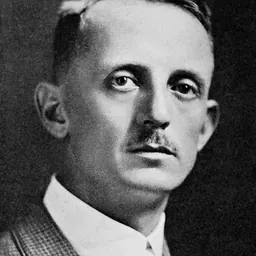




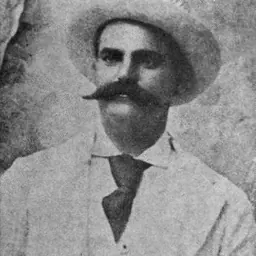
Related people
Same field, nearest in time
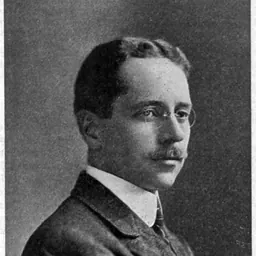



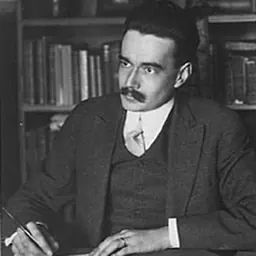
Contemporaries
People whose lives overlapped Charles William Dickey's
Frequently asked questions
Who was Charles William Dickey?
American architect famous for developing a distinctive style of Hawaiian architecture
When was Charles William Dickey born?
Charles William Dickey was born on 6 July 1871.
When did Charles William Dickey die?
Charles William Dickey died on 25 April 1942.
What was Charles William Dickey's occupation?
Charles William Dickey was an architect.
What nationality was Charles William Dickey?
Charles William Dickey was American.
Sources & further reading
· Wikipedia: Charles William Dickey
Cite this page
APA: Biography.guide. (2026). Charles William Dickey. https://biography.guide/charles-william-dickey/
MLA: "Charles William Dickey." Biography.guide, https://biography.guide/charles-william-dickey/.
Chicago: "Charles William Dickey." Biography.guide. https://biography.guide/charles-william-dickey/.
Data last updated: 2026-09-20 · Spot an error? Report a correction.
Page generated 2026-09-27 05:21 UTC