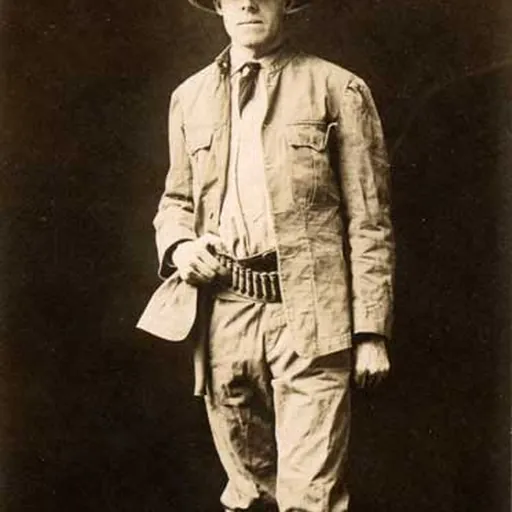
Charles W. Furlong
American artist, writer and explorer
About Charles W. Furlong
Lived 1874 – 1967 (aged 92–93). Charles W. Furlong was an American painter, botanical collector, explorer, soldier, discoverer and military officer.
Charles Wellington Furlong (1874–1967) was an American explorer, writer, artist and photographer from Massachusetts.
Life
Furlong was born in Cambridge, Massachusetts in 1874. He graduated from Massachusetts Normal Art School in 1895. From 1901 to 1902, he was a student at Cornell, Harvard, Ecole des Beaux Arts, Paris. He was the head of the Art Department at Cornell from 1896 to 1904.
He was in North Africa, 1904–1905; Tierra del Fuego, 1907–1908; and Venezuela, 1910. In 1915 he was a member of an expedition to the West African islands for the Harvard Museum of Comparative Zoology (the Kitty A expedition).
He was the first American to explore the Tripolitan Sahara. This experience led to his writing of The Gateway to the Sahara in 1909. Harper's magazine funded him on a trip to South America around 1909. His article "The Southernmost people of the world" came out of this trip. Even after the article was written he continued to travel and explore in South America.
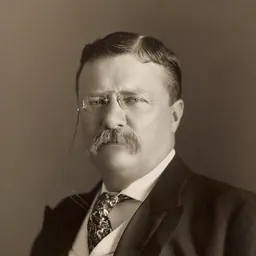
His world travels led to a decline in his overall health, in order to get better he traveled to the American West as Theodore Roosevelt had done for his health earlier.
In 1914, he became a member of the U.S. Army until the end of World War I in 1918. After the war, he was a Member of the American Peace delegation in Paris, France for a year. Then in 1919 he was appointed as the Special Military aide to President Woodrow Wilson for a brief time before he was reappointed as a Military observer, intelligence officer in the Balkans, Near East and Middle East. His association with the U.S. military was not a brief affair. He served as a Reserve officer for 34 years, attaining the rank of colonel. His knowledge of the Middle East was valuable during World War II.
In 1925, he helped establish a voting system in Tacona, Africa, personally designing ballots and setting up polling places in remote areas. While traveling the world he continued to write and create a variety of types and kinds of art, along with his work as a diplomat and military delegate.
He died in 1967, leaving behind two children.
Works
Books
Tripoli in Barbary(1911) The vanishing people of the Land of Fire The southernmost people of the world
Articles
• -- (August, 1918) "Climbing the Shoulders of Atlas," Harper's Monthly Magazine 819 (1918): 420–434.
Artworks
https://americanart.si.edu/search/artworks?content_type=artwork&persons[]=2917
Don’t just read it —
keep it.
Full-length biographies made to live with: read them, listen on the way to work, watch them tonight.
- E-book
- Audio
- Video
Instant download · yours to keep · every purchase keeps this site free
Important facts
People in Charles W. Furlong's life
Named in this biography and alive at the same time

Related people
Same field, nearest in time

Contemporaries
People whose lives overlapped Charles W. Furlong's


Frequently asked questions
Who was Charles W. Furlong?
American artist, writer and explorer (1874-1967)
When was Charles W. Furlong born?
Charles W. Furlong was born on 13 December 1874 in Cambridge.
When did Charles W. Furlong die?
Charles W. Furlong died in 1967.
What was Charles W. Furlong's occupation?
Charles W. Furlong was a painter, botanical collector, explorer, soldier, discoverer and military officer.
What nationality was Charles W. Furlong?
Charles W. Furlong was American.
Sources & further reading
· Wikipedia: Charles W. Furlong
Cite this page
APA: Biography.guide. (2026). Charles W. Furlong. https://biography.guide/charles-w-furlong/
MLA: "Charles W. Furlong." Biography.guide, https://biography.guide/charles-w-furlong/.
Chicago: "Charles W. Furlong." Biography.guide. https://biography.guide/charles-w-furlong/.
Data last updated: 2026-09-22 · Spot an error? Report a correction.
Portrait: Wikimedia Commons · author & licence
Page generated 2026-09-27 05:01 UTC