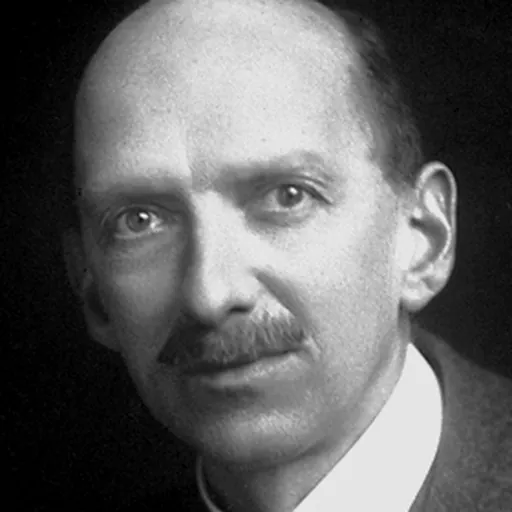
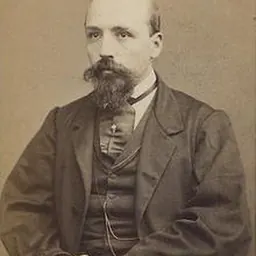
Charles Thomson Rees Wilson
Scottish physicist and meteorologist
About Charles Thomson Rees Wilson
Lived 1869 – 1959 (aged 90). Charles Thomson Rees Wilson was a British physicist, meteorologist, university teacher, chemist and scholar.
Early life and education Charles Thomson Rees Wilson was born on 14 February 1869 in Glencorse, Scotland, the son of John Wilson, a sheep farmer, and Annie Clark Harper. After his father died in 1873, Wilson moved with his family to Manchester, England.
With financial support from his step-brother, Wilson studied biology at Owens College (now the University of Manchester) with the intent of becoming a doctor. He graduated with a B.Sc. in 1887. The following year, he won a scholarship to attend Sidney Sussex College, Cambridge, where he became interested in physics and chemistry. In 1892, he received First Class Honours in both parts of the Natural Sciences Tripos. where he made observations of cloud formation. He was particularly fascinated by the appearance of glories. He then tried to reproduce this effect on a smaller scale in the Cavendish Laboratory at Cambridge, expanding humid air within a sealed container.
In 1895, Wilson discovered that at a large enough expansion ratio, supersaturated water vapour condensates even without dust which he removed by previous condensations, contrary to the previous research by John Aitken. Under J. J. Thomson's mentorship by 1896, he found out that X-rays stimulate the condensation just as well as dust.
In 1900, Wilson became a Fellow of Sidney Sussex College, Cambridge, and was appointed University Lecturer and Demonstrator. He taught a course on atmospheric electricity as a visiting lecturer at Imperial College London. He was appointed Reader in Electrical Meteorology in 1918 and Jacksonian Professor of Natural Philosophy in 1925.
Wilson published numerous papers on meteorology and physics, on topics including X-rays, ionisation, thundercloud formation, and other meteorological events. Weather was a focus of his work throughout his career, from his early observations at Ben Nevis to his final paper, on thunderclouds. The Cavendish Laboratory praised him for the creation of "a novel and striking method of investigating the properties of ionised gases." The cloud chamber allowed huge experimental leaps forward in the study of subatomic particles and the field of particle physics, generally. Some have credited Wilson with making the study of particles possible at all.
Retrospectively, Wilson's experimental method has received some attention from scholars.
In a period of scientific inquiry characterised by a divide between "analytical" and "morphological" scientists, Wilson's method of inquiry represented a hybrid. While some scientists believed phenomena should be observed in pure nature, others proposed laboratory-controlled experiments as the premier method for inquiry. Wilson used a combination of methods in his experiments and investigations. Wilson's work "made things visible whose properties had only previously been deduced indirectly." 1902 Royal Society of Edinburgh Fellow Awards Year Organisation Award Citation 1911 Royal Society Hughes Medal "For his work on nuclei in dust-free air, and his work on ions in gases and atmospheric electricity." 1922 Royal Society Royal Medal "For his researches on condensation nuclei and atmospheric electricity." 1925 Franklin Institute Howard N. Potts Medal "Method of making the tracks of ionizing rays visible and permanently recording them by photography." 1927 Royal Swedish Academy of Sciences Nobel Prize in Physics "For his method of making the paths of electrically charged particles visible by condensation of vapour." 1931 Institute of Physics Duddell Medal and Prize — 1935 Royal Society Copley Medal "For his work on the use of clouds in advancing our knowledge of atoms and their properties."
Orders Year Head of state Order 1937 George VI Order of the Companions of Honour
Commemoration
Wilson crater on the Moon is named after him, Alexander Wilson, and Ralph Elmer Wilson. The Wilson Condensation Cloud formations that occur after large explosions, such as nuclear detonations, are named after him. The Wilson Society—the scientific society of Sidney Sussex College, Cambridge—is named in his honour, as is the CTR Wilson Institute for Atmospheric Electricity—the Atmospheric Electricity Special Interest Group of the Royal Meteorological Society.
The archives of C.T.R. Wilson are maintained by the Archives of the University of Glasgow.
in 1996, a blue plaque in Wilson's honour was installed in a specially built cairn at Flotterstone, close to his birthplace at Crosshouse Farm.
In 2012, the Royal Society of Edinburgh held a meeting in honour of Wilson, the "Great Scottish Physicist."
Don’t just read it —
keep it.
Full-length biographies made to live with: read them, listen on the way to work, watch them tonight.
- E-book
- Audio
- Video
Instant download · yours to keep · every purchase keeps this site free
Important facts
People in Charles Thomson Rees Wilson's life
Named in this biography and alive at the same time





Related people
Same field, nearest in time
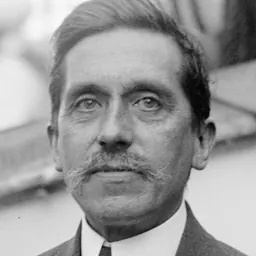
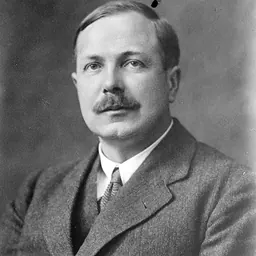
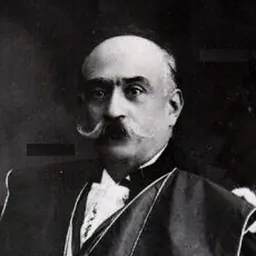
Contemporaries
People whose lives overlapped Charles Thomson Rees Wilson's
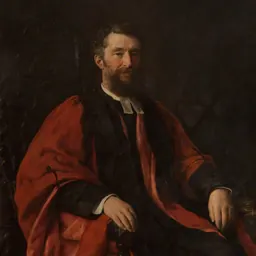


Frequently asked questions
Who was Charles Thomson Rees Wilson?
Scottish physicist and meteorologist (1869-1959)
When was Charles Thomson Rees Wilson born?
Charles Thomson Rees Wilson was born on 14 February 1869 in Glencorse.
When did Charles Thomson Rees Wilson die?
Charles Thomson Rees Wilson died on 15 November 1959 in Carlops.
What was Charles Thomson Rees Wilson's occupation?
Charles Thomson Rees Wilson was a physicist, meteorologist, university teacher, chemist and scholar.
What nationality was Charles Thomson Rees Wilson?
Charles Thomson Rees Wilson was British.
Sources & further reading
· Wikipedia: Charles Thomson Rees Wilson
Cite this page
APA: Biography.guide. (2026). Charles Thomson Rees Wilson. https://biography.guide/charles-thomson-rees-wilson/
MLA: "Charles Thomson Rees Wilson." Biography.guide, https://biography.guide/charles-thomson-rees-wilson/.
Chicago: "Charles Thomson Rees Wilson." Biography.guide. https://biography.guide/charles-thomson-rees-wilson/.
Data last updated: 2026-09-23 · Spot an error? Report a correction.
Portrait: Wikimedia Commons · author & licence
Page generated 2026-09-27 05:08 UTC