
About Charles Swainson
Lived 1841 – 1913 (aged 71–72). Charles Swainson was a British writer.
Charles Swainson (1840–1913) M.A. was an English cleric and naturalist. He was rector of High Hurst Wood, Sussex, from 1872 to 1874, from where he published his Handbook of Weather Folk-Lore which also included folklore and mythology relating to elements of nature and a short chapter on birds.
As Rector of St Luke's, Old Charlton, Kent, from 1874 to 1908, which collected the vernacular and regional names of British birds together with an array of British and European folklore related to birds. The 1885 edition (Provincial Names and Folk-Lore...) was published within the Dialect Society's blue cover papers, and the 1886 edition (The Folk-Lore and Provincial Names...), with the title slightly changed for emphasis, was published in the Folk-Lore Society's brown cloth covers. His parents married in 1838; his mother was the widow of George Decimus Littledale of Sandown House, near Liverpool, who died in 1826 leaving her with three children. He was educated at Harrow School from September 1854 to December 1859, took a B.A. degree from Christ Church, Oxford, in 1863 and was ordained a deacon in 1864, spending less than a year at Wilton in Wiltshire, not far from Salisbury. He was ordained a priest in 1865, and moved to Crick to serve his father's parish as curate.
He married Isabel Augusta Gossip at Doncaster, Yorkshire, in April 1865, and they had four children: Isabel, George, Harriet and Charles. In 1908 he left Charlton at the age of 67 and moved to a residence nearby, spending time in Torquay with his daughter Harriet in 1911. He died on 30 December 1913 at the age of 72. His work was reviewed in the respected scientific and literary journals The Athenaeum, Nature, and The Academy in 1887, and the interest excited by his newly published work prompted a correspondent to the Ceylon Observer to collect from local people some dialect names and folk-lore about Sri Lanka's birds, which were noted in the journal Nature.
Swainson drew on sources from as faras Norway, Iceland, France, Germany, and Russia; relied on the ornithological histories of Bewick and Yarrell; referred to the poetry of John Clare and the works of Shakespeare; drew examples from the lives of the saints and the legends of the Middle Ages; and referred to local English, Scottish and Irish glossaries and collections or provincial names for the birds. In the same year the Society's founder and president, Professor Walter William Skeat, (author of an etymological dictionary on the Anglo-Saxon roots of the English language, and one of the leading philologists of his time), initiated a fund mainly from his own resources in order to set up a new project which would bring the work of the Society to its fulfilment. All 80 published volumes of the Society would be included in The English Dialect Dictionary, and its compiler, Joseph Wright, a self-taught philologist, would involve a nationwide network of almost a thousand volunteers to assist and contribute to this massive cultural undertaking.
Swainson's work on weather-lore and on provincial birds' names and folk-lore was included in the massive undertaking which became The English Dialect Dictionary, published in six volumes between 1898 and 1905.
Swann pays tribute to Charles Swainson in the first part of his introduction, and subsequently mentions other major works he has made use of, from Turner (1544) to Ray and Willughby (1678). He refers throughout his work to Swainson's names and derivations, and paraphrases parts of Swainson's original collection in his dictionary, published in the year of Swainson's death in 1913. An example of this practice is given in his article on the Redbreast (pp 189–190), where he briefly summarises parts of the Redbreast article (pp 13–18) in Swainson, which consists of original detailed research which is attributed, analysed and contextualised.
Lockwood also references Swainson's work in his etymological research, for example in "The Philology of 'Auk' and related matters" in the journal Neuephilologische Mitteilungen vol. 79, no.4 (1978) which explores the roots of the word "auk" and related names of the Alcidae family (guillemots, razorbills and auks).
On Francesca Greenoak: British Birds: Their Folklore, Names and Literature and recent authors Swainson is still widely referenced today as an authoritative and reliable source, for example by Francesca Greenoak in her British Birds; their Folklore, Names and Literature (1997) which was originally published by Andre Deutsch in 1979 as All the Birds of the Air, and by Stephen Moss Mrs Moreau's Warbler; How Birds Got Their Names which treats principally of eponymous bird names, and of the people these names refer to. Moss also includes lengthy quotations which he attributes erroneously to Charles Swainson; these are in fact attributable to William Swainson (on Latham and the merits of his works and of his memory, p 144 and p 320).
Bob Montgomery of the American Ornithological Society in his 2017 article Bird Names Then and Now credits Charles Swainson with compiling "the names of common birds from both folklore and regional dialects across England and Scotland, and several books have since been published on the sources of common names in use today".
On research into etymology, philology, comparative mythology, natural history, literature & poetry Articles published in journals which refer to Swainson's works include:
Bird Folklore from Roanoke Island, North Carolina (Journal of American Folklore, 1947); The Image of the Halcyon Kingfisher in Mediaeval Chinese Poetry (Journal of the American Oriental Society, 1984); Chaucer's Archangel (Modern Languages Notes, 1940); Langland's "Corlew": Another Look at 'Piers Plowman', (Medium Aevum, 1993). Birds In The Poetry of Browning, (The Review of English Studies, 1956) The Whistler, Bird of Omen, (Modern Languages Notes, 1950) Exeter Book Riddle 57 (55) - a double solution? (Anglo-Saxon England, 1996) Notes on Shells from the Shrine of Santa Lucia, near Figueras in Spain (Transactions of the Glasgow Archaeological Society, 1896) Little King, Sow, Lady-cow (Journal of American Folklore, 1935) Bird-names in Latin Glossaries by W M Lindsay (Notes on the foregoing Article by Professor D'Arcy Wentworth Thompson) Classical Philology, vol 13, no.1, January 1918 p.16
Don’t just read it —
keep it.
Full-length biographies made to live with: read them, listen on the way to work, watch them tonight.
- E-book
- Audio
- Video
Instant download · yours to keep · every purchase keeps this site free
Important facts
People in Charles Swainson's life
Named in this biography and alive at the same time



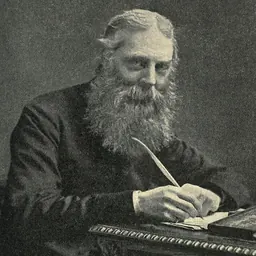
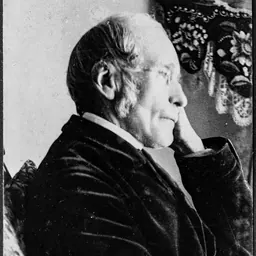
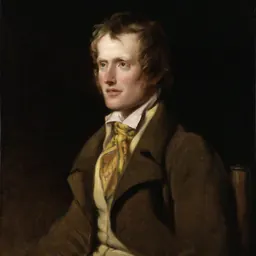
Related people
Same field, nearest in time
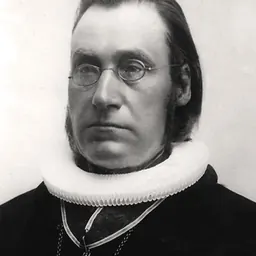

Contemporaries
People whose lives overlapped Charles Swainson's

Frequently asked questions
Who was Charles Swainson?
cleric, naturalist and author
When was Charles Swainson born?
Charles Swainson was born in 1841.
When did Charles Swainson die?
Charles Swainson died in 1913.
What was Charles Swainson's occupation?
Charles Swainson was a writer.
What nationality was Charles Swainson?
Charles Swainson was British.
Sources & further reading
· DBpedia: Charles Swainson (naturalist)
Cite this page
APA: Biography.guide. (2026). Charles Swainson. https://biography.guide/charles-swainson/
MLA: "Charles Swainson." Biography.guide, https://biography.guide/charles-swainson/.
Chicago: "Charles Swainson." Biography.guide. https://biography.guide/charles-swainson/.
Data last updated: 2026-09-20 · Spot an error? Report a correction.
Page generated 2026-09-27 05:08 UTC