
About Charles Sturm
Lived 1803 – 1855 (aged 52). Charles Sturm was a Swiss and French mathematician, physicist and university teacher, known for Speed of sound, Sturm separation theorem and Sturm series.
Jacques Charles François Sturm (29 September 1803 – 15 December 1855) was a French mathematician, who made a significant addition to equation theory with his work, Sturm's theorem.
Early life Sturm was born in Geneva, Switzerland in 1803. The family of his father, Jean-Henri Sturm, had emigrated from Strasbourg around 1760—about 50 years before Charles-François's birth. His mother's name was Jeanne-Louise-Henriette Gremay.
In 1818, he started to follow the lectures of the academy of Geneva. The death of his father forced Sturm to give lessons to children of the rich in order to support his own family the following year. In 1823, he became tutor to the son of Madame de Staël.
At the end of that year, Sturm stayed in Paris for a short time following the family of his student. He resolved, with his school-fellow Jean-Daniel Colladon, to try his fortune in Paris, and obtained employment on the Bulletin universel.
Discovery In 1829, he discovered the theorem that bears his name, and concerns real-root isolation, that is the determination of the number and the localization of the real roots of a polynomial.
Work Sturm benefited from the 1830 revolution, as his Protestant faith ceased to be an obstacle to employment in public high schools. At the end of 1830, he was thus appointed as a professor of Mathématiques Spéciales at the collège Rollin.
He was chosen a member of the Académie des Sciences in 1836, filling the seat of André-Marie Ampère. Sturm became répétiteur in 1838, and in 1840 professor in the École Polytechnique. The same year, after the death of Poisson, Sturm was appointed as mechanics professor of the . His works, Cours d'analyse de l'école polytechnique (1857–1863) and Cours de mécanique de l'école polytechnique (1861), were published after his death in Paris, Sturm's name is one of the 72 names engraved at the Eiffel Tower.
Distinctions
Grand prix de Mathématiques (4 December 1834) Member of the academy of Berlin (1835) Member of the academy of Saint-Petersburg (1836) Officier de la Légion d'Honneur (1837) Copley Medal of the Royal Society of London (1840) Member of the Royal Society of London (1840)
Selected writing
Cours d'analyse de l'Ecole polytechnique. Tome premier (Gauthier-Villars, 1877) Cours d'analyse de l'Ecole polytechnique. Tome second (Gauthier-Villars, 1877) Cours de mécanique de l'Ecole polytechnique (Gauthier-Villars, 1883)
Don’t just read it —
keep it.
Full-length biographies made to live with: read them, listen on the way to work, watch them tonight.
- E-book
- Audio
- Video
Instant download · yours to keep · every purchase keeps this site free
Important facts
People in Charles Sturm's life
Named in this biography and alive at the same time
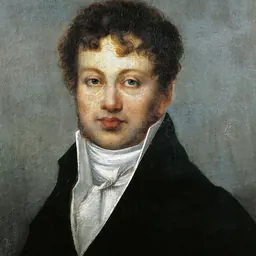
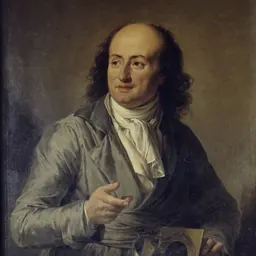
Related people
Same field, nearest in time



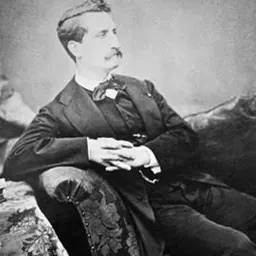

Contemporaries
People whose lives overlapped Charles Sturm's





Frequently asked questions
Who was Charles Sturm?
mathematician from Geneva (1803-1855)
When was Charles Sturm born?
Charles Sturm was born on 29 September 1803 in Geneva.
When did Charles Sturm die?
Charles Sturm died on 18 December 1855 in Paris.
What was Charles Sturm's occupation?
Charles Sturm was a mathematician, physicist and university teacher.
What was Charles Sturm known for?
Charles Sturm was known for Speed of sound, Sturm separation theorem, Sturm series, Sturm's theorem, Sturm–Liouville theory and Sturm–Picone comparison theorem.
What nationality was Charles Sturm?
Charles Sturm was Swiss and French.
Sources & further reading
· DBpedia: Jacques Charles François Sturm
Cite this page
APA: Biography.guide. (2026). Charles Sturm. https://biography.guide/charles-sturm/
MLA: "Charles Sturm." Biography.guide, https://biography.guide/charles-sturm/.
Chicago: "Charles Sturm." Biography.guide. https://biography.guide/charles-sturm/.
Data last updated: 2026-09-20 · Spot an error? Report a correction.
Page generated 2026-09-27 05:18 UTC