
About Charles Smith Bird
Lived 1795 – 1862 (aged 66–67). Charles Smith Bird was a poet and entomologist.
Charles Smith Bird (1795–1862) was an English academic, cleric and tutor, known as a theological author and writer of devotional verse, and described as a High Church Evangelical. He was the author of several significant books against Tractarianism.
Life His father was William Bird (died 1814), a West Indies merchant; of a religious character, he objected, for instance, to his children reading Shakespeare. Charles Smith Bird was the fifth of six children, born in Union Street, Liverpool, 28 May 1795. After attending private schools, he was articled to a firm of conveyancing solicitors at Liverpool in 1812.
Bird went back in 1815 to Macclesfield grammar school, under David Davies (1755–1828). He entered Trinity College, Cambridge, where he became a scholar in 1818. He was third Wrangler in 1820, was awarded a Smith's Prize behind Henry Coddington, and elected a Fellow of his college.
Bird was then ordained and became curate of Burghfield, six miles from Reading, Berkshire, and lived in a house at Culverlands, near Burghfield, in 1823. His marriage in that year meant he had to give up his Trinity fellowship. He took pupils for twenty years, an early one being Thomas Babington Macaulay who joined a reading party at Llanrwst in 1821.
In 1840 Bird became a sort of part-time curate to Rev. Alan Briscoe (died 1845) at Sulhamstead Abbots. Having given up his house at Burghfield, he took the curacy of Fawley near Henley-on-Thames. In 1843 he was given the vicarage of Gainsborough, Lincolnshire, with a prebendal stall of Lincoln Cathedral. There he led a quiet life, occasionally lecturing at the Gainsborough Literary and Mechanics' Institute on natural history, English literature, and other subjects. In the summer of 1844 he went to Scotland, and in the next year preached before Cambridge University four sermons on the parable of the sower.
The views Bird held were related to those of George Stanley Faber, combining justification by faith with support of episcopacy, and some sympathy with Calvinism, for a "moderate evangelicalism". Bird was reticent by nature, publishing his 1838 work against the Tracts for the Times at the urging of Henry Budd. There was a reply on behalf of the Tractarians by Frederick Oakeley, who had written the article. The Baptismal Privileges, the Baptismal Vow, and the Means of Grace, as they are set forth in the Church Catechism, considered in six Lent Lectures preached at Sulhamstead, Berks, 1841; 2nd ed. 1843. A Defence of the Principles of the English Reformation from the Attacks of the Tractarians; or a Second Plea for the Reformed Church, 1843.
Other works were: The Eve of the Crucifixion, 1858.
Bird was also an entomologist, and became a fellow of the Linnean Society in 1828, publishing in the Entomological Magazine. A moth Lepidocera birdella was named for him by John Curtis.
Family On 24 June 1823 Bird married Margaret Wrangham, of Bowdon, Cheshire. A daughter married H. C. Barker, who had been Bird's curate, in 1849. Claude Smith Bird published Sketches from the Life of the Rev. Charles Smith Bird (1864).
Don’t just read it —
keep it.
Full-length biographies made to live with: read them, listen on the way to work, watch them tonight.
- E-book
- Audio
- Video
Instant download · yours to keep · every purchase keeps this site free
Important facts
People in Charles Smith Bird's life
Named in this biography and alive at the same time

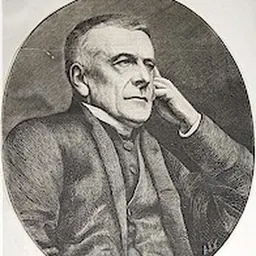

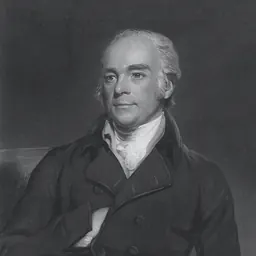



Related people
Same field, nearest in time
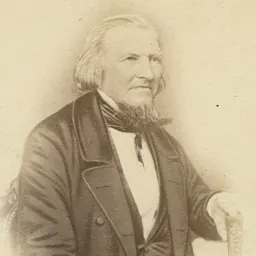

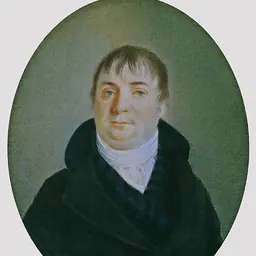
Contemporaries
People whose lives overlapped Charles Smith Bird's




Frequently asked questions
Who was Charles Smith Bird?
British poet
When was Charles Smith Bird born?
Charles Smith Bird was born in 1795.
When did Charles Smith Bird die?
Charles Smith Bird died in 1862.
What was Charles Smith Bird's occupation?
Charles Smith Bird was a poet and entomologist.
Sources & further reading
· Wikipedia: Charles Smith Bird
Cite this page
APA: Biography.guide. (2026). Charles Smith Bird. https://biography.guide/charles-smith-bird/
MLA: "Charles Smith Bird." Biography.guide, https://biography.guide/charles-smith-bird/.
Chicago: "Charles Smith Bird." Biography.guide. https://biography.guide/charles-smith-bird/.
Data last updated: 2026-09-20 · Spot an error? Report a correction.
Page generated 2026-09-27 05:21 UTC