
About Charles Seymour
Lived 1885 – 1963 (aged 78). Charles Seymour was an American historian and university teacher.
Charles Seymour (January 1, 1885 – August 11, 1963) was an American academic, historian and the 15th President of Yale University from 1937 to 1951. As an academic administrator, he was instrumental in establishing Yale's residential college system. His writing focused on the diplomatic history of World War I.
Early life and education Seymour was born in New Haven, Connecticut, the son of Thomas Day Seymour, who taught classics at Yale, and Sarah Hitchcock Seymour. His paternal grandfather, Nathan Perkins Seymour, was the great-great grandson of Thomas Clap, who was President of Yale in the 1740s. His paternal grandmother, Elizabeth Day, was the grandniece of Jeremiah Day, who was Yale's president from 1817 through 1846. An ancestor of his mother, the former Sarah Hitchcock, was awarded an honorary degree at Yale's first graduation ceremonies in 1702.
Seymour was awarded a Bachelor of Arts at King's College, Cambridge in 1904; and he earned a second BA from Yale in 1908. He went on to earn a PhD from Yale in 1911. He taught history at Yale from 1911 though 1937, when he became president of the university.
Seymour was elected to the American Academy of Arts and Sciences in 1938 and the American Philosophical Society in 1939.
At age 52, Seymour succeeded James Rowland Angell as the university's 15th president in October 1937. After his retirement in July 1950, he would be succeeded by Alfred Whitney Griswold.
After his retirement as president, Seymour continued his involvement with the university as curator of the papers of Edward M. House at the Yale University Library.
He died in Chatham, Massachusetts in 1963 after a long illness. His son, Charles Seymour Jr., was a professor of art history at Yale.
Selected works
1915 – Electoral Reform in England and Wales: The Development and Operation of the Parliamentary Franchise, 1832–1885. New Haven: Yale University Press. 1916 – The Diplomatic Background of the War, 1870–1914. New Haven: Yale University Press. 1918 – How the World Votes: The Story of Democratic Development in Elections with Donald Paige Frary. Springfield, Massachusetts: C. A. Nichols. 1921 – Woodrow Wilson and the World War. New Haven: Yale University Press. 1926 – The Intimate Papers of Colonel House. New York: Houghton Mifflin. 1934 – American Diplomacy During the World War. Baltimore: Johns Hopkins Press. [reprinted by Greenwood Press, Westport Connecticut, 1975: 1935 – American Neutrality, 1914–17: Essays on the Causes of American Intervention in the World War. 1921 – What Really Happened in Paris: the story of the Peace Conference, 1918–1919 with Edward House. New York: Charles Scribner's Sons. 1963 – Letters from the Paris Peace Conference. New Haven
Don’t just read it —
keep it.
Full-length biographies made to live with: read them, listen on the way to work, watch them tonight.
- E-book
- Audio
- Video
Instant download · yours to keep · every purchase keeps this site free
Important facts
People in Charles Seymour's life
Named in this biography and alive at the same time


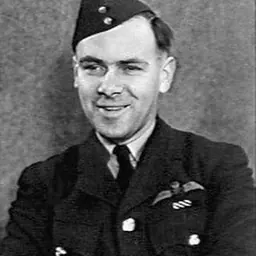
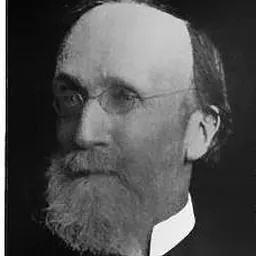


Related people
Same field, nearest in time
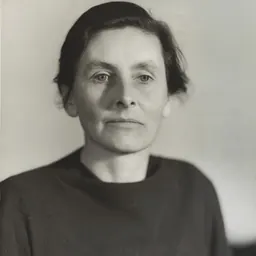
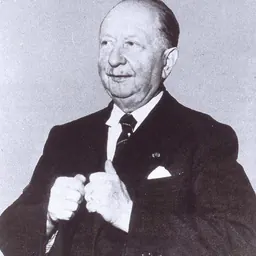
Contemporaries
People whose lives overlapped Charles Seymour's


Frequently asked questions
Who was Charles Seymour?
President of Yale University (1885–1963)
When was Charles Seymour born?
Charles Seymour was born on 1 January 1885 in New Haven.
When did Charles Seymour die?
Charles Seymour died on 11 August 1963 in Chatham.
What was Charles Seymour's occupation?
Charles Seymour was a historian and university teacher.
What nationality was Charles Seymour?
Charles Seymour was American.
Sources & further reading
Cite this page
APA: Biography.guide. (2026). Charles Seymour. https://biography.guide/charles-seymour-historian/
MLA: "Charles Seymour." Biography.guide, https://biography.guide/charles-seymour-historian/.
Chicago: "Charles Seymour." Biography.guide. https://biography.guide/charles-seymour-historian/.
Data last updated: 2026-09-26 · Spot an error? Report a correction.
Page generated 2026-09-27 05:15 UTC