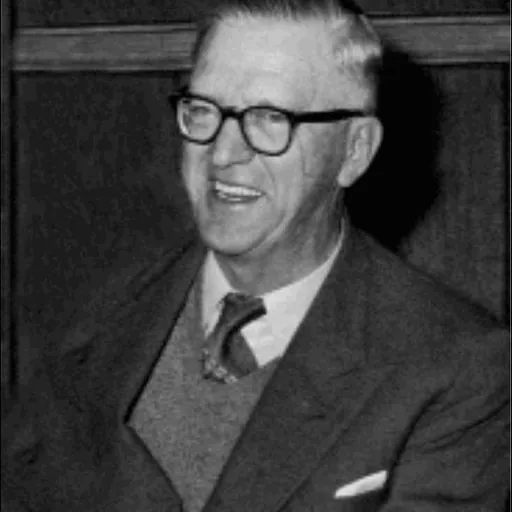
About Charles Robberts Swart
Lived 1894 – 1982 (aged 87). Charles Robberts Swart was a South African politician, journalist, minister and jurist.
Charles Robberts Swart (5 December 1894 – 16 July 1982), nicknamed "Blackie",
He was the third of six children, born to Hermanus Bernardus Swart (1866–1949) and Aletta Catharina Robberts (1871–1927). The Anglo-Boer War (Second Boer War) broke out when he was five years old. During the war, his mother and the children were interned at the Winburg concentration camp. Out of the three boys, one died while in the concentration camp. His father was wounded and captured by the British during the Battle of Paardeberg. He became a prisoner-of-war and stayed in Greenpoint and Simon's Town until the end of the war.
Aged seven, Swart went to the government school in Winburg. He later went to a CNO (Christelike Nasionale Onderwys or "Christian National Education") school, set up by the Afrikaners in response to Lord Milner's anglicisation policy at the government-sponsored schools.
He established himself as a barrister in 1914. He spent a brief period in Hollywood acting in silent films, before embarking on his public career. He practised law in Bloemfontein from 1919–1948, with the exception of the time spent earning a degree in journalism from Columbia University in New York in 1921–22. He reported briefly from Washington for the Die Burger newspaper. After the end of the Second World War, he was appointed Minister of Justice when the National Party came to power in 1948, and was responsible for legislation to strengthen the powers of the South African Police to suppress anti-apartheid activity.
In 1959, Swart was appointed Governor-General, but like his predecessor Ernest George Jansen, he was a staunch republican. Despite this, he had earlier kneeled before Queen Elizabeth II and kissed her hand. In a referendum the following year, a small majority of white voters endorsed a government proposal to become a republic. In 1961, after signing into law the new republican constitution passed by Parliament, he asked the Queen to release him from office, and Parliament then elected him as state president, the new post that replaced the monarch and the Governor-General as ceremonial head of state. Nelson Mandela and other underground black resistance leaders tried to protest against the change to the new system by planning a three-day general strike of non-white workers, but the government preemptively averted most of these plans through an extensive use of police force to persecute the dissenters.
Although elected for a seven-year term in office, Swart served as state president for only six years, and he retired in 1967. After his retirement, Swart was awarded the Decoration for Meritorious Services by State President Jim Fouché. He died on 16 July 1982, aged 87. Swart was popularly known as "Blackie" (Swart is Afrikaans for "black") or as "Oom Blackie", oom being Afrikaans for "uncle", but used as a sign of respect towards an older male.
Legacy
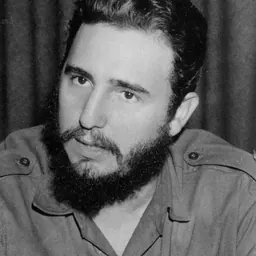
The tallest building in Bloemfontein, which housed various governmental departments and the Law Faculty of the University of the Orange Free State, was named the President CR Swart Building in his honour. In 2015, the ANC government renamed the popular CR Swart Building the Fidel Castro Building.
A statue of CR Swart at the University of the Free State was destroyed by protesting students in late-February 2016.
The highest peak in the remote Prince Edward Islands was called State President Swart Peak, before it was renamed Mascarin Peak in 2003.
Swart's portrait is depicted on the obverses of the coins of the South African rand – from 1 to 50 Cents dated 1968, which was struck to commemorate him as the first State President of South Africa.
Don’t just read it —
keep it.
Full-length biographies made to live with: read them, listen on the way to work, watch them tonight.
- E-book
- Audio
- Video
Instant download · yours to keep · every purchase keeps this site free
Important facts
People in Charles Robberts Swart's life
Named in this biography and alive at the same time




Related people
Same field, nearest in time





Contemporaries
People whose lives overlapped Charles Robberts Swart's


Frequently asked questions
Who was Charles Robberts Swart?
South African politician (1894–1982)
When was Charles Robberts Swart born?
Charles Robberts Swart was born on 5 December 1894 in Winburg.
When did Charles Robberts Swart die?
Charles Robberts Swart died on 16 July 1982 in Bloemfontein.
What was Charles Robberts Swart's occupation?
Charles Robberts Swart was a politician, journalist, minister and jurist.
What nationality was Charles Robberts Swart?
Charles Robberts Swart was South African.
Sources & further reading
· Wikipedia: Charles Robberts Swart
Cite this page
APA: Biography.guide. (2026). Charles Robberts Swart. https://biography.guide/charles-robberts-swart/
MLA: "Charles Robberts Swart." Biography.guide, https://biography.guide/charles-robberts-swart/.
Chicago: "Charles Robberts Swart." Biography.guide. https://biography.guide/charles-robberts-swart/.
Data last updated: 2026-09-22 · Spot an error? Report a correction.
Portrait: Wikimedia Commons · author & licence
Page generated 2026-09-27 05:02 UTC