
About Charles Rob
Lived 1913 – 2001 (aged 88). Charles Rob was a military personnel, known for Carotid endarterectomy, Kidney transplantation and Open aortic surgery.
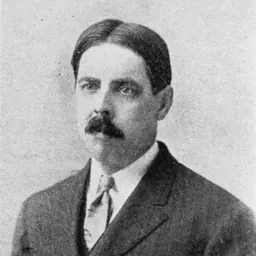
Charles Granville Rob (4 May 1913 – 26 July 2001) was a British surgeon who pioneered techniques in the repair of damaged blood vessels, particularly the operation to unblock arteries of the neck, known as carotid endarterectomy and of the aorta when treating aortic aneurysms.
After graduating from Cambridge University and St Thomas' Hospital Medical School, Rob operated throughout the Blitz and in the Tunisian Campaign, where he received the Military Cross.
After the Second World War, Rob became the youngest chief of surgery at St. Mary's Hospital, London and he also lead the vascular surgery program at St Mary's Hospital, London where he carried out one of the world's first carotid endarterectomies and a year later performed the UK's first deceased donor human-to-human kidney transplant. His contributions paved the way for St Mary's in becoming a pioneering centre in vascular surgery and transplant surgery.
In 1960, he moved to the United States and continued developing techniques in vascular surgery including vein by-pass grafting.
Early life and education Charles Rob was born on 4 May 1913 in Weybridge, England. His father was Joseph William Rob, a family physician, who came from the farming and landowning family in Catton near Thirsk, Yorkshire. and his mother was a descendant of Edward "Grog" Vernon, the British Admiral who introduced diluted rum for Royal Navy sailors in the 18th century.
He was educated at Hordle House and Oundle before going on to graduate from St John's College, Cambridge, in 1934. During his time there, he once climbed one of the spires of King's College to place an open umbrella on the top.
He was later made resident assistant surgeon at Hydestile Hospital, close to Godalming
Michael DeBakey performed the first carotid endarterectomy in 1953 and the procedure became better known after Rob and his colleagues performed one in 1954. The operation proved to reduce the risk of stroke in patients with significant blocked carotid arteries and he reported to have carried out more than 5000 of these operations in his lifetime. In addition, he introduced using frozen cadaver arterial grafts in the treatment of aortic aneurysms. In 1955, he presented his experiences of over 30 abdominal aortic aneurysms to the Royal College of Surgeons.
In 1955, Rob performed the UK's first recorded deceased donor kidney transplant with Hammersmith hospital's surgeon Jim Dempster, at St Mary's Hospital. The recipient had developed acute renal failure following a septic abortion and was considered by Dempster as not ideal for transplant and an unnecessary fatal disaster. However, it instilled an interest in further transplantation developments at St Mary's, which became regarded as pioneers in this field.
Surgical career in the United States In 1960
After retiring in 1978, he moved to East Carolina University, taking an appointment as professor of surgery. Five years later he joined the Uniformed Services University of the Health Sciences at Bethesda, near Washington DC. He was a past president of the International Society of Cardiovascular Surgery and the North American Chapter of the International Cardiovascular Society. He was awarded the René Leriche prize of the International Society of Surgery. In 1994, he required a carotid endarterectomy himself.
Death and legacy Rob died of heart disease while visiting relatives on 26 July 2001 in Montpellier, Vt. Apart from his medical innovations, he has been remembered for his saying on the treatment of a gangrenous limb: "The best treatment for the condition is rest. The best way to rest is sleep. The best way to get sleep is to relieve pain, and the best way to relieve pain is to give whiskey."
Selected publications Rob published more than 200 papers. His book publications included: Operative Surgery. 8 vols. Butterworths, London, 1956. (edited with Rodney Smith)
Don’t just read it —
keep it.
Full-length biographies made to live with: read them, listen on the way to work, watch them tonight.
- E-book
- Audio
- Video
Instant download · yours to keep · every purchase keeps this site free
Important facts
People in Charles Rob's life
Named in this biography and alive at the same time



Related people
Same field, nearest in time



Contemporaries
People whose lives overlapped Charles Rob's



Frequently asked questions
Who was Charles Rob?
British surgeon (1913–2001)
When was Charles Rob born?
Charles Rob was born on 4 May 1913 in Weybridge.
When did Charles Rob die?
Charles Rob died on 26 July 2001 in Berlin.
What was Charles Rob's occupation?
Charles Rob was a military personnel.
What was Charles Rob known for?
Charles Rob was known for Carotid endarterectomy, Kidney transplantation and Open aortic surgery.
Sources & further reading
Cite this page
APA: Biography.guide. (2026). Charles Rob. https://biography.guide/charles-rob/
MLA: "Charles Rob." Biography.guide, https://biography.guide/charles-rob/.
Chicago: "Charles Rob." Biography.guide. https://biography.guide/charles-rob/.
Data last updated: 2026-09-20 · Spot an error? Report a correction.
Page generated 2026-09-27 05:14 UTC