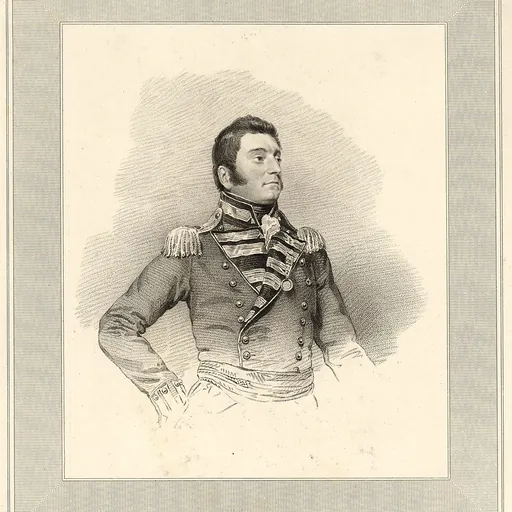
About Charles Philippe de Bosset
Lived 1773 – 1845 (aged 71). Charles Philippe de Bosset was a Swiss engineer, archaeologist and soldier.
Early life Charles-Philippe de Bosset was born on 29 July 1773 in Neuchâtel of the Principality of Neuchâtel, Switzerland, the son of State Councillor Charles-Abel de Bosset (1732–1811), originally from La Neuveville, and Philippine-Régine de Sandoz (1750–1833), daughter of Lt. General François-Auguste Sandoz. young de Bosset, though having trained for a career in commerce, joined, in August 1796, Count Charles-Daniel de Meuron's Swiss Regiment.
Army service While stationed in Switzerland, de Bosset, in September 1798, was ordered to London, from where he expected to be transferred to India. Instead, he was kept in England, undertaking various auxiliary missions. In April 1799, on account of developments in Europe, and, in particular, following the battles in Neuenegg, Fraubrunnen, and Grauholz, he was ordered back to his home country, where, in the ranks of the Coalition forces, he participated in the skirmishes leading up to the battle for Zurich, and distinguished himself in the battle itself, whose outcome was the retreat of the French forces under General André Masséna from the city. a chart that outlines in graphic form the structure of the British Army on the eve of the Napoleonic Wars, with all its infantry, cavalry and artillery formations, including several foreign regiments, such as the West India Regiments, and specialist ones, like the 95th Rifles. During his time in the German Legion, he served in the Mediterranean (1806-07), in the Baltic (1807-08), and in the Peninsula (1808). In 1808, he accompanied Sir John Moore in his diplomatic missions to Sweden and Portugal. In December of the same year, he was promoted to the rank of major in de Roll's Swiss Regiment. He was eventually commissioned, in October 1809, to lead the foreign troops to a mission in Sicily, and, from there, to the Ionian Islands, then occupied by British forces under Brigadier General John Oswald. He distinguished himself in the siege of Santa Maura, leading his troops to victory against the French garrison and the Albanian Regiment. His conduct was honourably mentioned in the issue of the London Gazette of 23 June 1810. of the island of Cephalonia. The same year, archaeological excavations undertaken in the island at de Bosset's orders, unearthed at Mazarakata ancient burial places that were subsequently determined to be the biggest Mycenaean-period cemetery on Cephalonia, with its characteristic beehive tombs. Most of the findings were donated to the British Museum and the Musee cantonale d'archeologie at Neuchâtel. After the construction was finished, in 1813, in its centre stood a small pyramid carrying the inscription "To The Glory of The British Nation 1813".
During his time as governor, de Bosset, an amateur numismatist and medalist, wrote an essay on the ancient medals discovered in Cephalonia and Ithaca.
On 4 June 1814, he was promoted to lieutenant colonel.
Inspector General of the Ionian Islands' armed forces After rejoining his regiment in Corfu and serving, in 1816, a stint as governor of the island of Zante, de Bosset was named, the same year, Inspector General of the Ionian islands' armed forces. In 1817, he personally undertook, as well, the command of the Parga fortress.
Britain had agreed to cede Parga to Ali Pasha, as a representative of the Sublime Porte, under certain specific conditions, mostly related to guarantees for the safety of Parga's inhabitants, since they had resisted for many years the Ottomans' attempts to conquer it. Despite Ali not meeting the obligations he had undertaken on behalf of the Porte, Lieutenant General Thomas Maitland, Lord High Commissioner of the Ionian Islands, was willing to cede Parga to the Albanian pasha, a development to which de Bosset strongly objected. 100px Royal Guelphic Order ribbon barThe two officers clashed in public, causing a minor scandal that was reported in the English press. De Bosset was forced to resign his commission. Upon his return to England, in 1817, he undertook legal action against Maitland and published a pamphlet in which he stated his positions on the matter, refuting all accusations of insubordination.
In April 1818, he was named a Knight of the Royal Guelphic Order, having already been declared Commander of the Order of the Bath.
Life in England While living in England, de Bosset married Fildesley Holmes, of South Kensington, in 1822.
He actively promoted to the London public the work of Swiss lens maker and optician Pierre-Louis Guinand, an acknowledged pioneer in the manufacture of optical glass for microscopes, telescopes, glasses and other optical instruments.
Return home He returned to Neuchâtel and established in 1827 a glove factory in Fleurier. After the decline of the lace industry since the introduction of machines for its manufacture, the need arose to replace that industry with a new one that did not require large workshops or expensive tools, and was within the reach of women. De Bosset believed he had identified one such endeavour as being the manufacture of gloves. Within a year after the founding of the glove factory, seventy workers were employed there and the future looked prosperous. However, as soon as watch making, with its great division and variability of parts, became accessible to women and they were able to earn more money from it than from making gloves, they all resigned from de Bosset's employment. He was forced to close the factory and then attempted in vain to compensate his friends and acquaintances who had invested in it.
In 1837, the British army gave de Bosset the rank of lieutenant general in retirement.
He committed suicide at his home in Neuchâtel on 15 March 1845.
Don’t just read it —
keep it.
Full-length biographies made to live with: read them, listen on the way to work, watch them tonight.
- E-book
- Audio
- Video
Instant download · yours to keep · every purchase keeps this site free
Important facts
People in Charles Philippe de Bosset's life
Named in this biography and alive at the same time





Related people
Same field, nearest in time
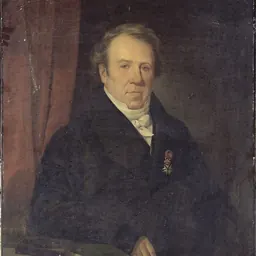
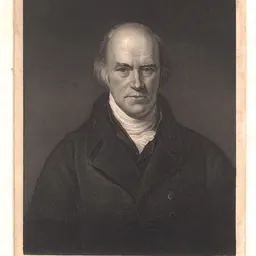
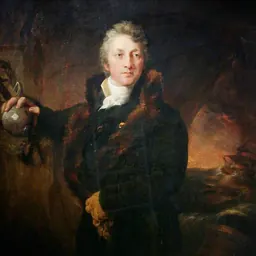
Contemporaries
People whose lives overlapped Charles Philippe de Bosset's



Frequently asked questions
Who was Charles Philippe de Bosset?
Swiss engineer
When was Charles Philippe de Bosset born?
Charles Philippe de Bosset was born on 29 July 1773 in Neuchâtel.
When did Charles Philippe de Bosset die?
Charles Philippe de Bosset died on 15 March 1845.
What was Charles Philippe de Bosset's occupation?
Charles Philippe de Bosset was an engineer, archaeologist and soldier.
What nationality was Charles Philippe de Bosset?
Charles Philippe de Bosset was Swiss.
Sources & further reading
· Wikipedia: Charles Philippe de Bosset
· DBpedia: Charles Philippe de Bosset
Cite this page
APA: Biography.guide. (2026). Charles Philippe de Bosset. https://biography.guide/charles-philippe-de-bosset/
MLA: "Charles Philippe de Bosset." Biography.guide, https://biography.guide/charles-philippe-de-bosset/.
Chicago: "Charles Philippe de Bosset." Biography.guide. https://biography.guide/charles-philippe-de-bosset/.
Data last updated: 2026-09-22 · Spot an error? Report a correction.
Portrait: Wikimedia Commons · author & licence
Page generated 2026-09-27 05:02 UTC