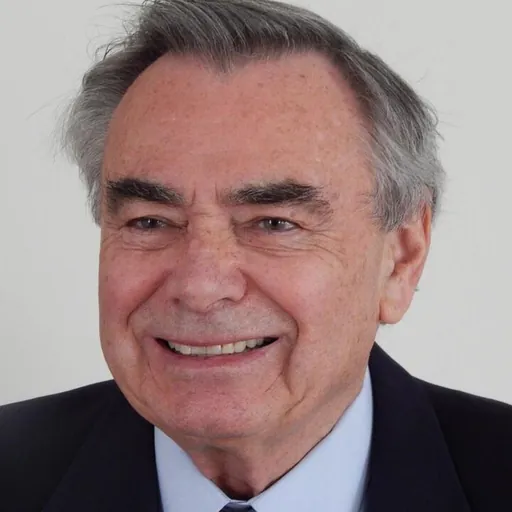
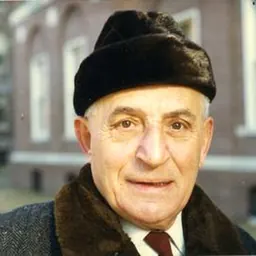
Charles P. O'Brien
American research scientist, medical educator and a leading expert in the science and treatment of addiction
About Charles P. O'Brien
Born 1939. Charles P. O'Brien is an American psychiatrist, physician, neurophysiologist and university teacher.
Charles P. O'Brien (born August 20, 1939, New Orleans, Louisiana) is a research scientist, medical educator and a leading expert in the science and treatment of addiction. He is board certified in neurology, psychiatry and addiction psychiatry.
Career O'Brien earned MD and PhD degrees from Tulane University in 1964 and 1966, respectively, In 1971 O'Brien founded and became director of a clinical research program consisting of a group of VA and University of Pennsylvania scientists. From 1971 until 2013, he served as director of this research center, called the Center for Studies of Addiction at the University of Pennsylvania. He and the center's other researchers made many discoveries about the treatment of addictive disorders, and published their research findings in more than 500 research papers, all authored or co-authored by O'Brien, and published in peer-reviewed scientific journals. O'Brien and his colleagues at the Center for Studies of Addiction received personal praise, for their innovative research and results in helping patients recover from drug addiction, from U.S. President George H.W. Bush during a September 1991 tour of the center.
In addition to conducting scientific research, O'Brien also has advised U.S. government authorities on policies affecting the availability of drugs, including alcohol and tobacco, as well as on government's proper role in preventing and treating addictive disorders. He has also provided policy advice about drugs and addiction to many other countries, especially France.
In the US, O'Brien has chaired or served as a member of many Institute of Medicine committees dealing with science and drug abuse policy matters. From 2007 to 2013, he served as chairperson of the Substance Use Disorders Committee of the American Psychiatric Association.
Naltrexone, an opioid receptor antagonist, was already in use by the early 1980s as a medication for treating addiction to heroin and other opioids, but not alcohol addiction. Based on animal studies, O'Brien in the 1980s theorized that alcohol produced pleasure by releasing endorphins – the brain's naturally occurring opioids. Accordingly, blocking endorphin receptors might help alcoholics resist drinking. In 1983, the Food and Drug Administration (FDA) granted permission to test this theory on patients. With funding provided by the U.S. Veterans Administration Substance Abuse Center in Philadelphia, O'Brien and one of his students, fellow University of Pennsylvania psychiatrist Joseph Volpicelli, and others conducted a study in which all addiction patients received counseling, but half of them also received naltrexone, while the other half received a placebo. During three months of treatment, those receiving naltrexone had fewer relapses to heavy drinking and reported less craving and less pleasure when they did drink. Working from these observations, O'Brien and his colleagues discovered a new treatment for alcoholism using naltrexone. In 1995, the FDA approved naltrexone for the treatment of alcohol dependence, ushering in a new era of alcoholism treatment which, prior to this time, had been limited mainly to psychotherapy and psychosocial interventions such as Alcoholics Anonymous.
In later studies, O'Brien and his colleagues noticed that naltrexone seemed to work effectively on only a subset of alcohol-addicted patients. The researchers began investigating why some alcoholics respond well to naltrexone while others do not. Their work led to the discovery of genes that determine the extent of pleasure one feels when drinking alcohol. Individuals with a particular genetic variant have a sensitive endogenous opioid system that is activated by alcohol, thereby producing stimulation and euphoria. Aimed at establishing a genomic sub-category of alcoholism, this work seemed to support the movement toward "personalized medicine" in the treatment of alcoholism. O'Brien and his colleagues never applied for a patent on the discovery of naltrexone's effectiveness for treating alcohol addiction, so this treatment continues to be used at no cost worldwide.
He has served as president of both the American College of Neuropsychopharmacology and the Association for Research in Nervous and Mental Disease. where he continued for many years to be a visiting professor the American Psychiatric Association Research Award in 2000 the gold medal for Research from the Society on Biological Psychiatry in 2010 the James B. Isaacson Award from the International Society for Biomedical Research on Alcoholism in 2012
Don’t just read it —
keep it.
Full-length biographies made to live with: read them, listen on the way to work, watch them tonight.
- E-book
- Audio
- Video
Instant download · yours to keep · every purchase keeps this site free
Important facts
Related people
Same field, nearest in time



Contemporaries
People whose lives overlapped Charles P. O'Brien's





Frequently asked questions
Who is Charles P. O'Brien?
American research scientist, medical educator and a leading expert in the science and treatment of addiction
When was Charles P. O'Brien born?
Charles P. O'Brien was born on 20 August 1939 in New Orleans.
What is Charles P. O'Brien's occupation?
Charles P. O'Brien is a psychiatrist, physician, neurophysiologist and university teacher.
What nationality is Charles P. O'Brien?
Charles P. O'Brien is American.
Sources & further reading
· Wikipedia: Charles P. O'Brien
Cite this page
APA: Biography.guide. (2026). Charles P. O'Brien. https://biography.guide/charles-p-o-brien/
MLA: "Charles P. O'Brien." Biography.guide, https://biography.guide/charles-p-o-brien/.
Chicago: "Charles P. O'Brien." Biography.guide. https://biography.guide/charles-p-o-brien/.
Data last updated: 2026-09-20 · Spot an error? Report a correction.
Portrait: Wikimedia Commons · author & licence
Page generated 2026-09-27 04:58 UTC