
Charles Norris-Newman
British journalist, adventurer and intelligence officer with the Russian Navy
About Charles Norris-Newman
Lived 1852 – 1920 (aged 67–68). Charles Norris-Newman was a British intelligence officer and journalist.
Charles Louis Marie William Norris-Newman (22 August 1852 – May 1920) was a British journalist, adventurer and intelligence officer with the Russian Navy. He was present at the 1870–1871 Siege of Paris and was in Spain during the Third Carlist War (from 1872) and in Egypt with General Charles George Gordon.
Norris-Newman was in Southern Africa from 1877 and was the only newspaper correspondent with the British forces during the invasion of Zululand in 1879, reporting for The Standard. He was present at the Action at Sihayo's Kraal, narrowly avoided the massacre of the British at the Battle of Isandlwana and was among the first group to ride into Rorke's Drift after the battle. Norris-Newman took up arms in the Battle of Gingindlovu, was the first to ride into the besieged settlement of Eshowe and was present at the final action, the Battle of Ulundi. He remained in the area after the war and covered the brief First Boer War of 1880–1881, though he was too late to witness any fighting. He afterwards joined Digby Willoughby in Basutoland and Madagascar. In 1885 he was town clerk and treasurer to the municipality of Aliwal North in Cape Colony but was dismissed for embezzlement. Norris-Newman afterwards reported on military campaigns in Central Africa. By the mid-1890s he was with the British South Africa Company in their campaign to take over Matabeleland. He published two newspapers, worked for Reuters and managed a messenger company. He worked for the company as an intelligence officer and colonial official in the Second Matabele War of 1896–1897.
Norris-Newman afterwards spent time in East Asia and in 1900, having fled creditors in China, married a former prostitute in Japan. His wife's former occupation excluded Norris-Newman from polite society. Norris-Newman was abusive to his wife and child, who died young, and she divorced him in 1908. From 1902 Norris-Newman worked for the Imperial Russian Navy first as an English teacher and then in publishing a journal in the Far East, eventually being granted the rank of lieutenant-colonel. He was accused by George Ernest Morrison, political adviser to the Chinese Republic, of propaganda against the Japanese during the 1904–1905 Russo-Japanese War. In later life he worked for newspapers in China.
Early life and career
Norris-Newman was born on 22 August 1852 at Elvington Hall, Yorkshire, England. He was the son of C. Sherwood Newman and the Countess de Rosa Y Robyns. He was educated at Sherborne, Lubeck and Harrow and is also known to have received a military education. Norris-Newman was present at the Siege of Paris during the Franco-Prussian War and was decorated for his service during the battle by the city's governor Louis-Jules Trochu. He accompanied Infante Carlos, Duke of Madrid during the Third Carlist War (1872–1876) and was with General Charles George Gordon during his service in Egypt (from 1873).
Anglo-Zulu War
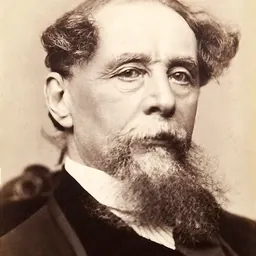
Norris-Newman arrived in Southern Africa in 1877. The British press showed little interest in the occupation, their war correspondents being pre-occupied with the ongoing Second Anglo-Afghan War. Norris-Newman was contracted as a special correspondent to The Standard but by arrangement his reporting was also made available to the local newspapers the Times of Natal and the Cape Standard and Mail. The unit's commander, Rupert la Trobe Lonsdale, gave him the nickname "Noggs", after the character Newman Noggs in Charles Dickens' Nicholas Nickleby. He was the first man with the invading force to cross the Buffalo river into Zululand on 11 January, swimming his horse across at 5:00am before the military began their crossing by pont. Norris-Newman accompanied Chelmsford in observing the first engagement of the war, the 12 January Action at Sihayo's Kraal.
Norris-Newman avoided death in the 22 January Battle of Isandlwana, in which the Centre Column's camp in Zululand was wiped out, as he had accompanied the 3rd NNC and Chelmsford on a reconnaissance expedition that morning. Norris-Newman gathered news of the defence before riding to the telegraph office at Pietermaritzburg, from where he filed a report to The Standard. It reached Cape Town by telegraph from where it had to be carried by ship to Cape Verde where a telegraph line connected to London. The story, the first news of the defeat, appeared in the British press twenty days after the battle. The report established Norris-Newman's name in journalism.
Following the defeat the British press dispatched their best correspondents to Natal, including Melton Prior, Charles Edwin Fripp and Archibald Forbes. The Standard sent F.R. MacKenzie to assist Norris-Newman. Norris-Newman also accompanied the relief expedition for the Siege of Eshowe. During the expedition he was present at the 2 April Battle of Gingindlovu. At one point in that battle he judged the fighting so desperate that he grabbed a rifle and helped, shooting at least one Zulu. After the battle he and a friend, a wagon driver named Palmer, went out into the field and found a group of three dead Zulu that they thought they had killed. They took from them items of their dress and weapons as trophies. Norris-Newman was the first man to enter Eshowe upon its relief, racing the correspondent of the Argus for the honour and beating him by five minutes. Norris-Newman was present in the decisive final British victory of the war, the 4 July Battle of Ulundi.
Norris-Newman's account of the Anglo-Zulu War, On Campaign with the British Army in the Zulu War of 1879, was published in 1880 by W. H. Allen & Co. Zulu War historian Donald R. Morris regarded the book as "brisk and accurate" for the parts of the war that Norris-Newman witnessed but otherwise liable to include hearsay. Norris-Newman featured in the 1979 film Zulu Dawn, portrayed by English actor Ronald Lacey as an "acidic" commentator on the invasion.
Later career in Africa
Norris-Newman was still in Southern Africa when the First Boer War broke out late in 1880 between the British and the Transvaal Boers. He was determined to report the war from the Boer point of view but failed to reach their lines before the ceasefire was declared.
By 1882 he was in Basutoland, in the wake of the Basuto Gun War, and afterwards joined the adventurer and mercenary Digby Willoughby in Madagascar.
By 1885 Norris-Newman was back in Southern Africa, serving as town clerk and treasurer to the municipality of Aliwal North in Cape Colony. He was dismissed after 18 months for embezzlement of town funds. Norris-Newman was then in Zanzibar and Central Africa until 1891, reporting on military campaigns there. He was also an agent for the Reuters news service and set up a postal service using a series of runners from Bulawayo southwards to the telegraph line that was being constructed from the Tati Goldfields. In 1895 he published Matabeleland And How We Got it on how the BSAC acquired the territory.
By 1896, when he visited England on a sightseeing and lecture tour, Norris-Newman was editor and proprietor of the Rhodesia Weekly Review.
East Asia
Norris-Newman left Africa for East Asia before the turn of the century. Finch was a former prostitute and Norris-Newman's association with her made it difficult for him to mix in polite society. He was during this period granted the rank of lieutenant-colonel by Russia and paid a retainer of $1,000 a month. Morrison noted that despite Norris-Newman's high level of remuneration he was still dissolute, having failed to honour a large number of promissory notes. By 1912 he had given an album of 4,000 stamps to a C. H. Meekle to be sold. Meekle passed these stamps to Charles H. Hussman of the Columbia Supply Company in the United States but no money reached Norris-Newman. Hussman claimed the album was security for a loan he had provided. Norris-Newman launched a court case to recover the stamps, or their value which he stated as $1,500. A jury in the court of in March 1912 ordered Hussman to return the album or pay Norris-Newman $750. His stamp collection was auctioned on 19 June 1913.
Norris-Newman died of stomach cancer at Victoria Hospital, Tianjin in May 1920.
Don’t just read it —
keep it.
Full-length biographies made to live with: read them, listen on the way to work, watch them tonight.
- E-book
- Audio
- Video
Instant download · yours to keep · every purchase keeps this site free
Important facts
People in Charles Norris-Newman's life
Named in this biography and alive at the same time




Related people
Same field, nearest in time


Contemporaries
People whose lives overlapped Charles Norris-Newman's


Frequently asked questions
Who was Charles Norris-Newman?
British journalist, adventurer and intelligence officer with the Russian Navy
When was Charles Norris-Newman born?
Charles Norris-Newman was born on 22 August 1852 in Elvington Hall.
When did Charles Norris-Newman die?
Charles Norris-Newman died in 1920 in Tianjin.
What was Charles Norris-Newman's occupation?
Charles Norris-Newman was an intelligence officer and journalist.
What nationality was Charles Norris-Newman?
Charles Norris-Newman was British.
Sources & further reading
· Wikipedia: Charles Norris-Newman
· DBpedia: Charles Norris-Newman
Cite this page
APA: Biography.guide. (2026). Charles Norris-Newman. https://biography.guide/charles-norris-newman/
MLA: "Charles Norris-Newman." Biography.guide, https://biography.guide/charles-norris-newman/.
Chicago: "Charles Norris-Newman." Biography.guide. https://biography.guide/charles-norris-newman/.
Data last updated: 2026-09-20 · Spot an error? Report a correction.
Page generated 2026-09-27 05:19 UTC