
About Charles Noguès
Lived 1876 – 1971 (aged 94). Charles Noguès was a French military personnel.
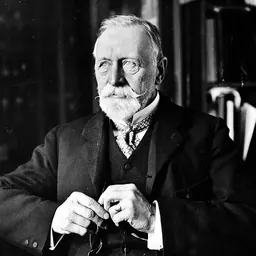
Charles Noguès (; 13 August 1876 – 20 April 1971) was a French general. He graduated from the École Polytechnique, and he was awarded the Grand Croix of the Legion of Honour in 1939.
He served in field artillery units during World War I. He became commander of 19th Army Corps (France) in French Algeria in 1933. He was appointed Resident General in Morocco by the Léon Blum administration in 1936 where he spearheaded violent campaigns by the colonial administration to quell the labor movement. He was considered a rightist. He graduated from Ecole Polytechnique. Noguès was appalled by news that the French government was seeking an armistice with Germany. On 17 June 1940, he telegraphed to Bordeaux, where the government sat: "The whole of North Africa is appalled. The troops beg to continue the struggle if the government has no objection. I am ready to take responsibility for this attitude with all the risks that it entails," i.e. asking for a hint to carry on fighting. However, he did not approve of General Charles de Gaulle's call from London on 18 June to carry on fighting, telling the British liaison officer that he thought de Gaulle's attitude "unseemly" and forbidding the North African press from publishing de Gaulle's appeal.
Noguès accepted the armistice on 22 June, partly because he claimed that Admiral François Darlan would not let him have the French fleet to continue hostilities against the Axis powers. He eventually agreed under pressure from Maxime Weygand's emissary General Louis Koeltz, telegraphing Weygand: "it covers me with shame". Sultan Mohammed V refused "Vichy’s plan to ghettoize and deport Morocco’s quarter of a million Jews to the killing factories of Europe", Leon Sultan, of the Moroccan Communist Party, for example, was disbarred.
Noguès was critical of movements in Morocco for reforms in colonial administration. He was of the belief that Moroccan reformers pursued independence and would not be satisfied with liberal reforms in France's colonial administration. Charles Noguès addresses French and Moroccans after the Allied invasion in November 1942 on the front page of es-Saada, an Arabic propaganda newspaper that was published by the French in Morocco. When the Allies landed in North Africa on 8 November 1942, he ordered the troops under his command to resist, until the conclusion three days later of the ceasefire, ordered by Darlan. In June 1943, he resigned from his position as Resident General of France in Morocco. Replaced by Gabriel Puaux, he retired to Portugal.
In 1947, he was sentenced in absentia to 20 years of forced labour. He returned to France in June 1954 and became a prisoner there but was immediately released.
Personal life He was married to the daughter of Théophile Delcassé.
Don’t just read it —
keep it.
Full-length biographies made to live with: read them, listen on the way to work, watch them tonight.
- E-book
- Audio
- Video
Instant download · yours to keep · every purchase keeps this site free
Important facts
People in Charles Noguès's life
Named in this biography and alive at the same time







Related people
Same field, nearest in time


Contemporaries
People whose lives overlapped Charles Noguès's
Frequently asked questions
Who was Charles Noguès?
French soldier (1876–1971)
When was Charles Noguès born?
Charles Noguès was born on 13 August 1876 in Monléon-Magnoac.
When did Charles Noguès die?
Charles Noguès died on 20 April 1971 in 17th arrondissement of Paris.
What was Charles Noguès's occupation?
Charles Noguès was a military personnel.
What nationality was Charles Noguès?
Charles Noguès was French.
Sources & further reading
Cite this page
APA: Biography.guide. (2026). Charles Noguès. https://biography.guide/charles-nogues/
MLA: "Charles Noguès." Biography.guide, https://biography.guide/charles-nogues/.
Chicago: "Charles Noguès." Biography.guide. https://biography.guide/charles-nogues/.
Data last updated: 2026-09-22 · Spot an error? Report a correction.
Page generated 2026-09-27 05:24 UTC