
About Charles Moureu
Lived 1863 – 1929 (aged 66). Charles Moureu was a French chemist, pharmacologist and university teacher, known for IUPAC.
François Charles Léon Moureu (19 April 1863, in Mourenx – 13 June 1929, in Biarritz) was a French organic chemist and pharmacist. In 1902 Charles Moureu published , translated into English as Fundamental principles of organic chemistry.
During World War I, Charles Moureu was vice-chairman of France's Committee for Gas Warfare. In this role, he established 16 chemistry laboratories in Paris, supervising their work until 1918. Moureu also became chairman of the Committee of National Defence when it was established in 1925, leading it until his death in 1929. and the founding President of the International Union of Pure and Applied Chemistry (IUPAC) from 1920 to 1922.
Education Charles Moureu attended school in Bayonne. At 17, he apprenticed with his older brother, Félix Moureu, in his brother's pharmacy in Biarritz, in preparation for studies in pharmacy.
From 1884 to 1891 Moureu studied at the École Supérieure de Pharmacie in Paris. He received the school's silver medal in 1886, and both its gold medal and the Laillet Prize in 1887. In addition, he interned in the Hôpitaux de Paris from 1886 to 1891, where he was given first place rank of the interns in 1887 and in 1889. with the dissertation Contribution à l'étude de l'acide acrylique et de ses dérivés (Contribution to the study of acrylic acid and its derivatives). He obtained his agrégation in 1899.
Career
From 1907 onward, Charles Moureu was a professor of chemical pharmacy at the École supérieure de Pharmacie in Paris. In 1913 he was named director of the laboratory of hydrological physical chemistry at the École pratique des hautes études. Charles Moureu was appointed vice-chairman of France's Committee for Gas Warfare. Moreu headed the Section des produits agressifs (Aggressive Products Section). In this role, he was responsible for 16 chemistry laboratories in Paris, supervising and coordinating their work until 1918.
Moureu supported initiatives for international cooperation and standardization among chemists. He served as a vice-president of the Société chimique de France (SCF) in 1910. Moureu was the founding President of the International Union of Pure and Applied Chemistry (IUPAC), holding the position from 1920 to 1922. In 1922, he visited Washington, D.C. for discussions on the use of gas in warfare. He visited a number of universities in the United States and Canada, and was given an honorary degree by the University of Montreal. Moureu became chairman of the French Committee of National Defence when it was established in 1925, leading it until his death in 1929. In addition, he studied acetylene compounds, phenolic compounds, plant essences, and rare gases found in wells and mines. It was first published in the Bulletin of the Chemical Society of France in 1922. The autoxidation reactions that Moureu and Dufraisse described occur spontaneously in most organic products in the presence of oxygen from the air and certain catalysts. Autoxidation affects virtually all living organisms. Moureu identified catalysts that could trigger such reactions, and other compounds that could slow or inhibit such reactions. He called the inhibitors "antioxygens", now known as "antioxidants". Moureu is best known for this pioneering research. It has led to the use of antioxidants in the rubber and vegetable oil industries, and to widespread applications in foods and medicines. He developed methods for analyzing the gaseous components of mineral springs, and carried out comparative analyses of at least 108 springs.
Death Charles Moureu died on June 13, 1929.
Subscribers funded the creation of a monument in his honor in the Parc Beaumont in Pau in 1933. The bust was sculpted by Ernest Gabard. Further celebrations were held in Pau and Mourenx on the centenary of his birthday in 1963.
Selected works
Published books by Moureu include: (doctoral thesis, Contribution to the study of acrylic acid and its derivatives) (The azoles, lecture delivered at the laboratory of Charles Friedel) (Theoretical study of pyridine compounds and hydropyridines) Translated into English as (Chemistry and war: science and the future) (Speeches and lectures on science and its applications)
Published papers include:
Don’t just read it —
keep it.
Full-length biographies made to live with: read them, listen on the way to work, watch them tonight.
- E-book
- Audio
- Video
Instant download · yours to keep · every purchase keeps this site free
Important facts
Family & relationships
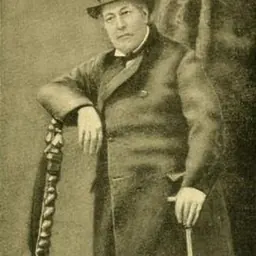
People in Charles Moureu's life
Named in this biography and alive at the same time

Related people
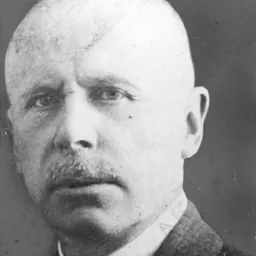
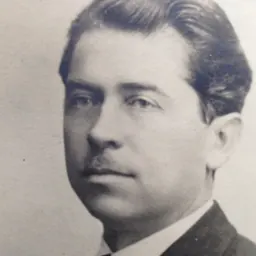
Same field, nearest in time


Contemporaries
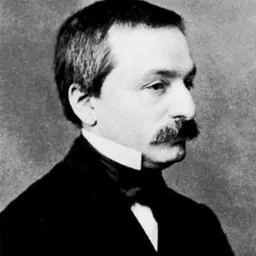
People whose lives overlapped Charles Moureu's



Frequently asked questions
Who was Charles Moureu?
French chemist (1863-1929)
When was Charles Moureu born?
Charles Moureu was born on 19 April 1863 in Mourenx.
When did Charles Moureu die?
Charles Moureu died on 13 June 1929 in Biarritz.
What was Charles Moureu's occupation?
Charles Moureu was a chemist, pharmacologist and university teacher.
What was Charles Moureu known for?
Charles Moureu was known for IUPAC.
What nationality was Charles Moureu?
Charles Moureu was French.
Sources & further reading
Cite this page
APA: Biography.guide. (2026). Charles Moureu. https://biography.guide/charles-moureu/
MLA: "Charles Moureu." Biography.guide, https://biography.guide/charles-moureu/.
Chicago: "Charles Moureu." Biography.guide. https://biography.guide/charles-moureu/.
Data last updated: 2026-09-20 · Spot an error? Report a correction.
Page generated 2026-09-27 05:20 UTC