
About Charles Morgan
Lived 1930 – 2009 (aged 78). Charles Morgan was an American lawyer, known for Julian Bond, Muhammad Ali and Reynolds v. Sims.
Charles "Chuck" Morgan Jr. (March 11, 1930 – January 8, 2009) was an American civil rights attorney from Alabama who played a key role in establishing the principle of "one man, one vote" in the Supreme Court of the United States decision in the 1964 case Reynolds v. Sims and represented Julian Bond and Muhammad Ali in their legal battles.
Biography
Early life Morgan was born in Cincinnati, Ohio, on March 11, 1930, and was raised in Kentucky. He moved with his family to Birmingham, Alabama, at the age of 15. Morgan attended the University of Alabama, where he earned his law degree and met his wife, the former Camille Walpole. His statements harmed his legal practice and led to death threats against him and his family. These threats caused Morgan to have to close his law practice down and move his family out of Birmingham.
The two biggest points of democratic power Morgan focused on were voting and equal dealing of justice among all citizens but specifically for Southern blacks. over separatism. Morgan had always had close ties and favorable relations with groups he did not necessarily agree with, though, such as segregationists and "silent moderates". He fought three court cases concerning Vietnam War protests as a leader of the ACLU. Through these cases, he was responsible for directing international attention to the limitations placed on soldiers' free speech. In 1972, the ACLU named Morgan as the legislative director of its national office in Washington, D.C.
Morgan and a group of other lawyers filed a lawsuit in 1962 that aimed to require reapportionment of the Alabama Legislature, to undo a system under which rural counties in southern Alabama had far greater voting strength than areas in the urbanized northern portion of the state. In the 1964 Supreme Court case Reynolds v. Sims, Morgan successfully argued that districts in state legislatures needed to be of nearly equal size, establishing the principle of "one man, one vote" to effectively end the use of gerrymandering that gave greater political power to the rural legislators who controlled the Alabama Legislature.
After Julian Bond was prevented from taking his seat in the Georgia House of Representatives after having made statements opposing United States involvement in the Vietnam War, Morgan appealed to the United States Supreme Court successfully to have Bond seated. Levy was sentenced to three years in prison, and was released after serving more than two years.
Private practice and later life After leaving the ACLU, Morgan spent the remainder of his career in private practice. He represented the Tobacco Institute in its opposition to smoking bans and won a number of cases for Sears, Roebuck and Company in which the Equal Employment Opportunity Commission (EEOC) had accused the company of racial and sexual discrimination due not to complaints from employees but rather due to EEOC analysis of data from Sears which was interpreted as evidence of discrimination. Sears won their case, in part, because the EEOC was unable to produce a single witness who alleged discriminatory hiring or promotion within Sears.
During his lifetime, Charles Morgan wrote two books: A Time to Speak (describing his experiences prior to 1963) and One Man, One Vote (describing his experiences in the 1960s and 1970s). In A Time to Speak, Morgan wrote: "What's it like living in Birmingham? No one ever really has known and no one will until this city becomes part of the United States. Birmingham is not a dying city; it is dead."
Morgan died at age 78 on January 8, 2009, at his home in Destin, Florida, as a result of complications from Alzheimer's disease.
Works
Charles Morgan: A Time to Speak. New York : Holt, Rinehart and Winston, 1964.
Don’t just read it —
keep it.
Full-length biographies made to live with: read them, listen on the way to work, watch them tonight.
- E-book
- Audio
- Video
Instant download · yours to keep · every purchase keeps this site free
Important facts
People in Charles Morgan's life
Named in this biography and alive at the same time
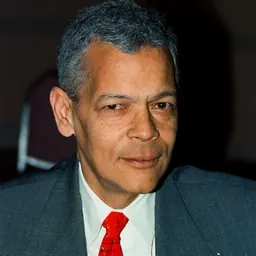
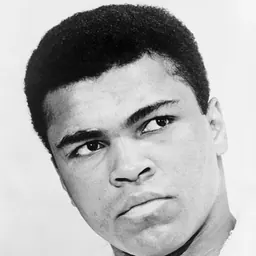
Related people
Same field, nearest in time



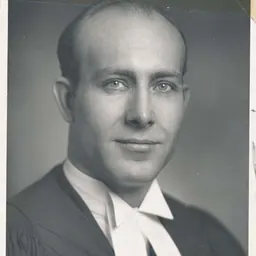
Contemporaries
People whose lives overlapped Charles Morgan's

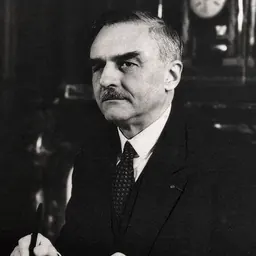
Frequently asked questions
Who was Charles Morgan?
American civil rights attorney (1930–2009)
When was Charles Morgan born?
Charles Morgan was born on 11 March 1930 in Cincinnati.
When did Charles Morgan die?
Charles Morgan died on 8 January 2009 in Destin, Florida.
What was Charles Morgan's occupation?
Charles Morgan was a lawyer.
What was Charles Morgan known for?
Charles Morgan was known for Julian Bond, Muhammad Ali and Reynolds v. Sims.
What nationality was Charles Morgan?
Charles Morgan was American.
Sources & further reading
Cite this page
APA: Biography.guide. (2026). Charles Morgan. https://biography.guide/charles-morgan/
MLA: "Charles Morgan." Biography.guide, https://biography.guide/charles-morgan/.
Chicago: "Charles Morgan." Biography.guide. https://biography.guide/charles-morgan/.
Data last updated: 2026-09-22 · Spot an error? Report a correction.
Page generated 2026-09-27 05:05 UTC