
About Charles Molnar
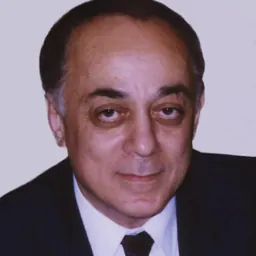
Lived 1935 – 1996 (aged 61). Charles Molnar was an American computer scientist and university teacher.
Charles Edwin Molnar (1935–1996) was a co-developer of one of the first minicomputers, the LINC (Laboratory Instrument Computer), while a graduate student at Massachusetts Institute of Technology (MIT) in 1962. His collaborator was Wesley A. Clark.
The LINC originated decades before the advent of the personal computer. Its development was the result of a National Institutes of Health (NIH) program that placed 20 copies of an early LINC prototype in selected biomedical research laboratories nationwide. Later, the LINC was produced in greater numbers by Digital Equipment Corporation and other computer manufacturers. Later he was on the faculty of Washington University in St. Louis.
Charlie Molnar was also well known as a pioneer in the modeling of the auditory system, especially numerical models of the function of the cochlea (the inner ear).
When he died in 1996, he was working at Sun Microsystems on asynchronous circuits with Ivan Sutherland.
Molnar received a bachelor's degree (1956) and a master's degree (1957) in electrical engineering from Rutgers University, where he was a member of the Cap and Skull Society, and received a doctoral degree (1966) from MIT in electrical engineering.
Important publications
Molnar's significant publications included the following:
Clark, W.A. and C.E. Molnar, 1964, "The LINC," Anal. New York Academy of Sciences, Vol 115, pp. 653–658. Clark, W.A. and C.E. Molnar, 1965, "A Description of the LINC," Computers in Biomedical Research, Vol II, B.D. Waxman and R. Stacey, eds, Academic Press, New York, NY. Model for the Convergence of Inputs Upon Neurons in the Cochlear Nucleus, D.Sc. Thesis, MIT, 1966. Chaney, T.J. and C.E. Molnar, "Anomalous Behavior of Synchronizer and Arbiter Circuits," IEEE Trans. on Computers, Vol. C-22, No. 4, pp. 421–422, Apr. 1973. Kim, D.O., C.E. Molnar, and R. R. Pfeiffer, 1973, "A system of nonlinear differential equations modeling basilar-membrane motion," J. Acoust. Soc. Am. 54(6):1517–29 Dec. 1973. Clark, W.A. and C.E. Molnar, 1974, "Macromodular Computer Systems," Computers in Biomedical Research, pp. 45–85, Vol IV, B.D. Waxman and R. Stacey, eds, Academic Press, New York, NY. Kim, D.O. and C.E. Molnar: Cochlear mechanics: Measurements and models, in The Nervous System, Vol. 3, Human Communication and Its Disorders, edited by DB Tower (Raven, New York) 1975; pp 57–68 Sproull, R.F., I.E. Sutherland, and C.E. Molnar, 1994, "The Counterflow Pipeline Architecture," IEEE Design and Test of Computers, Vol. 11, no.3, pp. 44–59.
Don’t just read it —
keep it.
Full-length biographies made to live with: read them, listen on the way to work, watch them tonight.
- E-book
- Audio
- Video
Instant download · yours to keep · every purchase keeps this site free
Important facts
People in Charles Molnar's life
Named in this biography and alive at the same time

Related people
Same field, nearest in time




Contemporaries
People whose lives overlapped Charles Molnar's





Frequently asked questions
Who was Charles Molnar?
American computer scientist (1935–1996)
When was Charles Molnar born?
Charles Molnar was born on 14 March 1935 in Newark.
When did Charles Molnar die?
Charles Molnar died on 13 December 1996 in Sunnyvale.
What was Charles Molnar's occupation?
Charles Molnar was a computer scientist and university teacher.
What nationality was Charles Molnar?
Charles Molnar was American.
Sources & further reading
Cite this page
APA: Biography.guide. (2026). Charles Molnar. https://biography.guide/charles-molnar/
MLA: "Charles Molnar." Biography.guide, https://biography.guide/charles-molnar/.
Chicago: "Charles Molnar." Biography.guide. https://biography.guide/charles-molnar/.
Data last updated: 2026-09-20 · Spot an error? Report a correction.
Page generated 2026-09-27 04:57 UTC