
About Charles Maries
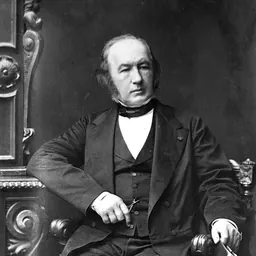
Lived 1851 – 1902 (aged 50). Charles Maries was a British botanist, botanical collector and scientific collector.
Charles Maries (18 December 1851 – 11 October 1902) was an English botanist and plant collector who was sent by James Veitch & Sons of Chelsea, London to search for new hardy plants in Japan, China and Taiwan between 1877 and 1879; there he discovered over 500 new species,
Early life Maries was born in Hampton Lucy, Warwickshire, the youngest of five sons born to George and Mary Maries. Reverend Henslow went on to become the Royal Horticultural Society's Professor of Botany. His knowledge of Japanese and Chinese plants led to him being invited by Harry Veitch to "undertake an exploring expedition to the Far East, the object of which was to obtain seeds of the coniferous trees of Japan, and to explore the great Yangtze valley of China".
From Yokohama and Tokyo, Maries proceeded overland to Nikkō and thence to Aomori, the northernmost port of the main island. According to the account in "Hortus Veitchii", whilst waiting at Aomori for a steamer to convey him to Hakodate on the island of Hokkaidō: Maries noticed a conifer new to him growing in a garden, and learnt that it could be found in quantity on a neighbouring mountain. He went in search, and had reached a height of 3,500 ft., when it became obvious that the bamboo scrub formed an impassable barrier on that side of the mountain, and he reluctantly had to turn back, although the object of his search could plainly be seen. The following day he again made the ascent, but this time from the north side, and he succeeded in procuring cones of a new species, since named by Maxwell T. Masters, Abies mariesii.
From Sapporo he travelled by way of Chitose and Yūbetsu, visiting Urakawa and Samani. Near Samani, he discovered the pretty little Dracocephalum ruyschiana and obtained seed to send to Chelsea. Making Horoizumi, on Cape Erimo, his headquarters, Maries stayed in Hokkaidō from June to October 1877, exploring the mountains and making extensive entomological and botanical collections. Whilst exploring the forests of Hokkaido and the Hidaka Mountains, he discovered Platycodon grandiflorus and Acer nikoense.
Maries then returned to Shanghai, on mainland China, from where, in the spring of 1878, he visited Zhenjiang, Jiujiang and nearby Mount Lushan, where he discovered a white form of Daphne genkwa as well as Hamamelis mollis, Pseudolarix amabilis, Rhododendron fortunei and Loropetalum chinense. In the Lushan Mountains, Maries visited the Temple of Teen Cha where he saw magnificent trees of Larix kaempferi, Cryptomeria japonica and Liriodendron chinense, as well as Lilium lancifolium formosanum. On this trip Maries suffered severely from sunstroke and returned to the coast.
After spending the summer of 1878 back in Japan, where he collected seeds of conifers, he returned to China in December, basing himself at Hankou on the Yangtze River. In the early spring of 1879, he set off for Yichang, 800 miles higher up the river. In the gorges of Yichang, Maries found Primula obconica, and sent seed to Chelsea. According to Hortus Veitchii, "he was not sufficiently gentle, and was often threatened and occasionally robbed of his baggage".
By the summer of 1879, he was back in Japan – on this trip seeds of many Japanese oaks were gathered and the beautiful dwarf bamboos, including the Square Bamboo, which he successfully introduced to England.
Maries returned to England in February 1880, when his herbarium was sent to the Royal Botanic Gardens, Kew and his collection of insects was accepted by the British Museum.
India Maries had left England before 1881 (his name does not appear in the 1881 census) to take up employment in India and in 1882, he was recommended by Sir Joseph Hooker to the post of Superintendent of the gardens of the Maharajah of Darbhanga, where he laid out the very extensive grounds which surround the palaces.
While working in India, Maries became an expert on mangoes, studying the texture, flavour, colour, history and location of mangoes that grew both wild and in cultivation. He wrote and illustrated a manuscript entitled Cultivated Mangoes of India but it was never published and is now in the archive at the Royal Botanic Gardens, Kew.
Family and personal life On 19 November 1881, he married Martha Maria Kerr, Acer polymorphum Chamaecyparis obtusa "Mariesii" Chimonobambusa quadrangularis (Square Bamboo) Dracocephalum ruyschiana Hamamelis mollis Hydrangea macrophylla "Mariesii" Hydrangea rosea (several new and distinct forms) Osmunda japonica corymbifera Primula obconica Pseudolarix amabilis Rhododendron fortunei Schizophragma hydrangeoides Spiraea palmata alba Styrax obassia Viburnum plicatum "Mariesii"
Don’t just read it —
keep it.
Full-length biographies made to live with: read them, listen on the way to work, watch them tonight.
- E-book
- Audio
- Video
Instant download · yours to keep · every purchase keeps this site free
Important facts
People in Charles Maries's life
Named in this biography and alive at the same time


Related people
Same field, nearest in time




Contemporaries
People whose lives overlapped Charles Maries's


Frequently asked questions
Who was Charles Maries?
British botanist (1851-1902)
When was Charles Maries born?
Charles Maries was born on 18 December 1851 in Hampton Lucy.
When did Charles Maries die?
Charles Maries died on 11 October 1902 in Gwalior.
What was Charles Maries's occupation?
Charles Maries was a botanist, botanical collector and scientific collector.
What nationality was Charles Maries?
Charles Maries was British.
Sources & further reading
Cite this page
APA: Biography.guide. (2026). Charles Maries. https://biography.guide/charles-maries/
MLA: "Charles Maries." Biography.guide, https://biography.guide/charles-maries/.
Chicago: "Charles Maries." Biography.guide. https://biography.guide/charles-maries/.
Data last updated: 2026-09-20 · Spot an error? Report a correction.
Page generated 2026-09-27 05:23 UTC