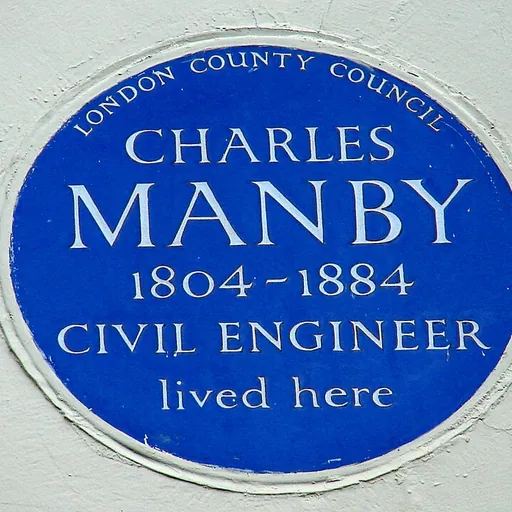
About Charles Manby
Lived 1804 – 1884 (aged 80). Charles Manby was a civil engineer and engineer, known for Institution of Civil Engineers.
Charles Manby (4 February 1804 – 31 July 1884) was Secretary of the Institution of Civil Engineers from November 1839 to 1856, and engineer of the first iron steamer to cross the English Channel. Fluent in French, he installed gas piping into Paris and advised on the construction of the Suez Canal.
Personal life Manby was born in Cowes on the Isle of Wight to Aaron and Juliana Manby, née Fewster. Aaron Manby was a successful engineer building bridges, ships and engines. As a child Charles attended a Roman Catholic seminary; in 1814 he attended well disciplined Saint-Servan College near Rennes, but returned to England in 1815 having turned down the opportunity of joining the military under a commission organised by his uncle. The ship was then reassembled with Charles Manby supervising the installation of the vessel's steam engine. Despite being only 18 years old, Manby was designated as the chief engineer during its maiden voyage on 10 June 1822 with Sir Charles Napier as captain. During this voyage across the English Channel, the vessel became the first iron ship to carry cargo from London to Paris. The company had been founded by Daniel Wilson and Manby's father the year before. Still employed in France by his father, Manby worked at a gas works at Ternes, Manby was then employed by the French government creating France's state-owned tobacco factories. Manby had become involved with the Arctic explorer Sir John Ross's India Steamship Company which he joined in 1838. The company's objective was to establish a steamship service to India, but it was quickly taken over by the Peninsular and Oriental Steam Navigation Company. The next secretary was Manby's former assistant James Forrest. Manby remained involved in the organisation and participated in its activities as Honorary Secretary until his death.
Manby helped Samuel Colt's company to create a factory in Pimlico to manufacture firearms. Colt had received a lot of interest in his revolvers at the Great Exhibition in 1851
In 1853 Manby became a Fellow of the Royal Society and in 1856 he became the London representative of locomotive manufacturer Robert Stephenson and Company.
Charles Manby was chosen with James Rendel and John Robinson McClean to join the International Scientific Commission on the Suez Canal. This was based in Paris where his French language was again useful. His knowledge of engineering and his linguistic skills helped him serve as one of the secretaries to the International Commission for the piercing of the isthmus of Suez, with Jules Barthélemy-Saint-Hilaire and Lieutenant Lieussou.
Manby left an estate of just under £250.
In addition to British honours he received acknowledgement being made Honorary Member for his work by the Institute of Civil Engineers in the Netherlands, an officer of the French Legion of Honour and an Italian knight of the Order of Saints Maurice and Lazarus and with similar honours from Turkey, Brazil and Sweden.
Don’t just read it —
keep it.
Full-length biographies made to live with: read them, listen on the way to work, watch them tonight.
- E-book
- Audio
- Video
Instant download · yours to keep · every purchase keeps this site free
Important facts
Family & relationships
People in Charles Manby's life
Named in this biography and alive at the same time



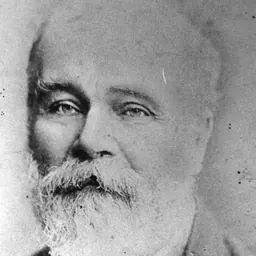
Related people
Same field, nearest in time




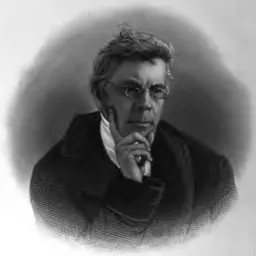
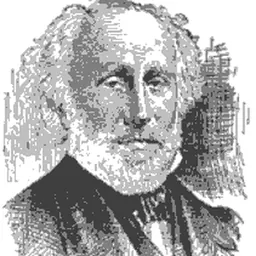
Contemporaries
People whose lives overlapped Charles Manby's





Frequently asked questions
Who was Charles Manby?
engineer (1804-1884)
When was Charles Manby born?
Charles Manby was born on 4 February 1804 in Cowes.
When did Charles Manby die?
Charles Manby died on 31 July 1884 in Westminster.
What was Charles Manby's occupation?
Charles Manby was a civil engineer and engineer.
What was Charles Manby known for?
Charles Manby was known for Institution of Civil Engineers.
Sources & further reading
Cite this page
APA: Biography.guide. (2026). Charles Manby. https://biography.guide/charles-manby/
MLA: "Charles Manby." Biography.guide, https://biography.guide/charles-manby/.
Chicago: "Charles Manby." Biography.guide. https://biography.guide/charles-manby/.
Data last updated: 2026-09-22 · Spot an error? Report a correction.
Portrait: Wikimedia Commons · author & licence
Page generated 2026-09-27 05:04 UTC