
Charles Lang Freer
American manufacturer and collector, 1854-1919
About Charles Lang Freer
Lived 1854 – 1919 (aged 65). Charles Lang Freer was an American art collector, businessperson, industrialist, collector and patron of the arts.
Charles Lang Freer (February 25, 1854 – September 25, 1919) was an American industrialist, art collector, and patron. He is known for his large collection of East Asian, American, and Middle Eastern art. In 1906, Freer donated his extensive collection to the Smithsonian Institution, making him the first American to bequeath his private collection to the United States. To house the objects, including The Peacock Room by James McNeill Whistler, Freer funded the construction of the Freer Gallery of Art in Washington, D.C.
Biography
Early life Charles Lang Freer was born in Kingston, New York, United States, in 1856. He was the son of Jacob Roosa Freer (1819–1875) and Phoebe Jane Townsend Freer (1826–1868). He was a direct descendant of Hugo Freer, a New Paltz patentee and the first Freer to the United States. The third child of six, his family had little money. Freer's mother died when he was fourteen years of age. After the seventh grade, Freer left school and took a job in a cement factory. In the early 1870s, Freer was noticed by Frank J. Hecker, then general superintendent of the New York, Kingston, & Syracuse Railroad, while working as a clerk in a general store. In the 1870s, a group of investors from Detroit decided to build a rail line in Logansport, Indiana; they hired Hecker to manage the project. Hecker brought the younger Freer along. Seven years later, in 1899, Freer organized a 13-company merger, creating American Car and Foundry in 1899.
In the late 19th century, Freer's health declined markedly. The economic depression of the 1890s paired with the stress of Freer's position within the company caused both physical and psychological trauma to the industrialist. Freer was diagnosed with neurasthenia, a nervous condition widespread among the upper-class in the United States. Treatment for neurasthenia included long periods of rest, and men were encouraged to pursue activities in the wilderness. Freer's treatment included outings in the Canadian wilderness and the Catskills. In 1899, Freer retired from industry, focusing his time and efforts on collecting art and travel.
Death Freer died in 1919 while staying at the Gotham Hotel at Fifth Avenue and 55th Street, New York City of what was described as a stroke of apoplexy. He left the bulk of his art collection, more than 5000 objects, to the federal government; it is now housed in the Freer Gallery of Art, Smithsonian Institution. Freer had no wife or children. The legacy of Charles Lang Freer is not just his wealth or art collection, but it is also his generosity as a patron to artists and the public. The boy who left school to work in a cement factory ultimately presented the United States its very first collection of Fine Art.
Art collection
Freer is known for his collection of late nineteenth century American painting and Asian art, developed largely after his retirement in 1899. Yet, the industrialist had begun collecting art and prints sixteen years prior, in 1883, when Freer purchased a selection of Old Masters prints from New York dealer, Frederick Keppel. His interests continued to grow in subsequent years through personal and professional connections. These relationships fundamentally shaped the collecting principles and philosophy of the collector. Two friendships, however, stand out for the effect they had on the collector and deserve further explanation. The first is with painter, James McNeill Whistler, who is largely considered to be the catalyst for Freer's Asian collection, while the second is with Asian art scholar, Ernest Fenollosa, who helped shape Freer's view of collecting. Freer and Ferguson differed in their tastes, however, as Ferguson preferred Ming and Qing styles. Freer was later asked to appraise a group of paintings Ferguson offered to the Metropolitan Museum, and recommended the purchase only of the earlier paintings, not the Ming and Qing items. There is also indication that Freer had been thinking of a museum project long before it was proposed to the Smithsonian. In the summer of 1900, Freer traveled through Venice, Munich, Nuremberg, Dresden, Berlin, Hamburg and Cologne. While in these cities he visited the major ethnological museums, where he drew floor plans and wrote note in a journal.
Freer Gallery of Art
Exterior of the Freer Gallery, a part of the Smithsonian Institution, along the Mall at Washington DC. On December 15, 1905, Freer sent U.S. President Theodore Roosevelt a letter in which Freer outlined his initial bequest offer. James McMillan, Freer's friend, U.S. Senator, and partner in the Michigan Car Company, championed the idea of a shaping Washington, DC into a beautiful capital city. His influence helped guide Freer's offer towards Washington. Negotiations continued for the next five months, stalled briefly by Samuel P. Langley, the director of the Smithsonian Institution. In May 1906, the Regents of the Smithsonian Institution accepted Freer's gift on behalf of the United States Government.
Freer spent part of his life in Capri where he owned the famous Villa Castello, together with Thomas Spencer Jerome, a socialite, clubman and lawyer from Detroit. A detailed report of Freer life in Italy, at the time of the Capri renaissance, is testified in the book of Carlo Knight, The Tiberio's Lawyer - The Tragic Life and death of Thomas Spencer Jerome.
Don’t just read it —
keep it.
Full-length biographies made to live with: read them, listen on the way to work, watch them tonight.
- E-book
- Audio
- Video
Instant download · yours to keep · every purchase keeps this site free
Important facts
People in Charles Lang Freer's life
Named in this biography and alive at the same time

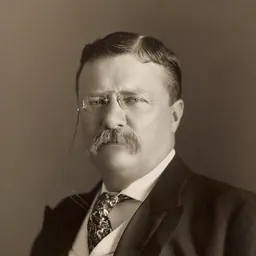

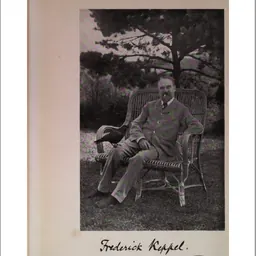
Related people
Same field, nearest in time
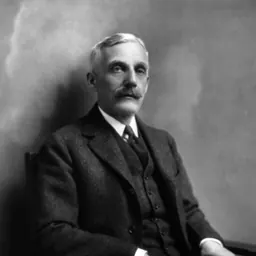
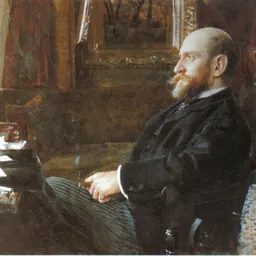
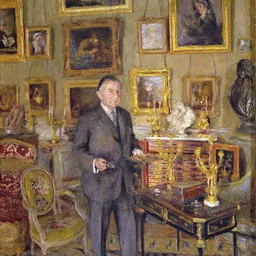
Contemporaries
People whose lives overlapped Charles Lang Freer's




Frequently asked questions
Who was Charles Lang Freer?
American manufacturer and collector, 1854-1919
When was Charles Lang Freer born?
Charles Lang Freer was born on 2 February 1854 in Kingston.
When did Charles Lang Freer die?
Charles Lang Freer died on 25 October 1919 in New York City, New York.
What was Charles Lang Freer's occupation?
Charles Lang Freer was an art collector, businessperson, industrialist, collector and patron of the arts.
What nationality was Charles Lang Freer?
Charles Lang Freer was American.
Sources & further reading
· Wikipedia: Charles Lang Freer
Cite this page
APA: Biography.guide. (2026). Charles Lang Freer. https://biography.guide/charles-lang-freer/
MLA: "Charles Lang Freer." Biography.guide, https://biography.guide/charles-lang-freer/.
Chicago: "Charles Lang Freer." Biography.guide. https://biography.guide/charles-lang-freer/.
Data last updated: 2026-09-22 · Spot an error? Report a correction.
Page generated 2026-09-27 05:23 UTC