
About Charles Jerome Hopkins
Lived 1836 – 1898 (aged 62). Charles Jerome Hopkins was an American composer.
Charles Jerome Hopkins (April 4, 1836 November 4, 1898) was a 19th-century musician, Composer and Champion of the Arts. He is often confused, in historical texts, with his nephew, Edward Hopkins, who was also a musician and composer.
Early life and inspirations Charles Jerome Hopkins was born April 4, 1836, in Burlington, Vermont. He was the 9th child of that state's first Episcopal Bishop, John Henry Hopkins, and Mellusina Muller Hopkins. Born prematurely, with a weak heart, it was uncertain that he would live beyond infancy. In a letter addressed to him from his aunt Amelia, many years later, it was observed that Charles labored at breathing when he was a child, suffered a lifelong heart murmur and was missing the "pinkie toe" on one of his feet – this latter physical feature responsible for keeping him out of the service during the Civil War. Charles did survive though he lived a protected and, some would say, a spoiled life due to his delicate health.
From the earliest ages right up through adolescence he was exempt from the work that was required of his older brothers who helped clear land, cut forest, plant an apple orchard and help build the family home and their father's school: the Vermont Episcopal Institute at Rock Point (Burlington, Vermont). Those composers he supported and he would later include their compositions among the pieces to be performed by either himself or his students. By and large, however, he believed that an American musical style, composed by American artists, would come to be respected and revered if only America would embrace and cultivate its own native artists.
At the time, America was still considered to be inhabited by crude immigrants and rebels with no culture. Classical music and opera were ruled by Europe and it was believed by many, worldwide, that only Europeans could become Masters of the Arts. Charles Jerome Hopkins was determined to prove them wrong.
From the age of ten, barely able to reach the stops, Charlie played pipe organ at St. Paul's Episcopal Cathedral (Burlington, Vermont). He traveled, as well, to churches in Rutland, Vermont and Rochester, New York to play organ and help Theodore write liturgical music for the church services. It was noted by Theodore, in letters of reference for Charles, that the lad could learn any composition by ear. Throughout his entire life, when giving his musical tours and performances, Hopkins never used sheet music or notes when performing or lecturing.
Education and early formative experiences At the age of fourteen, Charles attended the University of Vermont, studying chemistry. He loved the science and for much of his life, even when he dedicated himself to music, it was thought of him that he struggled to choose between two equal masters of his passions: Chemistry and Music. Records and family letters suggest that her father was a contemporary of Jerome's father, Bishop Hopkins, claiming him as an "... upstanding figure in the [Episcopal] Church..." and referring to Cicily as a "... good daughter of the [Episcopal] Church..." the children's opera, "Taffy and Old Munch"; a holy mass, "Te Deum"; and a book of church choral music for children compiled and edited by Jerome. Many unpublished works were preserved by family members and/or donated to various universities as a part of related collections.
Supporting the Orpheon Free Music Schools almost single-handedly took its toll upon Hopkins. Coming close to filing for bankruptcy and losing his home,
Final years The last few years of Jerome Hopkins' life were spent reviving the musical mission of the Orpheon Schools via the newly formed Children's Musical Congress. Several concerts were given a year to much success. Hopkins lived to see the first seeds planted for the public support of Arts Education when the New York City Municipal fund was modified early in 1898 to allow schools to set monies aside for musical instruments and teaching staff. Charles Jerome Hopkins died on November 4, 1898, of a brain hemorrhage, at Clover Hill. At the time of his death, Hopkins had composed over 1200 musical pieces.
His deathbed was attended by his niece, Amy Fay, who took possession of his many letters, manuscripts and musical compositions. Upon her death and that of Fay's daughter, those documents were donated to Harvard University's Houghton Library as a part of the Sylvia Mitarachi Wright Collection, where they can still be accessed. Many more documents are stored at the Cooper Union Archives in New York City, The Episcopal Diocese Office of Burlington Vermont at Rock Point, and at the University of Vermont. This unsung and widely unknown composer was, to his last day, a tireless champion of art and the American identity.
Don’t just read it —
keep it.
Full-length biographies made to live with: read them, listen on the way to work, watch them tonight.
- E-book
- Audio
- Video
Instant download · yours to keep · every purchase keeps this site free
Important facts
People in Charles Jerome Hopkins's life
Named in this biography and alive at the same time


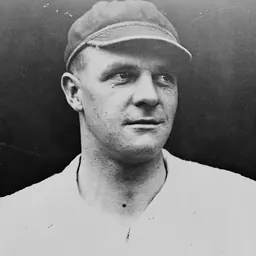
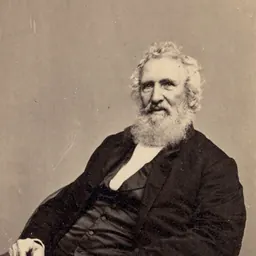
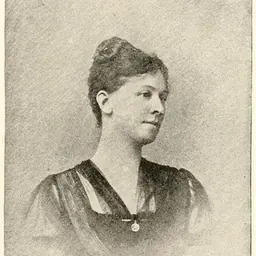

Related people
Same field, nearest in time

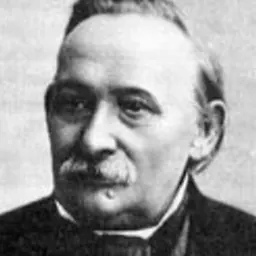
Contemporaries
People whose lives overlapped Charles Jerome Hopkins's




Frequently asked questions
Who was Charles Jerome Hopkins?
American composer (1836–1898)
When was Charles Jerome Hopkins born?
Charles Jerome Hopkins was born on 4 April 1836 in Burlington.
When did Charles Jerome Hopkins die?
Charles Jerome Hopkins died on 4 November 1898 in Clifton.
What was Charles Jerome Hopkins's occupation?
Charles Jerome Hopkins was a composer.
What nationality was Charles Jerome Hopkins?
Charles Jerome Hopkins was American.
Sources & further reading
· Wikipedia: Charles Jerome Hopkins
· DBpedia: Charles Jerome Hopkins
Cite this page
APA: Biography.guide. (2026). Charles Jerome Hopkins. https://biography.guide/charles-jerome-hopkins/
MLA: "Charles Jerome Hopkins." Biography.guide, https://biography.guide/charles-jerome-hopkins/.
Chicago: "Charles Jerome Hopkins." Biography.guide. https://biography.guide/charles-jerome-hopkins/.
Data last updated: 2026-09-20 · Spot an error? Report a correction.
Page generated 2026-09-27 05:14 UTC