
About Charles Hyder
Lived 1930 – 2004 (aged 74). Charles Hyder was an American astrophysicist and dissident, known for Hunger strike and Nuclear power.
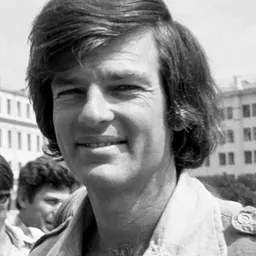
Charles Latif Hyder (April 18, 1930 – June 8, 2004) was an American astrophysicist and dissident from Albuquerque, New Mexico, who campaigned against arms race, nuclear weapons and nuclear waste, and ran for the U.S. presidency. Media coverage of his hunger strike by the Communist press and television was seen as a Cold War retaliation to Andrei Sakharov, a Soviet scientist whose protest in turn was rallied by the Western media but received little or no coverage in the Soviet Bloc. By the end of his strike Hyder achieved superstar status in the USSR and the allied socialist countries (parallel only to Angela Davis, Dean Reed, and Samantha Smith before him), his name became nearly symbolic behind the Iron Curtain, though he remained little known in the United States, and apart from his wartime tour of duty never traveled outside the U.S.
Biography Hyder was born in Albuquerque, New Mexico, in 1930. After graduating from Albuquerque High School, he served in the United States Air Force during the Korean War.
Hyder attended the University of New Mexico, graduating with bachelor's (1958) and master's (1960) degrees in physics. In 1964, he received a doctorate in astrophysics from the University of Colorado. and was also involved in NASA's Solar Maximum Mission satellite.
Hyder was married twice and had four children.
Controversy
In the US, Hyder's hunger strike did not attract much attention. Furthermore, the astrophysicist was not always present at the White House. The Russian Gosteleradio (government broadcasting) correspondent in Washington, Vladimir Dunaev, introduced and explained the scientist's story to the Russian audience. Dunaev's son later revealed that to make the hunger strike look continuous, Dunaev would shoot five stories in succession every day, asking Dr. Hyder to change into different suits and ties.
According to Dunaev, Hyder was advised by doctors to diet, as his weight openly threatened his health. During the hunger strike he lost almost half of his weight of 300 pounds. He also subsequently accused the USSR of environmental pollution, after which Russian news agencies stopped reporting about him in the USSR. In 1999, he published the book "Human Survival on a Plutonium-Contaminated Planet," again trying to fast in order to fight against the storage of nuclear waste (Waste Isolation Pilot Plant).
Don’t just read it —
keep it.
Full-length biographies made to live with: read them, listen on the way to work, watch them tonight.
- E-book
- Audio
- Video
Instant download · yours to keep · every purchase keeps this site free
Important facts
People in Charles Hyder's life
Named in this biography and alive at the same time



Related people
Same field, nearest in time





Contemporaries
People whose lives overlapped Charles Hyder's
Frequently asked questions
Who was Charles Hyder?
American physicist (1930–2004)
When was Charles Hyder born?
Charles Hyder was born on 18 April 1930 in Albuquerque.
When did Charles Hyder die?
Charles Hyder died on 21 June 2004 in New Mexico.
What was Charles Hyder's occupation?
Charles Hyder was an astrophysicist and dissident.
What was Charles Hyder known for?
Charles Hyder was known for Hunger strike and Nuclear power.
What nationality was Charles Hyder?
Charles Hyder was American.
Sources & further reading
Cite this page
APA: Biography.guide. (2026). Charles Hyder. https://biography.guide/charles-hyder/
MLA: "Charles Hyder." Biography.guide, https://biography.guide/charles-hyder/.
Chicago: "Charles Hyder." Biography.guide. https://biography.guide/charles-hyder/.
Data last updated: 2026-09-20 · Spot an error? Report a correction.
Page generated 2026-09-27 05:18 UTC