
About Charles Henry Pepys Harington
Lived 1910 – 2007 (aged 96–97). Charles Henry Pepys Harington was a British military officer.
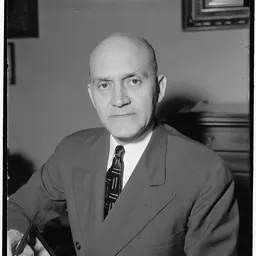
General Sir Charles Henry Pepys Harington, (5 May 1910 – 13 February 2007) was an officer in the British Army. He served in the British Expeditionary Force and in Normandy during the Second World War. He was later Commander-in-Chief of the three-service Middle East Command from 1963 to 1965, based at Aden. He ended his military career as Chief of Personnel and Logistics at the UK Ministry of Defence from 1968 to 1971.
Early life and career Charles Henry Pepys Harington was born in Royal Tunbridge Wells, into a military family, on 5 May 1910. He was related to General Sir Charles Harington Harington, the commander in Constantinople in 1922 during the Chanak crisis. His father, Lieutenant-Colonel Herbert Hastings Harington, an officer in the British Indian Army, was killed in action in Mesopotamia in 1916, and Harington and his two sisters were raised by their widowed mother.
Charles Harington was educated at Malvern College and later the Royal Military College, Sandhurst, and was commissioned as a second lieutenant into the Cheshire Regiment on 30 January 1930, being immediately posted to the regiment's 2nd Battalion. Promoted on 30 January 1933, he excelled at athletics, holding the British Army record for the 440 yard hurdles and competing for the Army against the other services. He was captain of the 2nd Battalion's athletics team, winning the Army Inter-Unit Team Athletic Championship in 1937, 1938 and 1939. He succeeded Thomas Brodie as the adjutant of the 2nd Battalion, then commanded by Lieutenant-Colonel Eric Nares, from 1936 to 1939, and on 1 August 1938 he was promoted to captain. During this time the battalion was deployed to Palestine during the Arab revolt, where it remained trying to keep the peace between the Jews and the Arabs, until 1938 when it returned to Aldershot, Hampshire.
Second World War He joined the British Expeditionary Force (BEF) in France in 1939 and 1940, commanding a machine gun company of the 2nd Battalion, Cheshire Regiment, which was attached to Major-General Harold Alexander's 1st Infantry Division. remaining the regiment's Colonel until 1968.
Aden Promoted to lieutenant-general, he was appointed Commander-in-Chief of the three-service Middle East Command in May 1963, with responsibility for an area extending from the Persian Gulf to East Africa. In January 1964, he had to deal with mutinous battalions in newly independent Kenya, Tanganyika and Uganda, formerly part of the King's African Rifles. He was knighted in 1964.
He then had to deal with insurgency of Haushabi and Radfan tribes in the Western Aden Protectorate on the road between Aden and Dhala. The deployment of British forces bolstered support for the Front for the Liberation of South Yemen, triggering a campaign of violence in Aden itself.
Sir Arthur Charles, the Speaker of the nascent National Council, was murdered outside his house in Crater in September 1965. Direct British rule was reimposed when the president of the council, Abdull al-Qawi Mecca-wi, refused to condemn the killing. The subsequent counterinsurgency operations failed: the Aden Police were infiltrated, and officers in the local Special Branch were killed. In 1966, the British government, led by Harold Wilson, decided to withdraw British forces from Aden and the Protectorates by 1968, by which time Harington had returned to the UK.
Late career Memorial to General Sir Charles Harington in Chester Cathedral. Harington returned from Aden in 1966 to take up the position of Deputy Chief of the Imperial General Staff. He was promoted to general in 1968, and became Chief of Personnel and Logistics at the UK Ministry of Defence. He was appointed GCB in 1969, and was an Aide-de-camp to the H. M. the Queen from 1969 to 1971. He retired from the Army in 1971.
In retirement, Harington was president of the Combined Cadet Force Association from 1971 to 1980 and also from 1972 to 1980 chairman of the Governors of the Royal Star and Garter Home, Richmond, for disabled ex-servicemen. He was a vice-president of Battersea Dogs' Home and from 1966 to 1999 president of the Milocarian (Tri-Service) Athletic Club. He also enjoyed sailing, and was president of the Hurlingham Club for over twenty-five years.
Harington's wife died in 2000, and he himself died in 2007, to be survived by a son and two daughters.
Awards and decorations Knight Grand Cross of the Order of the Bath (1969), previously Knight Commander (1964), and Companion (1961) Commander of the Order of the British Empire (8 March 1957), previously Officer (Civil Division) (1953) Companion of the Distinguished Service Order (1 February 1945) Military Cross (20 August 1940) Mentioned in despatches (4 April 1946) Knight Grand Officer of the Order of Orange Nassau with Swords (Netherlands, 18 July 1947)
Don’t just read it —
keep it.
Full-length biographies made to live with: read them, listen on the way to work, watch them tonight.
- E-book
- Audio
- Video
Instant download · yours to keep · every purchase keeps this site free
Important facts
People in Charles Henry Pepys Harington's life
Named in this biography and alive at the same time


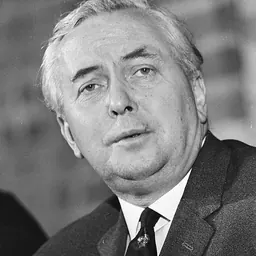
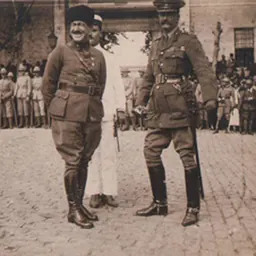


Related people
Same field, nearest in time
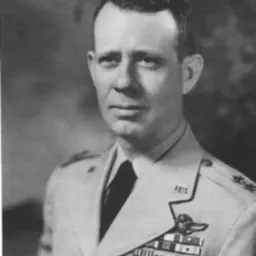
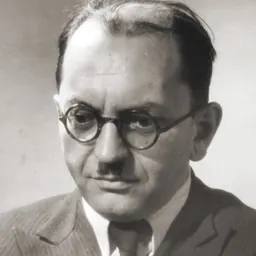

Contemporaries
People whose lives overlapped Charles Henry Pepys Harington's






Frequently asked questions
Who was Charles Henry Pepys Harington?
British Army general
When was Charles Henry Pepys Harington born?
Charles Henry Pepys Harington was born in 1910 in Royal Tunbridge Wells.
When did Charles Henry Pepys Harington die?
Charles Henry Pepys Harington died on 13 February 2007.
What was Charles Henry Pepys Harington's occupation?
Charles Henry Pepys Harington was a military officer.
What nationality was Charles Henry Pepys Harington?
Charles Henry Pepys Harington was British.
Sources & further reading
· Wikipedia: Charles Henry Pepys Harington
· DBpedia: Charles Harington (British Army officer, born 1910)
Cite this page
APA: Biography.guide. (2026). Charles Henry Pepys Harington. https://biography.guide/charles-henry-pepys-harington/
MLA: "Charles Henry Pepys Harington." Biography.guide, https://biography.guide/charles-henry-pepys-harington/.
Chicago: "Charles Henry Pepys Harington." Biography.guide. https://biography.guide/charles-henry-pepys-harington/.
Data last updated: 2026-09-20 · Spot an error? Report a correction.
Page generated 2026-09-27 05:25 UTC