
About Charles Henry Langston
Lived 1817 – 1892 (aged 74–75). Charles Henry Langston was an American educator, known for Oberlin-Wellington Rescue.
Charles Henry Langston (1817–1892) was an American abolitionist and political activist who was active in Ohio and later in Kansas, during and after the American Civil War, where he worked for black suffrage and other civil rights. He was a spokesman for blacks of Kansas and "the West". |group=fn Quarles freed Lucy and their daughter Maria in 1806, in the course of what was a common-law relationship of more than 25 years. Charles Langston and his two younger brothers were born free, to a free woman. (Interracial marriage was illegal in Virginia at the time.) In addition to freeing Lucy and Maria, Quarles made legal provisions for his "natural" (illegitimate) children to inherit his substantial fortune after his death.
Lucy had had three children with another partner before she moved into the Great House and deepened her relationship with Quarles. Their three sons were born after that. Of the older half-siblings, William Langston had the closest relationship with Quarles's sons. Their father had left his natural sons substantial inheritances that provided for their education and, as adults, enabled them to work for political reform. The oldest brother, Gideon, looked so much like his father that at age 21, he took the Quarles surname. Their younger brother John Langston also graduated from there.
Career
Ohio
Langston quickly became involved in black political affairs in Ohio, where Oberlin was the center of a strong abolitionist movement, with supporters aiding a station on the Underground Railroad. He started working for suffrage and equal rights for blacks. Not only was he active, but Langston introduced his younger brother John to his political circles. He helped the young man be admitted to a state convention in 1850, when he was only 20. It was the start of an illustrious career in which John would eventually overshadow Charles in political office achieved.
In 1858 the older Langston was one of a group of men who freed runaway slave John Price from a US Marshal and his assistants in the Oberlin-Wellington Rescue. The Underground Railroad hid Price in Oberlin, then helped transport him to Canada and freedom. The daring rescue captured national attention. The president demanded that the rescuers be prosecuted.
A grand jury indicted 37 men (among them 12 free blacks). In response, the state arrested the US Marshal and his team. As a result of negotiations between state and federal officials, only Charles Langston and Simon M. Bushnell, a white man, were tried for their part in subverting the 1850 Fugitive Slave Act. The state released the arresting party and the federal government released 35 men.
Both Bushnell and Langston were tried and convicted by the same all-Democratic white jury, an injustice Langston addressed in his speech to the court. He made a rousing statement of the case for abolition and for justice for "colored men", Langston closed with these words:
The judge gave the men light sentences. Langston and Bushnell sued for a writ of habeas corpus in 1859 in the Ohio Supreme Court, but it ruled against them, with the judge saying he had no choice but to uphold the federal law.
Kansas Early in the Civil War in 1862, Langston moved to Leavenworth, Kansas, where he organized a school for contrabands, escaped slaves who had fled to Union lines from Missouri. He taught the children for about three years. In 1863, Langston returned to Ohio and, like his brother John Mercer, helped recruit African Americans for the United States Colored Troops when Ohio raised its first regiment.
By 1865, about 2,455 blacks, nearly one-fifth of those in Kansas, lived in Leavenworth, close to Missouri. In 1865, Langston was appointed general superintendent for refugees and freedmen for the Freedmen's Bureau in Kansas. There were more than 12,000 blacks in Kansas by then. While living in Leavenworth, he was active in Topeka, Lawrence, Atchison and small towns in northeastern Kansas, frequently covered in press reports of political activities.
From 1863 to 1870, Langston worked for equality under the law for blacks in Kansas: suffrage, the right to sit on juries and testify in court, and to have black children educated in common schools. Blacks were not authorized to serve on juries until 1874. Langston had pushed for black men to be included on juries (restricted to men at the time), noting that without that representation, blacks were not being tried "by a jury of their peers." The college closed later in the 20th century, and no buildings remain.
As the black population increased rapidly in Kansas in the decades during and after the Reconstruction era, Langston worked to aid the "exodusters" and other early migrants. From 17,108 blacks in Kansas in 1870, the numbers increased to 43,107 in 1880 and 52,003 by 1900. Most lived in urban areas. In 1880 Langston was president of a statewide Convention of Colored Men that called on the Refugee Relief Board to use monies and goods donated for the new migrants and settle them on school properties to help them get established.
In Lawrence, Langston also served as associate editor of the Historic Times, a local paper that promoted the cause of equal rights and justice for blacks.
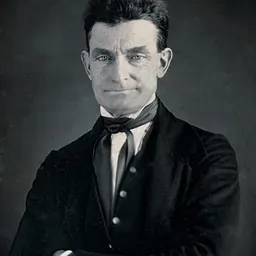
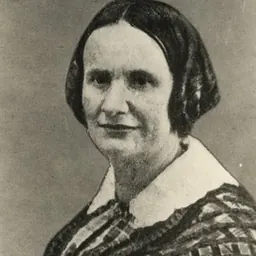
Marriage and family After his first wife died, in 1869 Langston married the widow Mary Patterson Leary in Oberlin. She had survived Lewis Sheridan Leary, another African-American political activist from Oberlin. He had joined John Brown's Raid in 1859 on Harper's Ferry and died of wounds eight days after the attack. Mary brought their daughter Louise to the marriage with Langston. They had two children together.
The Langstons remained in Lawrence, Kansas, for the rest of their lives, moving in 1888 into town, where Charles had a part-interest in a grocery store. Their children were Nathaniel Turner Langston, named after the man who led a slave rebellion in Virginia; and Caroline Mercer Langston. She married and had a son, Langston Hughes, who became a renowned poet in the United States. The Langstons also had a foster son, named Dessalines Langston after a major leader of the Haitian Revolution.
Community involvement In addition to his political activities, while in Columbus, Ohio, Langston was president of the Colored Benevolent Society, first Worshipful Master of St. Mark's Lodge No. 7.
He also served as Grand Master of the Prince Hall Grand Lodge of Kansas, and a founder of the Inter-state Library Association. He also was active in an African Methodist Episcopal Church.
Legacy and honors In 1872 the Kansas Republican Party honored Langston by nominating him as one of four electors to cast the state's votes for President Ulysses S. Grant. At his death in 1892, the Lawrence Weekly Record published a 200-word obituary about him, demonstrating his high community standing. Historian Richard B. Sheridan wrote of him:
Footnotes
Don’t just read it —
keep it.
Full-length biographies made to live with: read them, listen on the way to work, watch them tonight.
- E-book
- Audio
- Video
Instant download · yours to keep · every purchase keeps this site free
Important facts
People in Charles Henry Langston's life
Named in this biography and alive at the same time




Related people
Same field, nearest in time




Contemporaries
People whose lives overlapped Charles Henry Langston's



Frequently asked questions
Who was Charles Henry Langston?
American abolitionist and political activist
When was Charles Henry Langston born?
Charles Henry Langston was born in 1817 in Louisa County.
When did Charles Henry Langston die?
Charles Henry Langston died in 1892 in Lawrence.
What was Charles Henry Langston's occupation?
Charles Henry Langston was an educator.
What was Charles Henry Langston known for?
Charles Henry Langston was known for Oberlin-Wellington Rescue.
What nationality was Charles Henry Langston?
Charles Henry Langston was American.
Sources & further reading
· Wikipedia: Charles Henry Langston
· DBpedia: Charles Henry Langston
Cite this page
APA: Biography.guide. (2026). Charles Henry Langston. https://biography.guide/charles-henry-langston/
MLA: "Charles Henry Langston." Biography.guide, https://biography.guide/charles-henry-langston/.
Chicago: "Charles Henry Langston." Biography.guide. https://biography.guide/charles-henry-langston/.
Data last updated: 2026-09-20 · Spot an error? Report a correction.
Page generated 2026-09-27 05:30 UTC