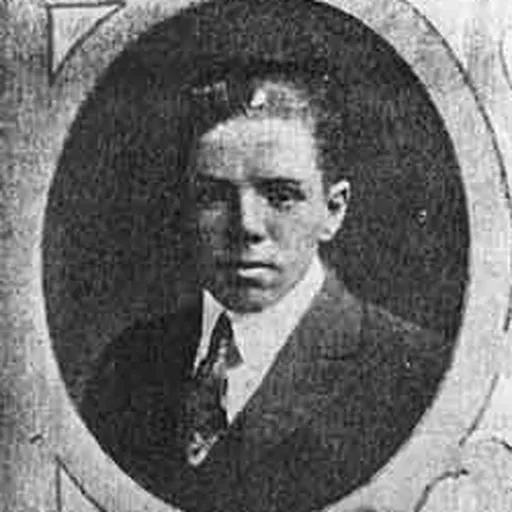
About Charles Harris Garrigues
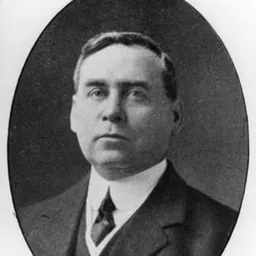
Lived 1903 – 1974 (aged 70). Charles Harris Garrigues was an American journalist.
Charles Harris Garrigues (July 7, 1902 – March 8, 1974) was an American writer and journalist. He was a general-assignment reporter in Los Angeles, California, in the 1920s, a grand jury investigator and political activist in the 1930s, a newspaper copy editor in the 1940s and a jazz critic in the 1950s. His nickname was Brick, for his red hair. The family later moved to Imperial, California, near the Mexican border. As a result, the lad was expelled by the school board in May 1918. The expulsion resulted in what the Enterprise called a "Walkout of High School Students," who "paraded the streets to demonstrate their dissatisfaction at the refusal of the faculty to reinstate C. H. Garrigues of the senior class." It was said that all the students walked out, "with the exception of two girls." Garrigues was befriended by the editor of the newspaper, who taught him the craft of journalism, and in 1919 he was allowed to graduate.
Southern California Garrigues attended the University of Southern California for a year but dropped out to become a reporter with the Hemet News in Riverside County. He then worked for the Venice Vanguard in Venice, a suburb of Los Angeles, and by mid-decade was with the Arizona Daily Star in Tucson. In 1926, he returned to Los Angeles, where he joined the Los Angeles Express as a copy editor. The next year he had become a reporter with the Los Angeles Illustrated Daily News, published by Manchester Boddy, where he specialized in reporting on civic affairs, particularly the county government. He also did investigative work into graft and corruption in county government, as a consequence of which by January 1931 he was granted a leave by Boddy to take a temporary job as an investigator for District Attorney Buron Fitts. His work led to the indictment and conviction of, and a prison term for, county supervisor Sidney T. Graves for accepting a bribe from builders of a flood-control dam on the San Gabriel River.
In 1934, he was working for a county grand jury impaneled by Superior Judge (and later Mayor) Fletcher Bowron; his investigation led to Fitts himself, whom the jury indicted that year on charges of bribery and perjury. In this work Garrigues became an enemy of Fitts, and the reporter was assaulted in a Hall of Justice stairway and beaten in a vacant courtroom by what he described as "a gang of the district attorney's plug-uglies."
By 1936, Garrigues was free-lancing as a political consultant, and the next year worked briefly for the San Diego Sun but soon left to become the editor of the Labor Leader, a newspaper published by the San Diego Federated Trades and Labor Council. In 1937 he was an organizer in Los Angeles for the American Newspaper Guild. He joined the Communist Party in 1937 but left it the next year.
San Francisco Bay Area
At the age of 34, Garrigues was named in 1936 as an investigator for a defense committee in the case of three labor union officials, Earl King, Ernest Ramsay, and Frank Conner, who faced trial for murdering an officer aboard a freighter anchored in the east San Francisco Bay, and three years later, in 1939, he moved to the Bay Area.
He found work as a copy editor on the San Francisco Examiner, where he stayed until his retirement in 1967. During that time, he wrote about the jazz scene in San Francisco. In 1943, his name was listed in a report of the anti-Communist Tenney Committee of the California state legislature in connection with testimony by writer Rena Vale about her experience as a Communist Party member from 1936 to 1938. In March 1953 Garrigues testified under subpoena in Los Angeles before Congressman Harold H. Velde of the House Committee on Un-American Activities about his interest in the labor movement and his membership in the Communist Party.
Between 1956 and 1961, Garrigues was the Examiner's staff jazz reviewer, "with a weekly column and a recognized name." So They Indicted Fitts (self-published pamphlet) Why Didn't Somebody Tell Somebody (self-published pamphlet), May 1938 and January 1939 "Most Polite Man," Nation's Business magazine, February 1953 (article on San Francisco-Oakland Bay Bridge toll collectors) "Target Therapy: New hope for lost minds," Brief magazine, August 1953 "How to Live Within Your Income," This Week magazine, February 18, 1959
Don’t just read it —
keep it.
Full-length biographies made to live with: read them, listen on the way to work, watch them tonight.
- E-book
- Audio
- Video
Instant download · yours to keep · every purchase keeps this site free
Important facts
People in Charles Harris Garrigues's life
Named in this biography and alive at the same time

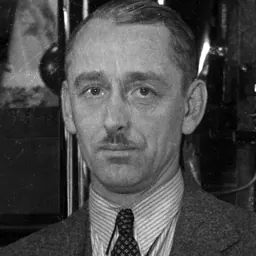
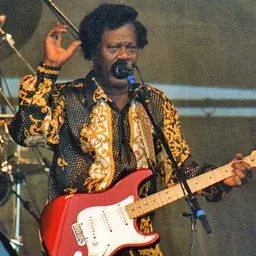
Related people
Same field, nearest in time
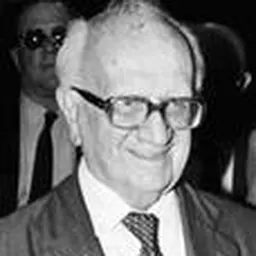
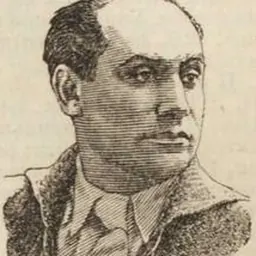

Contemporaries
People whose lives overlapped Charles Harris Garrigues's
Frequently asked questions
Who was Charles Harris Garrigues?
writer and journalist (1903-1974)
When was Charles Harris Garrigues born?
Charles Harris Garrigues was born on 8 July 1903.
When did Charles Harris Garrigues die?
Charles Harris Garrigues died on 8 March 1974.
What was Charles Harris Garrigues's occupation?
Charles Harris Garrigues was a journalist.
What nationality was Charles Harris Garrigues?
Charles Harris Garrigues was American.
Sources & further reading
· Wikipedia: Charles Harris Garrigues
· DBpedia: Charles Harris Garrigues
Cite this page
APA: Biography.guide. (2026). Charles Harris Garrigues. https://biography.guide/charles-harris-garrigues/
MLA: "Charles Harris Garrigues." Biography.guide, https://biography.guide/charles-harris-garrigues/.
Chicago: "Charles Harris Garrigues." Biography.guide. https://biography.guide/charles-harris-garrigues/.
Data last updated: 2026-09-24 · Spot an error? Report a correction.
Portrait: Wikimedia Commons · author & licence
Page generated 2026-10-03 09:35 UTC