
About Charles Hall
Lived 1814 – 1883 (aged 68–69). Charles Hall was a British judge and barrister.
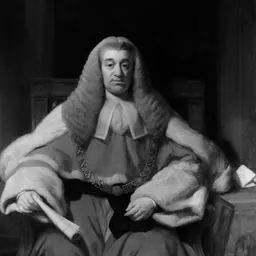
Sir Charles Hall (1814–1883) was an English barrister and judge, who became Vice-Chancellor of England.
Life The fourth son of John Hall of Manchester and Mary, daughter of John Dobson of Durham, he was born on 14 April 1814. His father, after financial losses by a bank failure, articled him to a solicitor in Manchester. In 1835 he entered the Middle Temple, and read for the bar successively with William Taprell the special pleader, James Russell of the chancery bar, and Lewis Duval the conveyancer. At the end of his year as a pupil he became Duval's principal assistant.
In time Hall succeeded to the bulk of Duval's practice, and through his wife inherited much of his fortune; and lived for the rest of his life in Duval's house at 8 Bayswater Hill (now 150 Baywater Road, and not as sometimes supposed 8 Orme Square). During the next twenty years he became the recognised leader of the junior chancery bar, and the first authority of his day on real property law. Having been called to the bar in Michaelmas term 1838, he built up a large court practice, and his pupils were prominent in the following generation of equity lawyers.
Hall's best known cases were the Bridgewater peerage case in the House of Lords in 1853, the Shrewsbury peerage case, and Allgood v. Blake in the exchequer chamber in 1872. He drew up several bills for Lord Westbury, including his Registration of Titles Act, and assisted Lord Selborne in drafting the Judicature Act 1873. Hall twice refused to take silk. In 1862 he became under-conveyancer and in 1864 conveyancer to the court of chancery, and in 1872 a bencher of his inn. He was raised to the bench in succession to Vice-chancellor John Wickens in November 1873 and knighted. He was transferred to the Chancery Division of the High Court upon the creation of the latter in 1875.
While walking home from his court, Hall was attacked by a stroke of paralysis, in June 1882. He resigned his judgeship before the ensuing Michaelmas sittings, and died on 12 December 1883. He never played any part in politics.
Family In 1837 Hall married Sarah, daughter of Francis Duval of Exeter and Lewis Duval's niece. He had four sons, two of whom survived him, the younger being Charles Hall the lawyer and politician, and four daughters.
Don’t just read it —
keep it.
Full-length biographies made to live with: read them, listen on the way to work, watch them tonight.
- E-book
- Audio
- Video
Instant download · yours to keep · every purchase keeps this site free
Important facts
People in Charles Hall's life
Named in this biography and alive at the same time


Related people
Same field, nearest in time

Contemporaries
People whose lives overlapped Charles Hall's




Frequently asked questions
Who was Charles Hall?
English barrister and judge, born 1814
When was Charles Hall born?
Charles Hall was born in 1814.
When did Charles Hall die?
Charles Hall died in 1883.
What was Charles Hall's occupation?
Charles Hall was a judge and barrister.
What nationality was Charles Hall?
Charles Hall was British.
Sources & further reading
· DBpedia: Charles Hall (judge)
Cite this page
APA: Biography.guide. (2026). Charles Hall. https://biography.guide/charles-hall/
MLA: "Charles Hall." Biography.guide, https://biography.guide/charles-hall/.
Chicago: "Charles Hall." Biography.guide. https://biography.guide/charles-hall/.
Data last updated: 2026-09-25 · Spot an error? Report a correction.
Page generated 2026-09-27 05:12 UTC