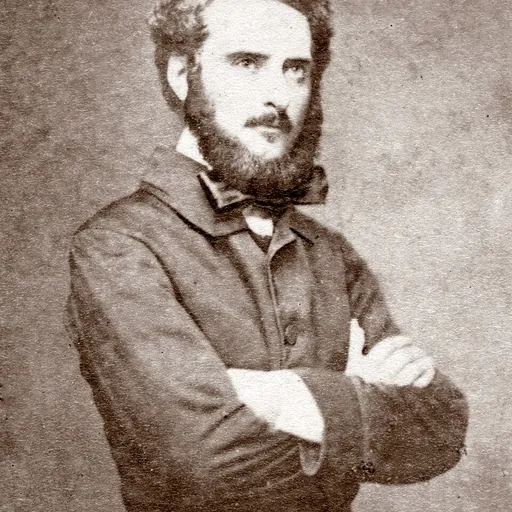
About Charles Frederick Henningsen
Lived 1815 – 1877 (aged 62). Charles Frederick Henningsen was a British biographer, soldier, arms trafficker, writer and mercenary.
Charles Frederick Henningsen (21 February 1815 – 14 June 1877) was a Belgian-American writer, mercenary, filibuster, and munitions expert. He participated in revolutions and civil wars in Spain, Circassia, Hungary, Nicaragua, and the United States.
Early life Henningsen was born in Brussels. His father was John Henningsen (1775–1859), a native of Copenhagen, Denmark, and his mother was Louisa Burke (1789–1842), an Irish heiress. However, being adventurous in his youth, he revered Lord Byron in both literature and adventure, and so idealized British nobility in his actions. The family lived in Brussels from at least the time of his birth until the onset of the Belgian Revolution, fleeing due to their pro-Dutch sympathies. The family fled first to Paris, then to London. One of his sisters was Josephine Amelie de Henningsen (1822–1904), a member of the Missionary Sisters of the Assumption, who established the order in South Africa in 1849.
Spain He fought in the First Carlist War, after entering as a volunteer in the service of Don Carlos in 1834. Henningsen rose to be captain of bodyguard to the Carlist general Tomás de Zumalacárregui. After the signing of the Lord Eliot Convention in April 1835, at which he was present, Henningsen returned to England.
However, Henningsen soon returned to Spain with the rank of lieutenant-colonel and joined the Carlist expedition that threatened Madrid from Aragon.
However, he was subsequently taken prisoner, and released on parole. He did not serve again in this war.
At the lake, he was joined by a reinforcement of 170 men, and escaped by breaking the siege of the allied Central American forces. His wife, Wilhelmina "Willy" Henningsen (1820-1880) opened and operated a hospital (the Henningsen Hospital) in Richmond until 1863, when its operations were consolidated with the Louisiana Hospital. She was noted for the kindness and tenderness to the wounded and afflicted soldiers. After the war he took up his residence in Washington, D.C., and was involved in the movement to liberate Cuba from Spanish rule.
Writings and munitions expertise Henningsen's specialty was artillery, but he also wrote about the improvement of small arms, and superintended the development of the first Minié rifles in the United States.
His works include:
The Last of the Sophias: A Poem (London, 1831) Scenes from the Belgian Revolution (London, 1832) The Siege of Missalonghi (London, 1832) The Most Striking Events of a Twelvemonth's Campaign with Zumalacarregui in Navarre and the Basque Provinces, 2 vols. (London: John Murray, 1836) – translated into Spanish, German, and French "St. Petersburg and Its Inhabitants", The New Monthly Magazine and Humorist, vol. 69 (October 1843): 241-59 "The Emperor Nicholas, His Nobles, Serfs, and Servants", The New Monthly Magazine, vol. 70 (April 1844): 477-93 "The Emperor Nicholas, His Nobles, Serfs, and Servants" (concluded), The New Monthly Magazine, vol. 71 (June 1844): 216-31 Revelations of Russia: or the Emperor Nicholas and His Empire in 1844. By one who has seen and describes., 2 vols. (London: Henry Colburn, 1844) – translated into French and German The White Slave; or, The Russian Peasant Girl. By the author of "Revelations of Russia." 3 Vols. (Henry Colburn, 1845) Revelations of Russia in 1846. By an English resident. Third edition, 2 vols. (Henry Colburn, 1846) – translated into German Eastern Europe and The Emperor Nicholas. By the author of "Revelations of Russia;" "The White Slave." 3 Vols. (London: T.C. Newby, 1846) – also translated into German Sixty Years Hence: A Novel. By the author of "The White Slave," etc., 3 vols. (T.C. Newby, 1847) Analogies and Contrasts; or, Comparative Sketches of France and England. By the author of "Revelations of Russia." (London, 1848) The National Defenses. By the author of "The Revelations of Russia," etc. (T.C. Newby, 1848) Kossuth and "The Times". By the author of "The Revelations of Russia" (London, 1851) The Past and Future of Hungary, by C.F. Henningsen, Secretary to Governor Louis Kossuth, author of "Twelve Months' Campaign with Zumalacarregui," "Revelations of Russia," "Eastern Europe," etc. (Cincinnati: E. Morgan, 1852)
Don’t just read it —
keep it.
Full-length biographies made to live with: read them, listen on the way to work, watch them tonight.
- E-book
- Audio
- Video
Instant download · yours to keep · every purchase keeps this site free
Important facts
People in Charles Frederick Henningsen's life
Named in this biography and alive at the same time


Related people
Same field, nearest in time
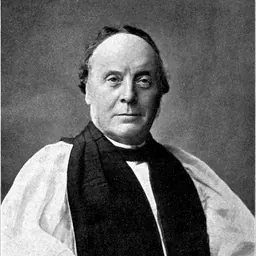
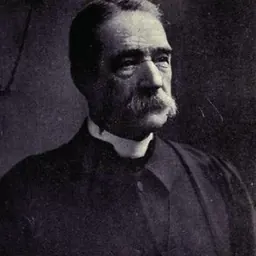
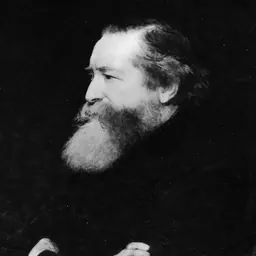


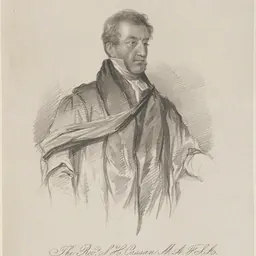
Contemporaries
People whose lives overlapped Charles Frederick Henningsen's





Frequently asked questions
Who was Charles Frederick Henningsen?
Confederate Army soldier (1815–1877)
When was Charles Frederick Henningsen born?
Charles Frederick Henningsen was born on 21 February 1815 in Brussels, Brussels.
When did Charles Frederick Henningsen die?
Charles Frederick Henningsen died on 14 June 1877 in Washington, D.C..
What was Charles Frederick Henningsen's occupation?
Charles Frederick Henningsen was a biographer, soldier, arms trafficker, writer and mercenary.
What nationality was Charles Frederick Henningsen?
Charles Frederick Henningsen was British.
Sources & further reading
· Wikipedia: Charles Frederick Henningsen
· DBpedia: Charles Frederick Henningsen
Cite this page
APA: Biography.guide. (2026). Charles Frederick Henningsen. https://biography.guide/charles-frederick-henningsen/
MLA: "Charles Frederick Henningsen." Biography.guide, https://biography.guide/charles-frederick-henningsen/.
Chicago: "Charles Frederick Henningsen." Biography.guide. https://biography.guide/charles-frederick-henningsen/.
Data last updated: 2026-09-24 · Spot an error? Report a correction.
Portrait: Wikimedia Commons · author & licence
Page generated 2026-09-27 05:09 UTC