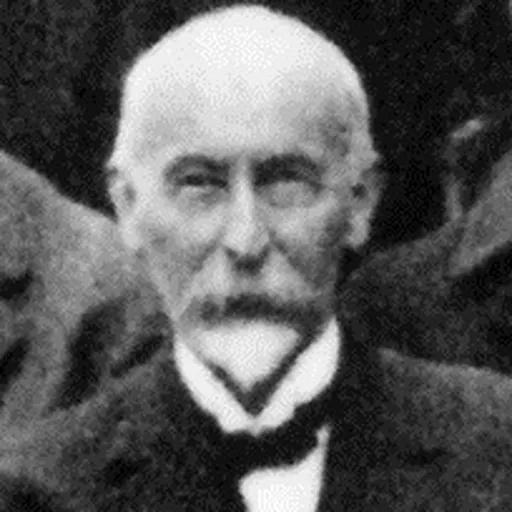
About Charles-Eugène Guye
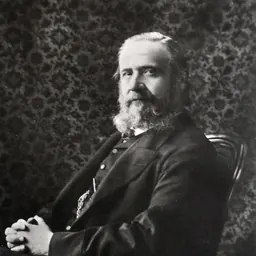
Lived 1866 – 1942 (aged 75). Charles-Eugène Guye was a Swiss physicist and university teacher.
Charles-Eugène Guye (; 15 October 1866 – 15 July 1942) was a Swiss experimental physicist noted for his experiments showing the dependence of the electron mass on its speed and attending the Solvay Conferences.
Life and work Guye was born on 15 October 1866 in Saint-Christophe, a hamlet within the commune of Champvent, Vaud, the son of Philippe Guye and Elise Besançon. His older brother, Philippe-Auguste (1862–1922), was a distinguished chemist. Guye studied physics at the University of Geneva, where he received his doctorate in 1889, studying the phenomenon of optical rotatory dispersion.
From 1890 to 1892 Guye worked as a Privatdozent (lecturer) at the University of Geneva, and from 1894 to 1900 he was a Privatdozent at the Zurich Polytechnic (now the Federal Institute of Technology Zurich), switching his research interests to electrical engineering. Albert Einstein was one of his students at the school. In 1900, Guye was appointed professor of experimental physics and director of the Physics Institute at the University of Geneva.
His research focus was in the fields of electric currents, magnetism, and electrical discharges in gases. Starting in 1907 and continuing for over a decade, he and his students Simon Ratnowsky and Charles Lavanchy conducted experiments with cathode rays that demonstrated the dependence of the electron mass on its speed, with results supporting the predictions of Lorentz, Einstein, and the special theory of relativity against Max Abraham's rival theory of the electron.
Guye was president both of the Swiss Physical Society, from 1914 to 1916, and of the Société de Physique et d'Histoire naturelle de Genève. Furthermore, he was editor-in-chief of Archives des Sciences physiques et naturelles and member of the editorial board of Helvetica Physica Acta. and was the author or co-author of over 200 papers in physics and several popular books, including philosophical works on the biological-physical-chemical basis of evolution and the limits of physics and biology. Guye died in Geneva on Wednesday, 15 July 1942.
Don’t just read it —
keep it.
Full-length biographies made to live with: read them, listen on the way to work, watch them tonight.
- E-book
- Audio
- Video
Instant download · yours to keep · every purchase keeps this site free
Important facts
People in Charles-Eugène Guye's life
Named in this biography and alive at the same time
Related people
Same field, nearest in time



Contemporaries
People whose lives overlapped Charles-Eugène Guye's



Frequently asked questions
Who was Charles-Eugène Guye?
Swiss physicist (1866-1942)
When was Charles-Eugène Guye born?
Charles-Eugène Guye was born on 15 October 1866 in Champvent.
When did Charles-Eugène Guye die?
Charles-Eugène Guye died on 15 July 1942 in Geneva.
What was Charles-Eugène Guye's occupation?
Charles-Eugène Guye was a physicist and university teacher.
What nationality was Charles-Eugène Guye?
Charles-Eugène Guye was Swiss.
Sources & further reading
· Wikipedia: Charles-Eugène Guye
· DBpedia: Charles-Eugène Guye
Cite this page
APA: Biography.guide. (2026). Charles-Eugène Guye. https://biography.guide/charles-eugene-guye/
MLA: "Charles-Eugène Guye." Biography.guide, https://biography.guide/charles-eugene-guye/.
Chicago: "Charles-Eugène Guye." Biography.guide. https://biography.guide/charles-eugene-guye/.
Data last updated: 2026-09-23 · Spot an error? Report a correction.
Portrait: Wikimedia Commons · author & licence
Page generated 2026-09-27 05:06 UTC