
About Charles Eugène de Croÿ
Lived 1651 – 1702 (aged 50–51). Charles Eugène de Croÿ was a French military officer and general field marshal.
Charles Eugène de Croÿ (; ; ; 1651 – ) was a German and Russian field marshal and nobleman from the French noble family of Croÿ.
Biography His father was Jacques Philippe de Croÿ-Roeulx (1614–1685), a descendant of Jean III of Croy-Roeulx, son of Antoine le Grand. His mother was Johanna Catharina van Bronckhorst, daughter of Field Marshal Johann Jakob van Bronckhorst.
In 1681, he married Wilhelmina Juliana van den Bergh (January 20, 1638 in Zutphen, Gelderland, Netherlands – October 1714), daughter of Hendrik van den Bergh (1573–1638), and his second wife, Hieronyma Katharina Countess von Spaur (1600–1683). They had no children.
Career Croÿ joined the Danish army during the Scanian War and was first a volunteer officer but was relatively quickly made a colonel for his bravery. He participated in the 1676 battle of Lund and the siege of Malmö in June 1677, when he was seriously wounded.
In November of that same year, he had recovered from his injuries and was nominated governor of the city of Landskrona which was the main Danish stronghold during the entire war. Unfortunately, he became quite unpopular because of his grand, continental manners and was replaced by less than a month later.
Later on, he fought with success in the Imperial Army of the Habsburg monarchy against the Ottoman Turks and participated in both the liberation of Vienna in 1683 and the attack on Belgrade in 1690. On October 18, 1692, he laid the foundation stone of the Petrovaradin Fortress and was promoted to Imperial Field Marshal for his services. In 1693, he failed to reconquer Belgrade from the Ottomans.
In 1697, he started serving the Russian tsar, Peter the Great, and commanded his forces in Livonia (Livonia at this time formed part of Sweden and the Polish Commonwealth). He led the Russian forces in the Battle of Narva on 20 November 1700 when he surrendered and was taken prisoner by the Swedes.
Death He died in Reval (Tallinn) as a prisoner of war in 1702. On demand of his creditors, his body, which rested at St. Nicholas Church, was not buried for more than 190 years, and, when mummified, was exhibited as a curiosity.
Don’t just read it —
keep it.
Full-length biographies made to live with: read them, listen on the way to work, watch them tonight.
- E-book
- Audio
- Video
Instant download · yours to keep · every purchase keeps this site free
Important facts
People in Charles Eugène de Croÿ's life
Named in this biography and alive at the same time
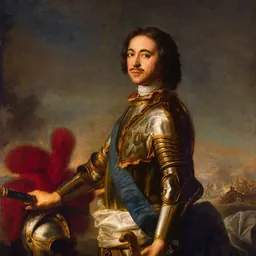
Related people
Same field, nearest in time

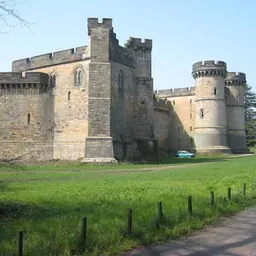

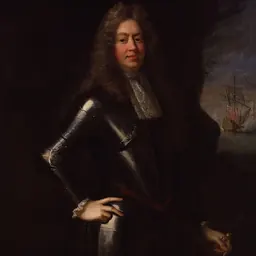


Contemporaries
People whose lives overlapped Charles Eugène de Croÿ's




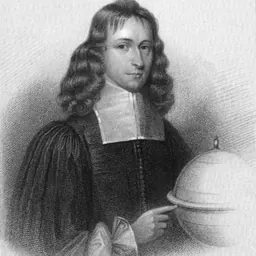
Frequently asked questions
Who was Charles Eugène de Croÿ?
Austrian marshal (1651-1702)
When was Charles Eugène de Croÿ born?
Charles Eugène de Croÿ was born in 1651 in Le Rœulx.
When did Charles Eugène de Croÿ die?
Charles Eugène de Croÿ died on 30 January 1702 in Tallinn.
What was Charles Eugène de Croÿ's occupation?
Charles Eugène de Croÿ was a military officer and general field marshal.
What nationality was Charles Eugène de Croÿ?
Charles Eugène de Croÿ was French.
Sources & further reading
· Wikipedia: Charles Eugène de Croÿ
· DBpedia: Charles Eugène de Croÿ
Cite this page
APA: Biography.guide. (2026). Charles Eugène de Croÿ. https://biography.guide/charles-eugene-de-croy/
MLA: "Charles Eugène de Croÿ." Biography.guide, https://biography.guide/charles-eugene-de-croy/.
Chicago: "Charles Eugène de Croÿ." Biography.guide. https://biography.guide/charles-eugene-de-croy/.
Data last updated: 2026-09-20 · Spot an error? Report a correction.
Page generated 2026-09-27 05:17 UTC