
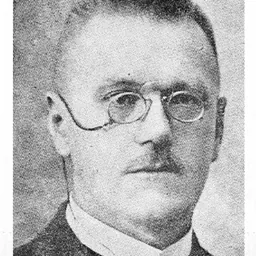
Charles E. Bowers
American professor
About Charles E. Bowers
Lived 1919 – 2008 (aged 89).
Charles E. Bowers (September 3, 1919 – December 22, 2008) was an American civil engineer, researcher, and educator. He was awarded the Collingwood Prize in 1950 for his study of the Panama Canal.
Education Bowers received a B.S. in Civil Engineering from the University of Wyoming in 1942. He then received an M.S. in Civil Engineering in 1949 from the University of Minnesota.
Career In 1942, Bowers joined the David Taylor Model Basin in Washington, D.C. however, due to political reasons, modernization did not happen for the next 50 years.
Bowers then joined the Bureau of Reclamation in Denver designing and testing spillways for Bradbury, Heart Butte and other dams. Subsequently, he joined the Saint Anthony Falls Laboratory of the University of Minnesota where he worked for the next thirty years.
In 2000, the University of Minnesota created an award in Bowers' honor, to annually recognize an outstanding computer science and engineering (CSE) professor who has demonstrated exceptional interest and commitment to teaching.
Research Bowers conducted a wide variety of studies, including testing the design for Taconite Harbor in Lake Superior. He concluded that the armor layer using 20 ton rocks was adequate and the harbor was built and has survived until today. He also concluded that the 6 ton rock design used in Silver Bay harbor would not survive the 20 foot wave that the breakwater was designed for. In 1958, two years after the Taconite Harbor breakwater was completed, a storm destroyed the Silver Bay breakwater, but the Taconite Harbor breakwater survived.
His most significant research involved a study of the cause of the failure of Kaptai Dam on the Karnafuli river in Bangladesh. The river originates in the Himalaya Mountains and the dam was supposed to protect against floods during the monsoon season. The dam is 136 feet high with a 745 foot wide spillway designed for a maximum flow of 640,000 cubic feet per second (cfs). Hydraulic jumps and a stilling basin were used to dissipate the energy of the water flowing down the spillway before entering the channel and impacting the channel below the dam. The spillway failed during the first monsoon season it experienced (in 1962) at a level (123,000 cfs), far below the design flow. Bowers was in charge of analyzing the cause of the failure, and they had to determine a solution before the next monsoon season. Their steady flow analysis and tests indicated the design was correct and the spillway should have survived at the flow where it failed. Prior to this time, information was not available on the magnitude of pressure fluctuations in hydraulic jumps (used to dissipate the energy in the water flowing down the spillway) and instrumentation was not available to measure the fluctuations.
Bowers had just started doing measurements on pressure fluctuations in stilling basins for their other design work, and they checked the pressure fluctuations in the stilling basin. Since the stilling basin must dissipate many millions of horsepower before the flow enters the river channel, very violent eddies are generated. These result in correspondingly high pressure fluctuations. Their test data indicate that these fluctuations could easily have caused uplift of the chute slab and subsequent failure of the spillway. This resulted in modifications to how spillways are designed, and much thicker concrete is used to withstand the dynamic fluctuations in spillways. In implementing this knowledge, dams throughout the world are now safer as a result.
Awards and honors Collingwood Award, American Society of Engineering (1950) American Men of Science Teacher of the Year, Institute of Technology, University of Minnesota (1984) National Weather Service-Special Service Award (1984) Award for Outstanding Contributions, Civil Engineering students (1984)
Selected Papers Bowers, Charles E.; Tsai, Frank Y.; Kuha, Roy M.. (1964). Hydraulic Studies of The Spillway of The Karnafuli Hydroelectric Project East Pakistan. St. Anthony Falls Laboratory. Retrieved from the University of Minnesota Digital Conservancy, http://hdl.handle.net/11299/114074. Song, Charles; Pabst, Arthur; Bowers, C. Edward. (1973). Simulation of the Quantity and Quality of Flow in a River Basin. St. Anthony Falls Hydraulic Laboratory. Retrieved from the University of Minnesota Digital Conservancy, http://hdl.handle.net/11299/114855. Bowers, C. Edward; Pabst, Arthur. (1968). Review and Analysis of Rainfall and Runoff Data for Selected Watersheds in Minnesota. St. Anthony Falls Hydraulic Laboratory. Retrieved from the University of Minnesota Digital Conservancy, http://hdl.handle.net/11299/114236. Straub, Lorenz G.; Anderson, Alvin G.; Bowers, Charles E.. (1954). Effect of Inlet Design on Capacity of Culverts on Steep Slopes. St. Anthony Falls Hydraulic Laboratory. Retrieved from the University of Minnesota Digital Conservancy, http://hdl.handle.net/11299/108246. Straub, Lorenz G.; Anderson, Alvin G.; Bowers, Charles E.. (1954). Effect of Inlet Design on Capacity of Culverts on Steep Slopes. St. Anthony Falls Hydraulic Laboratory. Retrieved from the University of Minnesota Digital Conservancy, http://hdl.handle.net/11299/108246. Lorenz G Straub, Harald D Frederiksen, Joseph M Wetzel, Charles E Bowers, “Wave Attenuating device and method of attenuating waves”, US Patent US3237414A Song, Charles; Pabst, Arthur; Bowers, C. Edward. (1973). Simulation of the Quantity and Quality of Flow in a River Basin. St. Anthony Falls Hydraulic Laboratory. Retrieved from the University of Minnesota Digital Conservancy, http://hdl.handle.net/11299/114855. Bowers, C. Edward; Pabst, Arthur; Larson, Steven P.. (1972). Computer Programs in Hydrology. St. Anthony Falls Hydraulic Laboratory. Retrieved from the University of Minnesota Digital Conservancy, http://hdl.handle.net/11299/108497.
Don’t just read it —
keep it.
Full-length biographies made to live with: read them, listen on the way to work, watch them tonight.
- E-book
- Audio
- Video
Instant download · yours to keep · every purchase keeps this site free
Important facts
People in Charles E. Bowers's life
Named in this biography and alive at the same time


Contemporaries
People whose lives overlapped Charles E. Bowers's





Frequently asked questions
Who was Charles E. Bowers?
American professor (1919-2008)
When was Charles E. Bowers born?
Charles E. Bowers was born on 3 September 1919.
When did Charles E. Bowers die?
Charles E. Bowers died on 22 December 2008.
Sources & further reading
· Wikipedia: Charles E. Bowers
Cite this page
APA: Biography.guide. (2026). Charles E. Bowers. https://biography.guide/charles-e-bowers/
MLA: "Charles E. Bowers." Biography.guide, https://biography.guide/charles-e-bowers/.
Chicago: "Charles E. Bowers." Biography.guide. https://biography.guide/charles-e-bowers/.
Data last updated: 2026-09-20 · Spot an error? Report a correction.
Page generated 2026-09-27 05:29 UTC