
About Charles Douglas Jackson
Lived 1902 – 1964 (aged 62). Charles Douglas Jackson was an American opinion journalist.
Charles Douglas (C. D.) Jackson (March 16, 1902 – September 18, 1964), commonly known as C. D. Jackson, was an American publisher, psychological warfare specialist, and presidential adviser. A senior executive at Time Inc., he served during World War II as Deputy Chief of the Psychological Warfare Branch at Allied Forces Headquarters and later as Deputy Chief of the Psychological Warfare Division at Supreme Headquarters Allied Expeditionary Force. After the war, he remained active in anti-communist information work through Time-Life International, the Free Europe Committee, Radio Free Europe, and the Eisenhower administration, where he served as Special Assistant to the President for International Affairs. Early life and Time Inc. Jackson was born in New York City. After graduating from Princeton University in 1924, he entered the private sector. In 1931 he took a position as Assistant to the President of Time Inc. In 1940 he was President of the Council for Democracy, and from 1942 to 1943, Special Assistant to U.S. Ambassador to Turkey, Laurence Steinhardt.
In North Africa, Jackson worked closely with British propagandist R. H. S. Crossman. Historian James Erdmann describes Jackson as the key OWI figure in North Africa and credits Crossman and Jackson with giving PWB more aggressive leadership, pushing psychological warfare toward enemy forces rather than only occupied audiences, and bringing a more activist journalistic and public-relations style into the organization. Jackson also helped recruit Frank Kaufman, later chief of the PWD/SHAEF Leaflet Section. Erdmann later identified Jackson as McClure’s chief civilian deputy and suggested that former PWD/SHAEF personnel such as McClure and Jackson may have influenced the postwar development of American national and military propaganda agencies. In 1949, Jackson became publisher of Fortune magazine. From 1951 to 1952, he was president of the anticommunist Free Europe Committee, and was a speechwriter for Dwight Eisenhower's successful 1952 presidential campaign. When joining the White House, Jackson took a leave of absence from Fortune. His new job title was Special Assistant to the President for International Affairs, with a salary of $15,000 a year. The Eisenhower Library describes his main function as coordinating activities that interpreted world events to the advantage of the United States and its allies and exploited incidents that reflected negatively on the Soviet Union, Communist China, and other Cold War adversaries. Jackson represented the U.S. as a delegate at the UN's Ninth General Assembly in late 1954.
In the early 1950s, Jackson helped establish the Bilderberg Group and ensured U.S. participation. He attended most of the Bilderberg Group meetings from 1954 to 1964.
Jackson was instrumental in creating Radio Free Europe, and he defended its mission to promote American values throughout the world. When the organization was accused of fomenting anti-Soviet rebellions behind the Iron Curtain, he stated: "Over the years, Radio Free Europe has never, in a single broadcast or leaflet, deviated from its essential policy, and did not broadcast a single program during the recent Polish and Hungarian developments which could be described as an 'incitement' program." To counter Soviet propaganda about the mistreatment of Negroes in the U.S., Jackson emphasized "the significant progress toward full equality brought about by the democratic system", and championed Porgy and Bess as illustrative of the social and cultural advancement that was occurring. His White House records document work on Korea, prisoner-of-war repatriation, the 1953 East German uprising, food relief for East Germany, Stalin’s death, unrest in satellite Europe, Southeast Asia, atomic energy, propaganda balloons, international broadcasting, and major Eisenhower speeches including the Chance for Peace and Atoms for Peace addresses. In 1958 he briefly returned to the White House to aid President Eisenhower as a speechwriter and consultant during the Lebanon crisis. Upon watching the disturbing film on November 24, Jackson ordered it locked away and denied public viewing until an appropriate later time.
Jackson was Time Inc.'s Senior Vice President before his death at age 62 in September 1964.
Don’t just read it —
keep it.
Full-length biographies made to live with: read them, listen on the way to work, watch them tonight.
- E-book
- Audio
- Video
Instant download · yours to keep · every purchase keeps this site free
Important facts
People in Charles Douglas Jackson's life
Named in this biography and alive at the same time

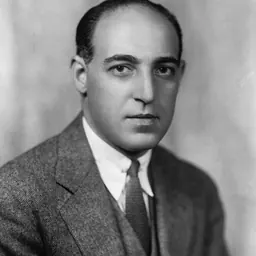
Related people
Same field, nearest in time



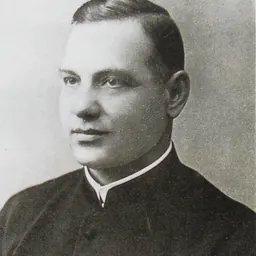
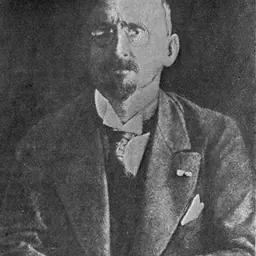
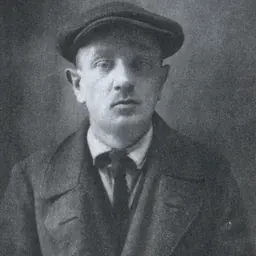
Contemporaries
People whose lives overlapped Charles Douglas Jackson's





Frequently asked questions
Who was Charles Douglas Jackson?
United States general (1902–1964)
When was Charles Douglas Jackson born?
Charles Douglas Jackson was born on 16 March 1902 in New York City.
When did Charles Douglas Jackson die?
Charles Douglas Jackson died on 18 September 1964 in New York City.
What was Charles Douglas Jackson's occupation?
Charles Douglas Jackson was an opinion journalist.
What nationality was Charles Douglas Jackson?
Charles Douglas Jackson was American.
Sources & further reading
· Wikipedia: Charles Douglas Jackson
Cite this page
APA: Biography.guide. (2026). Charles Douglas Jackson. https://biography.guide/charles-douglas-jackson/
MLA: "Charles Douglas Jackson." Biography.guide, https://biography.guide/charles-douglas-jackson/.
Chicago: "Charles Douglas Jackson." Biography.guide. https://biography.guide/charles-douglas-jackson/.
Data last updated: 2026-09-20 · Spot an error? Report a correction.
Page generated 2026-09-27 05:19 UTC