
About Charles Douglas Armstrong
Lived 1897 – 1985 (aged 88). Charles Douglas Armstrong was a British military personnel.
Brigadier Charles Douglas Armstrong (11 June 1897 – 11 December 1985) was a British Army officer in World War I and World War II. In the latter conflict he was the head of the British Special Operations Executive (SOE) liaison mission to the Chetnik forces of Draža Mihailović in Yugoslavia from July 1943 to early 1944.
Early life Armstrong was born on 11 June 1897 and was educated at Cheltenham College. After attending the Royal Military College, Sandhurst, he was commissioned into the East Surrey Regiment in April 1915 during the First World War. Seconded to the Machine Gun Corps, he served in France from 1916 to 1918, where he was twice wounded and, in March 1918, made a prisoner of war.
Repatriated in December 1918, by which time the war was over due to the armistice with Germany, he served in North Russia during the Russian Civil War in 1919 and was awarded the Military Cross (MC) for gallantry. The citation for his MC, appearing in The London Gazette in January 1920, reads as follows:
He was present in Mesopotamia 1920-21 and on the Indian North West Frontier 1930-31,
In April 1942 he was posted to command the 70th (Young Soldiers) Battalion, and later 1st Battalion, the Duke of Wellington's Regiment which, in early 1943 he took to North Africa. According to some sources, he was carefully selected for this mission because of his lack of political contacts or skill. Together with members of his mission, Armstrong parachuted into Yugoslavia at the end of September 1943. Before he was dispatched to Chetnik headquarters, a previous member of British mission with the Chetniks, Colonel Bailey, advised him that the Chetniks were angry and that Mihailović "won't hear of British anymore". The United Kingdom had provided substantial supplies to Yugoslav Communist forces who opposed the Chetniks, while the BBC repeatedly gave the Communist forces credit for the anti-Axis actions of Chetniks, especially during September and October 1943. For example, when Chetniks attacked the German garrison in Prijepolje on 11 September, killed 200 German soldiers and captured the town, the BBC credited Tito's Communist Partisans with the victory.
Witness to Chetnik anti-Axis actions, credited to Partisans by BBC Less than a week after Armstrong arrived at Chetnik headquarters he, Albert Seitz, head of the USA Mission with the Chetniks, and Hudson saw a successful Chetnik attack on Višegrad and the destruction of the railway bridge across Drina. Armstrong and Seitz took part in the Chetnik action against Axis controlled units protecting the railway bridge over Drina in Višegrad. In this attack about 2,500 Chetniks killed about 350 Ustaše and German soldiers and captured a lot of ammunition and arms. Before the Chetniks stormed into Višegrad, they first destroyed four smaller bridges in Mokra Gora. The bridge in Višegrad was destroyed with help of British sappers commanded by British Major Archie Jack. British media, including the BBC, credited Yugoslav Communist Partisans for this successful action by the Chetniks. In spite of protests, including from Kenneth Pickthorn and officials of the Yugoslav government in exile in London, the BBC did not make any corrections.
After the capture of Višegrad, the Chetniks also captured Rogatica on 14 and 15 October and killed more than 200 Axis soldiers. The BBC again credited Communist forces with this success. In November 1943 the Chetniks attacked Axis positions at Nova Varoš and Kalna, and both actions were again attributed to Communists by the BBC. Archival evidence, published in 1980 for the first time, confirms that some actions against Axis carried by Mihailović and his Chetniks with Armstrong were mistakenly credited to Tito and his Communist forces. Armstrong sent an angry protest to the BBC insisting on the publication of correct information, to no avail. Until December 1943 the British army delivered only 30 tons of arms to Chetniks and 18,000 tons to the Communist Partisans, who used many British arms to attack Chetniks.
Armstrong refused to participate in the Ba Congress held between 25 and 28 January 1944 because he was dissatisfied with the refusal of the Chetniks to follow British requests to perform two sabotages against the Germans. Armstrong insisted that Chetniks should destroy bridges over river Morava and river Ibar near Raška as condition for his participation at the Congress.
Leaving Yugoslavia, Armstrong returned to England and, in June 1944, took command of the British Airborne Liaison Unit to the Polish Parachute Brigade. In August 1945, now a substantive Lieutenant Colonel, he took command of the 1st Battalion, East Surrey Regiment in Austria, returning to England in November 1946 to command a prisoner of war camp for Germans.
In retirement he lived in Camberley, Surrey and was a member of the Special Forces Club. He died on 11 December 1985, at the age of 88. There is a memorial plaque to Armstrong in the East Surrey Regiment Chapel in All Saints Church, Kingston upon Thames.
Don’t just read it —
keep it.
Full-length biographies made to live with: read them, listen on the way to work, watch them tonight.
- E-book
- Audio
- Video
Instant download · yours to keep · every purchase keeps this site free
Important facts
People in Charles Douglas Armstrong's life
Named in this biography and alive at the same time
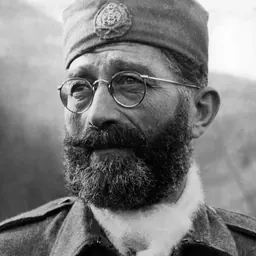



Related people
Same field, nearest in time

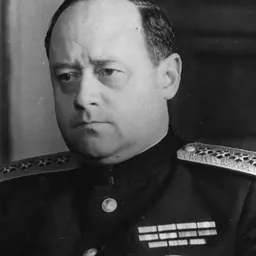



Contemporaries
People whose lives overlapped Charles Douglas Armstrong's
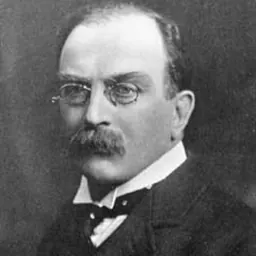

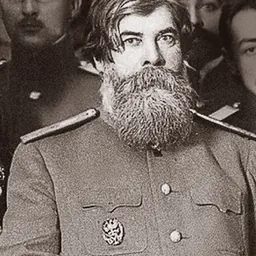
Frequently asked questions
Who was Charles Douglas Armstrong?
British military personnel (1897-1985)
When was Charles Douglas Armstrong born?
Charles Douglas Armstrong was born on 11 June 1897.
When did Charles Douglas Armstrong die?
Charles Douglas Armstrong died on 11 December 1985.
What was Charles Douglas Armstrong's occupation?
Charles Douglas Armstrong was a military personnel.
What nationality was Charles Douglas Armstrong?
Charles Douglas Armstrong was British.
Sources & further reading
· Wikipedia: Charles Douglas Armstrong
· DBpedia: Charles Armstrong (British Army officer)
Cite this page
APA: Biography.guide. (2026). Charles Douglas Armstrong. https://biography.guide/charles-douglas-armstrong/
MLA: "Charles Douglas Armstrong." Biography.guide, https://biography.guide/charles-douglas-armstrong/.
Chicago: "Charles Douglas Armstrong." Biography.guide. https://biography.guide/charles-douglas-armstrong/.
Data last updated: 2026-09-25 · Spot an error? Report a correction.
Page generated 2026-09-27 05:12 UTC