
About Charles David Keeling
Lived 1928 – 2005 (aged 77). Charles David Keeling was an American chemist, oceanographer, physicist and meteorologist, known for Keeling Curve.
Charles David Keeling (April 20, 1928 – June 20, 2005) was an American scientist whose recording of atmospheric carbon dioxide at the Mauna Loa Observatory confirmed Svante Arrhenius's proposition of the possibility of anthropogenic contribution to the greenhouse effect and global warming, by documenting the steadily rising carbon dioxide levels. The Keeling Curve measures the progressive buildup of carbon dioxide, a greenhouse gas, in the atmosphere.
Early life and early career Keeling was born in Scranton, Pennsylvania, to Ralph Keeling and Grace L Keeling (née Sherberne). His father, an investment banker, excited interests of astronomy in a 5-year-old Charles, while his mother instilled a lifelong love of music. He graduated with a degree in chemistry from the University of Illinois in 1948. Charles Keeling earned a PhD in chemistry from Northwestern University in 1953 under Malcolm Dole, a polymer chemist. Most of Dole's graduates were going straight into the oil industry; Keeling "had trouble seeing the future this way" and had become interested in geology, for which he had acquired most of the undergraduate coursework during his PhD. Keeling had applied for postdoctoral positions as a chemist almost exclusively to geology departments "west of the continental divide." He received an offer from Harrison Brown who had recently started a geochemistry department at California Institute of Technology. He was a postdoctoral fellow in geochemistry there until he joined the Scripps Institution of Oceanography in 1956, and was appointed professor of oceanography there in 1968.
At Caltech he developed the first instrument able to measure carbon dioxide in atmospheric samples with consistently reliable accuracy. Keeling camped at Big Sur where he used his new device to measure the level of carbon dioxide and found that it had risen since the 19th century.
Work with the Scripps Institution of Oceanography, 1958–2005 Atmospheric CO2 concentrations measured at Mauna Loa Observatory: The Keeling Curve. Keeling worked at the Scripps Institution for 43 years during which time he published many influential papers. Roger Revelle, the director of the Scripps Institution of Oceanography, based at La Jolla, California, persuaded Keeling to continue his work there. Revelle was also one of the founders of the International Geophysical Year (IGY) in 1957–58 and Keeling received IGY funding to establish a base on Mauna Loa in Hawaii, two miles (3,000 m) above sea level.
Keeling started collecting carbon dioxide samples at the base in 1958.
Keeling married Louise Barthold in 1954. They had five children, one of whom (Ralph Keeling) followed in his father's footsteps and is a climate scientist at the Scripps Institution of Oceanography. Another one of his children, Eric Keeling, currently teaches biology at SUNY New Paltz. Charles Keeling was also an accomplished classical pianist who almost chose a career in music. Keeling was a founding director of the University of California San Diego Madrigal Singers. He was also general chairman of the citizens committee which drafted the Del Mar General Plan (or "Community Plan") in 1975.
Keeling died in 2005, aged 77, of a heart attack.
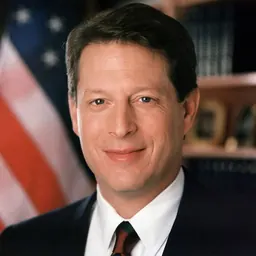
Legacy At a White House ceremony held in July 1997, Keeling was presented with a "special achievement award" from Vice President Al Gore. Keeling was honored "for 40 years of outstanding scientific research associated with monitoring of atmospheric carbon dioxide in connection with Mauna Loa Observatory". The Keeling Curve is "engraved in bronze on a building at Mauna Loa and carved into a wall at the National Academy of Sciences in Washington." It was also a chart on the wall in a classroom at Harvard University where Revelle had moved to teach in the 1960s and where among others, student Al Gore would see and "marvel" at it. In 2006, Gore featured the graph in the book and movie An Inconvenient Truth. The Keeling Curve Prize. Multiple awards presented annually by the Global Warming Mitigation Project since 2018. On August 11, 2025, the minor planet was named in his honor.
Memberships/fellowships Keeling was a Guggenheim fellow at the Meteorological Institute, Stockholm University (1961–62); a guest professor at the Second Physical Institute of the University of Heidelberg (1969–70) and the Physical Institute of the University of Bern (1979–80).
He was a fellow of the American Academy of Arts and Sciences, the American Geophysical Union, and the American Association for the Advancement of Science, and a member of the National Academy of Sciences.
He was a member of the commission on global pollution of the International Association of Meteorology, and scientific director of the Central CO2 Calibration Laboratory of the World Meteorological Organization.
Selected publications
Don’t just read it —
keep it.
Full-length biographies made to live with: read them, listen on the way to work, watch them tonight.
- E-book
- Audio
- Video
Instant download · yours to keep · every purchase keeps this site free
Important facts
People in Charles David Keeling's life
Named in this biography and alive at the same time





Related people
Same field, nearest in time


Contemporaries
People whose lives overlapped Charles David Keeling's




Frequently asked questions
Who was Charles David Keeling?
American scientist (1928–2005)
When was Charles David Keeling born?
Charles David Keeling was born on 20 April 1928 in Scranton.
When did Charles David Keeling die?
Charles David Keeling died on 20 June 2005 in Hamilton.
What was Charles David Keeling's occupation?
Charles David Keeling was a chemist, oceanographer, physicist and meteorologist.
What was Charles David Keeling known for?
Charles David Keeling was known for Keeling Curve.
What nationality was Charles David Keeling?
Charles David Keeling was American.
Sources & further reading
· Wikipedia: Charles David Keeling
· DBpedia: Charles David Keeling
Cite this page
APA: Biography.guide. (2026). Charles David Keeling. https://biography.guide/charles-david-keeling/
MLA: "Charles David Keeling." Biography.guide, https://biography.guide/charles-david-keeling/.
Chicago: "Charles David Keeling." Biography.guide. https://biography.guide/charles-david-keeling/.
Data last updated: 2026-09-26 · Spot an error? Report a correction.
Page generated 2026-09-27 05:13 UTC