
About Charles Cullen
Born 1960. Charles Cullen is an American nurse, serial killer and health professional.
Charles Edmund Cullen (born February 22, 1960) is an American serial killer. While working as a nurse, Cullen murdered dozens—possibly hundreds—of patients during a 16-year career spanning several New Jersey and Pennsylvania medical centers until finally being arrested in 2003. He confessed to committing as many as 40 murders at least 29 of which have been confirmed, Researchers have suggested that Cullen may have murdered as many as 400 people. However, most murders cannot be confirmed due to lack of records.
Early life Charles Cullen was born in West Orange, New Jersey, the youngest of eight children. His father, Edmond, a bus driver, died on September 17, 1960, when Charles was seven months old. His childhood was impoverished; Cullen later described it as "miserable" and claimed to have been constantly bullied by his schoolmates and sisters' boyfriends. He made the first of many suicide attempts when he was approximately nine years old, drinking chemicals from a chemistry set. Cullen's mother, Florence Cullen , was born in England and emigrated to the US after World War II as a war bride. She was killed in a car accident on December 6, 1977, when Cullen was 17 and a junior in high school. He claimed that he was not immediately informed of her death, and instead of returning the body to the family, the hospital chose to cremate her. He served aboard the submarine USS Woodrow Wilson. He successfully passed basic training and the psychological examinations required for submarine crews (who were expected to spend as long as two months at a time being submerged in a cramped vessel). Cullen rose to the rank of petty officer second class as part of the team that operated the vessel's Poseidon missiles. He did not fit in during his time in the Navy and was hazed and (like his school days) bullied by his fellow crewmen.
A year into his service, Cullen's leading petty officer aboard Woodrow Wilson discovered him seated at the missile controls wearing a surgical gown, mask, and gloves rather than his uniform. Cullen was disciplined for that action but never explained why he had dressed that way. The Navy reassigned him to a lower-pressure job on the supply ship USS Canopus. He attempted suicide He graduated in 1987
Shortly before securing his nursing license in 1987, Cullen married Adrienne Taub, a computer programmer. Cullen eventually admitted to killing several other patients at Saint Barnabas, including an AIDS patient who died after Cullen gave him an overdose of insulin. The investigation later determined that Cullen had most likely been responsible, resulting in dozens of patient deaths at the hospital. The hospital administered a lie detector test to Cullen and several other nurses, which they all passed. He later pleaded guilty to killing her with an injection of digoxin. and his wife was disturbed by his unusual behavior and his abuse of the family dogs. In January 1993, she filed for divorce, and four months later she applied for a restraining order against him based on her fear that he might endanger her and their children. The restraining order was granted after Cullen had been treated at two psychiatric institutions. The divorce became final in December 1994, and he moved into a basement apartment in Phillipsburg. In March 1993, Cullen broke into a co-worker's home while she and her young son slept, but he left without waking them. He then began stalking the woman, who filed a police report against him. Cullen subsequently pleaded guilty to trespassing and received one year of probation.
Cullen left Warren Hospital at the end of 1993 He claimed that he did not harm anyone during the first two years at Hunterdon. However, hospital records for that period had been destroyed at the time of his arrest in 2003. Cullen admitted to murdering five patients between January and September 1996, again with overdoses of digoxin. He then found work at Morristown Memorial Hospital but was soon fired for poor performance. where he staffed a ward of ventilator-dependent patients. On 7 May 1998, Francis Henry, 83, was transported to the Lehigh Valley Hospital after choking on his own vomit. Henry's nurse at Liberty, Kimberly Pepe, was contacted three times by Lehigh to ask why he had been administered a "toxic dose of insulin." She was fired over the incident within the next two months despite claims that she did not give Henry the medication. In her 2000 wrongful termination lawsuit, Pepe accused Liberty of "violating her civil rights" and accused the hospital of not investigating Cullen, who already had "problems with his performance" and was also working the evening of Henry's death. Cullen filed for bankruptcy in 1998.
After leaving Liberty, Cullen was employed at the Easton Hospital in Northampton County, Pennsylvania from November 1998 to March 1999. He was hired through a temporary agency called Healthforce of Harrisburg. On 2 December 1998, John R. Sakala, 86, was admitted to the hospital for a persistent cold and “inexplicably” died the following day. During an autopsy, a hospital pathologist found his blood contained “abnormally high level of insulin” but the “extremely low serum glucose level” was not determined to be the cause of death. Sakala’s death was not investigated by the county coroner. Between 29 December 1998 and 31 December 1998, Cullen worked two overnight shifts in the hospital’s 4 North West wing where Ottomar Schramm, 78, was receiving treatment for a seizure. On 30 December 1998, Schramm’s blood tested positive for non-prescribed digoxin. After his death on 31 December 1998, the hospital’s owner, Two Rivers Corporation, alerted the Northampton County Coroner Zachary Lysek in January 1999 for further inquiry. Lysek was concerned that Schramm had been a victim of an “angel of death” but his investigation was deemed inconclusive in 2000 after he was informed by the hospital officials that their internal probe had not produced a suspect.
As part of his plea agreement, Cullen promised to cooperate with authorities if they did not seek the death penalty for his crimes. A month later, he pleaded guilty to the murder of three more patients in New Jersey. In November 2004, Cullen pleaded guilty in an Allentown court to killing six patients and trying to kill three others. He repeatedly interrupted the proceedings by taunting the judge with the chant, "Your Honor, you need to step down." Cullen was ordered to be restrained and gagged.
On March 2, 2006, in New Jersey, Cullen was sentenced to 18 consecutive life sentences; he is not eligible for parole until June 10, 2403. Currently, he is held at New Jersey State Prison in Trenton, New Jersey. On March 10, 2006, Cullen was brought into the courtroom of Lehigh County (Pennsylvania) Judge William H. Platt for a sentencing hearing. Upset with the judge, Cullen repeatedly said, "Your Honor, you need to step down" for 30 minutes until Platt had Cullen gagged with cloth and duct tape. Even after being gagged, Cullen continued to try to repeat the phrase. In that hearing, Platt gave him an additional six life sentences. Cullen will never be eligible for parole because under Pennsylvania law a life sentence comes without the possibility of parole. As part of his plea agreement, Cullen has been working with law enforcement officials to identify additional victims.
After the news of him being a match was revealed to the general public, the prosecutor and the victims’ families were “up in arms” about Cullen going to a hospital where he could “kill somebody or himself.” According to Johnnie Mask, New Jersey’s deputy public defender, Cullen was “so determined” to help Ernie that he threatened to cease cooperation with detectives investigating his case, potentially exposing himself to the death penalty. It was also reported that he had threatened to not attend his sentencing hearing unless he was allowed to donate the kidney. Cullen has denied attempting to trade his sentencing appearance for donation. State officials insisted that he undergo sentencing before being allowed to donate his kidney.
On 20 August 2006, Mask confirmed that a social worker assigned to the case had notified him of the surgery harvesting Cullen’s kidney for the donation. Although the name of the hospital at which the procedure had taken place was not revealed for security reasons, Mask suspected it was St. Francis Medical Center in Trenton, which has a secure prison wing. The kidney was flown to Stony Brook University Hospital. Cullen remained hospitalised for several days before returning to the New Jersey State Prison in Trenton.
Aftermath After his arrest, more than 150 families of patients who died at Somerset Medical Center contacted the law enforcement fearing Cullen’s involvement; almost 50 of them were ruled out as potential victims later, according to Somerset County prosecutor Wayne Forrest. St. Luke's University Hospital received 18 calls from anxious former patients or their families, even though only 4 involved patients received treatment at the hospital’s cardiac unit while Cullen was employed there.
Lawsuits against hospitals In 2008, after four years of litigation, the families of 22 patients believed to be Cullen’s victims reached a confidential settlement with Somerset Medical Center, Hunterdon Medical Center and Warren Hospital to end their wrongful-death lawsuits. The hospitals did not admit to wrongdoing in the case, dismissing claims that administrators failed to stop Cullen from murdering patients and to notify authorities when he was suspected of wrongdoing.
In 2005, families of Regina Miller and Marilyn Hall sued the St. Luke's University Hospital, claiming that Cullen murdered the patients while he worked there. Cullen admitted that Miller and Hall were not one of his victims. The lawsuits were dismissed by Lehigh County Court in 2009, and in 2010, an appeals court upheld the ruling. In 2011, St. Luke’s countersued both families and their attorneys under Pennsylvania’s Dragonetti Act, claiming that the families had no “direct knowledge or evidence” to prove that Cullen was responsible for the deaths of their relatives. The hospital sought to recover $50,000 in punitive damages and over $560,000 in legal costs. The lawsuit was dismissed. The families used the Dragonetti Act to then sue St. Luke’s for the second time, claiming that the hospital “misused civil proceedings and acted with gross negligence and without probable cause when suing them.” The jury ruled in the families’ favor but no financial damages were ordered as part of the verdict. Clifford Haines, representing the families’, said that St. Luke’s had taken "a very public, and aggressive stance against their former patients." In 2008, a similar lawsuit brought forth by St. Luke’s was dismissed by Lehigh County jury, in which the hospital had countersued Ed Shaughnessy, an Easton lawyer. Shaughnessy had first sued St. Luke's for the wrongful death of Franklin Pope, 72, a former patient of the hospital during Cullen’s tenure. He dropped the lawsuit in 2007. The hospital then claimed that he had “purposely filed a frivolous lawsuit” even though the case had “no merit.”
In March 2010, the Lehigh County jury dismissed St. Luke’s from a lawsuit that awarded a $95 million civil judgment against Cullen to families of eight former patients. The families’ appealed to overturn the ruling to hold St. Luke’s accountable, as Cullen had no assets. In September 2012, the Pennsylvania Supreme Court denied their last appeal. The hospital also countersued the firm behind the case, claiming that the lawsuits were “abusive and frivolous.”
In 2012, families of five patients reached a confidential settlement with Cullen and St. Luke’s after eight years of litigation. Nine months prior, the hospital had exhausted last of their several appeals to dismiss the lawsuits when Pennsylvania Supreme Court refused to hear their case. He said that he could not recall how many he killed or why he had chosen them. At times, Cullen adamantly denied committing any murders at a given facility. However, after reviewing medical records, he admitted that he had been involved in patient deaths.
Legal impact Cullen moved from facility to facility undetected mainly because of the lack of requirements to report suspicious behavior by medical workers and inadequate legal obligations on employers. New Jersey and Pennsylvania, like most other states, required health care facilities to report suspicious deaths only in the most egregious cases, and the penalties for failing to report incidents were minor. Also, many states did not give investigators the legal authority to discover workers' previous employers.
Employers feared investigating incidents or giving a bad employment reference for fear of such actions triggering lawsuits. According to detectives and Cullen himself, several hospitals suspected him of harming or killing patients but failed to take appropriate legal actions. After Cullen's criminal conviction, many of the hospitals at which he had worked were sued by the families of his victims. The files and settlements against the New Jersey hospitals, all of which were settled out of court, are sealed.
In some cases, individual workers took it upon themselves informally to try to prevent Cullen from being hired or to have him terminated. Some contacted nearby hospitals in secret or quietly spoke to their superiors to alert them not to hire Cullen. When Cullen took a job at Sacred Heart Hospital, in Allentown, in June 2001, a nurse who had heard rumors about him at Easton Hospital advised her coworkers. The nurses threatened to quit en masse if Cullen was not immediately dismissed, which he was.
Prompted by the Cullen case, Pennsylvania, New Jersey, and 35 other states adopted new laws which encourage employers to give honest appraisals of workers' job performance and provide legal protections for reporting medical errors. The New Jersey laws, in particular, formed the model other states would follow. Firstly, the 2004 Patient Safety Act increased hospitals' responsibility for reporting "serious preventable adverse events". The 2005 Enhancement Act, a supplement to the Patient Safety Act, required hospitals to report certain details on their employees to the New Jersey Division of Consumer Affairs and mandated that complaints and disciplinary records relating to patient care be kept for at least seven years.
In popular culture The 2008 direct-to-video film Killer Nurse, written and directed by Ulli Lommel, was loosely based on Cullen.
The CBS newsmagazine show 60 Minutes featured an interview with Cullen conducted by correspondent Steve Kroft, in an episode titled "Angel of Death" that originally aired on April 28, 2013. It was the first time Cullen had spoken publicly of his crimes or of his motives for committing them.
On June 25, 2020, the British television channel Sky Crime aired the documentary Charles Cullen – Killing for Kindness, produced by Woodcut Mediastory.
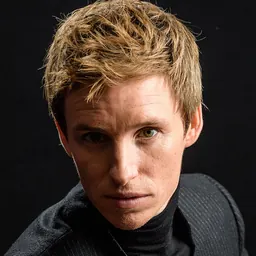
The film The Good Nurse, adapted from Charles Graeber's non-fiction book The Good Nurse: A True Story of Medicine, Madness, and Murder, was released on Netflix on October 26, 2022. Eddie Redmayne portrays Cullen and Jessica Chastain portrays coworker Amy Loughren, a nurse who helped implicate Cullen and assisted detectives by talking with Cullen after work hours while she wore a wire.
Capturing the Killer Nurse is a 2022 documentary film about Cullen. It includes interviews with Cullen, his co-workers, detectives and Amy Loughren, a nurse who assisted the detectives. There are interviews with family members of the victims, true crime author Charles Graeber and audio from Cullen himself. It began streaming on Netflix on November 11, 2022.
A 2023 episode of the podcast Criminal is an interview with Amy Loughren and covers the story.
Don’t just read it —
keep it.
Full-length biographies made to live with: read them, listen on the way to work, watch them tonight.
- E-book
- Audio
- Video
Instant download · yours to keep · every purchase keeps this site free
Important facts
People in Charles Cullen's life
Named in this biography and alive at the same time







Related people
Same field, nearest in time



Contemporaries
People whose lives overlapped Charles Cullen's


Frequently asked questions
Who is Charles Cullen?
Nurse convicted of killing patients
When was Charles Cullen born?
Charles Cullen was born on 22 February 1960 in West Orange.
What is Charles Cullen's occupation?
Charles Cullen is a nurse, serial killer and health professional.
What nationality is Charles Cullen?
Charles Cullen is American.
Sources & further reading
Cite this page
APA: Biography.guide. (2026). Charles Cullen. https://biography.guide/charles-cullen/
MLA: "Charles Cullen." Biography.guide, https://biography.guide/charles-cullen/.
Chicago: "Charles Cullen." Biography.guide. https://biography.guide/charles-cullen/.
Data last updated: 2026-09-20 · Spot an error? Report a correction.
Page generated 2026-09-27 05:24 UTC