
About Charles Correa
Lived 1930 – 2015 (aged 84). Charles Correa was an Indian architect and urban planner.
Charles Mark Correa (1 September 1930 – 16 June 2015) was an Indian architect and urban planner based in Mumbai, India. Credited with the creation of modern architecture in post-Independent India, he was celebrated for his sensitivity to the needs of the urban poor and for his use of traditional methods and materials.
Biography Early life Charles Correa, a Roman Catholic of Goan descent, was born on 1 September 1930 in Secunderabad. He began his higher studies at St. Xavier's College, Mumbai. He went on to study at the University of Michigan (1949–53) where Buckminster Fuller was a teacher, and the Massachusetts Institute of Technology (1953–55) where he obtained his master's degree.
Career In 1958, Charles Correa established his own professional practice in Mumbai. His first significant project was the Mahatma Gandhi Sangrahalaya (Mahatma Gandhi Memorial) at Sabarmati Ashram in Ahmedabad (1958–1963), followed by the Madhya Pradesh Legislative Assembly in Bhopal (1967). In 1961-1966, he designed his first high-rise building, the Sonmarg apartments in Mumbai. On the National Crafts Museum in New Delhi (1975–1990), he introduced "the rooms open to the sky", his systematic use of courtyards. In the Jawahar Kala Kendra (Jawahar Arts Centre) in Jaipur (1986–1992), he makes a structural hommage to Jai Singh II. Later, he invited the British artist Howard Hodgkin for the outside design of the British Council in Delhi (1987–1992). which shared the site with the Aga Khan Museum designed by Fumihiko Maki, and the Champalimaud Foundation Centre in Lisbon, inaugurated by the Portuguese President Aníbal Cavaco Silva on 5 October 2010.
Final years He died on 16 June 2015 in Mumbai following a brief illness.
Work Style Charles Correa designed almost 100 buildings in India, from low-income housing to luxury condos. He rejected the glass-and-steel approach of some post-modernist buildings, and focused on designs deeply rooted in local cultures, all the while providing modern structural solutions under his creative designs. His style was also focused on reintroducing outdoor spaces and terraces.
His work is the physical manifestation of the idea of Indian nationhood, modernity and progress. His vision sits at the nexus defining the contemporary Indian sensibility and it articulates a new Indian identity with a language that has a global resonance. He is someone who has that rare capacity to give physical form to something as intangible as ‘culture’ or ‘society’ – and his work is therefore critical: aesthetically; sociologically; and culturally.|British architect David Adjaye in 2013.
In a 2024 article in the Journal of the Society of Architectural Historians, Vishvesh Prabhakar Kandolkar and R. Benedito Ferrão trace "the influence of the architect's minority Goan origins in his design practice," especially in "focusing on the Islamicate and Indo-Portuguese aesthetics" he imbibed.
Projects
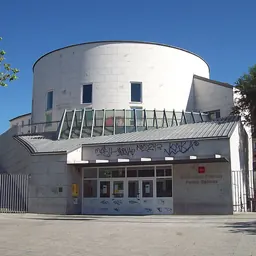
Photo Date Name Location Notes 125px 1958–63 Mahatma Gandhi SangrahalayaMahatma Gandhi Memorial Sabarmati Ashram, Ahmedabad 1958–59 Cama Hotel Ahmedabad substantially altered later by owners 1961–62 Tube House Ahmedabad demolished 125px 1967 Madhya Pradesh Legislative Assembly Bhopal 125px 1969–74 The Leela Kovalam- A Raviz Hotel Kovalam sloping architecture that blends into the landscape 125px 1975–90 National Crafts Museum New Delhi R&D facility of Mahindra & Mahindra Ltd Mahindra Research Valley, Chennai 1980–97 Vidhan Bhavan 125px 1982 Bharat Bhavan Bhopal 1986 Artist Village CBD Belapur, Navi Mumbai 125px 1986–92 Jawahar Kala KendraJawahar Arts Centre Jaipur 125px 1986 Jeevan BharatiLife Insurance Corporation of India On the 2018 World Monuments Watch list of "50 Cultural Sites at Risk from Human and Natural Threats" 125px 1987–92 British Council Delhi 125px 1989 Jawaharlal Nehru Centre for Advanced Scientific Research Bangalore 125px 2000 St. Peter and St. Paul's Church, Parumala Parumala, Thiruvalla 125px 2000–05 McGovern Institute for Brain Research MIT, Boston, US 2004 City centre Salt Lake City, Kolkata 125px 2007–10 Champalimaud Centre for The Unknown Lisbon, Portugal 125px Ismaili Centre Toronto, Canada Jawaharlal Nehru Institute of Banking and Finance Hyderabadleft 112x112px2023-25Inter-University Centre for Astronomy and AstrophysicsSavitribai Phule Pune University, PuneArchitect Charles Correa's last project before he died in 2015 was the Inter-University Centre for Astronomy and Astrophysics (IUCAA - 2) in Pune, India. The IUCAA is a premier research institution in India, established in 1988 with the aim of promoting excellence in research and education in astronomy and astrophysics. The IUCAA building is a unique example of Correa's architectural style, which combines modernism with traditional Indian design elements. The building is spread over an area of 16 acres and is designed to be both functional and aesthetically pleasing. The design incorporates features like courtyards, terraces, and verandas, which provide ample natural light and ventilation while also creating spaces for people to interact and collaborate.
Construction of the IUCAA 2 building started in 2023, eight years after Correa's death, and will completed in 2025.
Awards 1972: Padma Shri 1984: Royal Gold Medal for architecture by the Royal Institute of British Architects. 1994: Praemium Imperiale 1998: 7th Aga Khan Award for Architecture for Madhya Pradesh Legislative Assembly 2005: Austrian Decoration for Science and Art alt=Charles Correa receiving Padma Vibhushan from President Dr. A.P.J. Abdul Kalam Charles Correa receiving Padma Vibhushan from President Dr. A.P.J. Abdul Kalam in 2006 2006: Padma Vibhushan given by Government of India 2011: Gomant Vibhushan conferred by Government of Goa
Publications Charles Correa, The New Landscape, RIBA Enterprises, December 1985,
Personal life Charles Correa married Monika (née Sequeira), an artist, in 1961. Together they lived in one of the flats of the Sonmarg apartments in Mumbai. They had two children.
Don’t just read it —
keep it.
Full-length biographies made to live with: read them, listen on the way to work, watch them tonight.
- E-book
- Audio
- Video
Instant download · yours to keep · every purchase keeps this site free
Important facts
People in Charles Correa's life
Named in this biography and alive at the same time


Related people
Same field, nearest in time



Contemporaries
People whose lives overlapped Charles Correa's



Frequently asked questions
Who was Charles Correa?
Indian architect and urban planner (1930–2015)
When was Charles Correa born?
Charles Correa was born on 1 September 1930 in Hyderabad.
When did Charles Correa die?
Charles Correa died on 16 June 2015 in Mumbai.
What was Charles Correa's occupation?
Charles Correa was an architect and urban planner.
What nationality was Charles Correa?
Charles Correa was Indian.
Sources & further reading
Cite this page
APA: Biography.guide. (2026). Charles Correa. https://biography.guide/charles-correa-architect/
MLA: "Charles Correa." Biography.guide, https://biography.guide/charles-correa-architect/.
Chicago: "Charles Correa." Biography.guide. https://biography.guide/charles-correa-architect/.
Data last updated: 2026-09-25 · Spot an error? Report a correction.
Page generated 2026-09-27 05:09 UTC