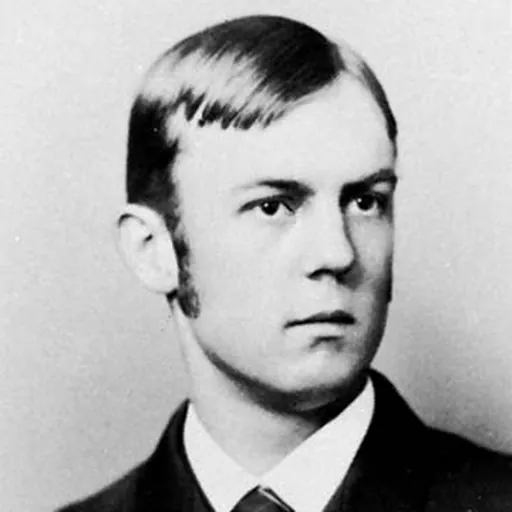
About Charles Cooley
Lived 1864 – 1929 (aged 64). Charles Cooley was an American sociologist and economist.
Charles Horton Cooley (August 17, 1864 – May 7, 1929) was an American sociologist. He was the son of Michigan Supreme Court Judge Thomas M. Cooley. He studied and went on to teach economics and sociology at the University of Michigan.
He was a founding member of the American Sociological Association in 1905 and became its eighth president in 1918. He is perhaps best known for his concept of the looking-glass self, which is the concept that a person's self grows out of society's interpersonal interactions and the perceptions of others.
Biography
Charles Horton Cooley was born in Ann Arbor, Michigan, on August 17, 1864, to Mary Elizabeth Horton and Thomas M. Cooley. Thomas Cooley was the Supreme Court Judge for the state of Michigan, and he was one of the first three faculty members to found the University of Michigan Law School in 1859. He served as dean of the law school from 1859 to 1884. Cooley's mother, Mary, took an active interest in public affairs and traveled with her husband to several cities around the United States in relation to the Interstate Commerce Commission. His father was a very successful political figure who stressed the importance of education to his six children. Nevertheless, Cooley had a difficult childhood, which exacerbated his feelings of detachment towards his father. Cooley was a daydreamer and much of his "dreaming-life" had a substantial influence to his sociological works. As a child, he dealt with feelings of isolation and loneliness, which led him to develop an interest in reading and writing.
Education
At the age of sixteen, Cooley began attending the University of Michigan. Cooley graduated from the University of Michigan in 1887, and continued with a year's training in mechanical engineering. Cooley returned to pursue a master's degree in political science and sociology in 1890. Following completion, he began teaching economics and sociology at UMich in the fall of 1892. Cooley went on to receive a PhD in philosophy in 1894. At this time he was interested in the subject matter of sociology, but due to the University of Michigan not having a sociology department, he had to continue the examination of his PhD through Columbia University. There, Cooley worked closely alongside American sociologist and economist, Franklin Henry Giddings and developed his doctoral thesis, The Theory of Transportation in economics.
Since his father was honored nationwide, Cooley feared the idea of failure. He lacked direction in life and contemplated science, mathematics, social science, psychology or sociology as his field of study. He wished to write and think, and after reading philosopher Herbert Spencer's works, Cooley realized he had an interest in social problems. He shared his reflections of the works of Spencer in 1920, citing that while he brought many valuable viewpoints with the subject of Darwinian principles, he lacks sympathy and the appropriate usage of the sociological perspective.
Cooley decided that he wanted to study sociology because it gave him the ability to analyze social discrepancies. He taught the University of Michigan's very first sociology class in 1899. He also played a prominent role in the development of symbolic interactionism, in which he worked heavily with fellow University of Michigan faculty member, psychologist John Dewey. He also encouraged sociologists to use the method of sympathetic introspection when attempting to understand the consciousness of an individual. Cooley thought that the only practical method is to study the actual situation "closely" and "kindly" with other people involved, then gradually work out the evil from the mixture and replace it with good. Basically, the only way to understand a grotesque human being is to identify how and why his human nature has come to work that way. He felt it was necessary in order to truly understand the activities taken from the actor, effectively separating Cooley from a majority of sociologists who preferred more traditional, scientific techniques. Cooley soon shifted to a broader analysis of the interplay of individual and social processes. In Human Nature and the Social Order (1902) he foreshadowed George Herbert Mead's discussion of the symbolic ground of the self by detailing the way in which an individual's active participation in society affects the emergence of normal social participation. Cooley greatly extended this conception of the "looking-glass self" (I am, who I think you think, that I am) in his next book, Social Organization (1909), in which he sketched a comprehensive approach to society and its major processes.
Social organization The first sixty pages of Social Organization (1909) were a sociological antidote to Sigmund Freud. In that much-quoted segment, Cooley formulated the crucial role of primary groups (family, playgroups and community of elders) as the source of one's morals, sentiments, and ideals. Primary groups are the first groups of individuals one is introduced to and are also influenced in their ideas and beliefs. They are the result of intimate association and corporation, along with coinciding ideals and values. He argued that individuals have two different channels of life- one from heredity and the other from society. Heredity is biological and predisposed; it is the human nature that people are born with. Society is the human nature that is expressed in primary groups that we can find in all civilizations. But the impact of a primary group is so great that individuals cling to shared beliefs in more complex associations, and even create new primary groupings within formal organizations. From this, he resolved to create a "Mental-Social" Complex of which he would term the "looking-glass self."
The looking-glass self is created through the imagination of how one's self might be viewed through the eyes of another individual. This would later be termed "empathic introspection." This theory not only applied to the individual, but to the macro-level economic issues of society and macro-sociological conditions that develop over time.
To the economy, Cooley presented a divergent view from the norm, stating that "...even economic institutions could [not] be understood solely as a result of impersonal market forces." With regard to the sociological perspective and its relevancy toward traditions he states that the dissolution of traditions may be positive, thus creating "the sort of virtues, as well as of vices, that we find on the frontier: plain dealing, love of character and force, kindness, hope, hospitality and courage." He believed that sociology continues to contribute to the "growing efficiency of the intellectual processes that would enlighten the larger public will."
The "looking-glass self"
The "looking-glass self" is undoubtedly Cooley's most famous concept, and is widely known and accepted by psychologists and sociologists today. It expanded William James's idea of self to include the capacity of reflection on its own behavior. Other people's views build, change and maintain our self-image; thus, there is an interaction between how we see ourselves and how others see us. Through these interactions, human beings develop an idea of who they are. He argued that when we feel shame or pride, it is due to what we think others view us as. He also mentions that we do not always perceive someone's impressions correctly. For example, if a student incorrectly answers a question in class, they might later question their own intelligence or capacity to prepare sufficiently. The notion of the looking-glass self applies throughout an individual's life: interactions with new people time and again encourage self-evaluation based on a presumed impression given off.
Thus, the three stages observed in the looking-glass self are outlines as: You imagine how you appear to the other person. You imagine the judgment of the other person. You feel some sense of pride, happiness, guilt, or shame.
In line with William James's thoughts, the concept of the looking glass self-contributed to an increasing abandonment of the so-called Cartesian disjunction between the human mind and the external social world. Cooley sought to break down the barrier Cartesian thought had erected between the individual and its social context.
"A self-idea of this sort seems to have three principal elements: the imagination of our appearance to the other person; the imagination of his judgment of that appearance, and some sort of self-feeling, such as pride or mortification."
Social process Cooley's Social Process (1918) emphasized the non-rational, tentative nature of social organization and the significance of social competition. Social Process was an essay-based work that expressed Cooley's social theories. It was more philosophical than sociological. He interpreted modern difficulties as the clash of primary group values (love, ambition, loyalty) and institutional values (impersonal ideologies such as progress or Protestantism) (See also The Protestant Ethic and the Spirit of Capitalism). As societies try to cope with their difficulties, they adjust these two kinds of values to one another as best they can. Cooley also mentions the idea of heroes and hero worship. He believed that heroes were an aide or a servant to the internalization of social norms because they represent and serve as an example to reinforce social values. The Social Process was Cooley's last major work, heavily influenced by Darwinian principles of natural selection and adaptation to collective (social) existence.
Personal life Cooley married Elsie Jones in 1890, who was the daughter of a professor of medicine at the University of Michigan. Mrs. Cooley differed from her husband in that she was outgoing, energetic, and capable of ordering their common lives in such a manner that mundane cares were not to weigh heavily on her husband. The couple had three children, a boy and two girls, and lived quietly and fairly withdrawn in a house close to the campus. The children served Cooley as his own domestic laboratory subjects for his study of genesis and growth of the self. He would observe imitation behavior in his three children and analyzed their reactions based on age. Even when he was not engaged in the observation of his own self and wished to observe others, he did not need to leave the domestic circle. Cooley also found pleasure in amateur botany and bird-watching in spare time away from his research.
Cooley's health began to deteriorate in 1928. He was diagnosed with an unidentified form of cancer in March 1929 and died two months later.
Cooley's works 1891: The Social Significance of Street Railways, Publications of the American Economic Association 6, 71–73 1894: Competition and Organization, Publications of the Michigan Political Science Association 1, 33–45 1894: The Theory of Transportation, Baltimore: Publications of the American Economic Association 9 1896: Nature versus Nurture' in the Making of Social Careers, Proceedings of the 23rd Conference of Charities and Corrections: 399–405 1897: Genius, Fame and the Comparison of Races, Philadelphia: Annals of the American Academy of Political and Social Science 9, 1–42 1897: The Process of Social Change, Political Science Quarterly 12, 63–81 1899: Personal Competition: Its Place in the Social Order and the Effect upon Individuals; with Some Considerations on Success, Economic Studies 4, 1902: Human Nature and the Social Order, New York: Charles Scribner's Sons (online), revised edn 1922 (online) 1902: The Decrease of Rural Population in the Southern Peninsula of Michigan, Publications of the Michigan Political Science Association 4, 28–37 1904: Discussion of Franklin H. Giddings', A Theory of Social Causation, Publications of the American Economic Association, Third Series, 5, 426–431 1907: Social Consciousness, Publications of the American Sociological Society 1, 97–109 1907: Social Consciousness, American Journal of Sociology 12, 675–687 Previously published as above. 1908: A Study of the Early Use of Self-Words by a Child, Psychological Review 15, 339–357 1909: Social Organization: a Study of the Larger Mind, New York: Charles Scribner's Sons (online) 1909: Builder of Democracy, Survey, 210–213 1912: Discussion of Simon Patten's The Background of Economic Theories, Publications of the American Sociological Society 7, 132 1912: Valuation as a Social Process, Psychological Bulletin 9, Also published as part of Social Process 1913: The Institutional Character of Pecuniary Valuation, American Journal of Sociology 18, 543–555. Also published as part of Social Process 1913: The Sphere of Pecuniary Valuation, American Journal of Sociology 19, 188–203. Also published as part of Social Process 1915: The Progress of Pecuniary Valuation, The Quarterly Journal of Economics 30, 1–21. Also published as part of Social Process 1916: Builder of Democracy, Survey 36, 116 1917: Social Control in International Relations, Publications of the American Sociological Society 12, 207–216 1918: Social Process, New York: Charles Scribner's Sons (online) 1918: A Primary Culture for Democracy, Publications of the American Sociological Society 13, 1–10 1918: Political Economy and Social Process, Journal of Political Economy 25, 366–374 1921: Reflections Upon the Sociology of Herbert Spencer, American Journal of Sociology 26, 129–145 1924: Now and Then, Journal of Applied Sociology 8, 259–262. 1926: The Roots of Social Knowledge, American Journal of Sociology 32, 59–79. 1926: Heredity or Environment, Journal of Applied Sociology 10, 303–307 1927: Life and the Student, NY: Charles Scribner's Sons 1928: Case Study of Small Institutions as a Method of Research, Publications of the American Sociological Society 22, 123–132 1928: Sumner and Methodology, Sociology and Social Research 12, 303–306 1929: The Life-Study Method as Applied to Rural Social Research, Publications of the American Sociological Society 23, 248–254 1930: The Development of Sociology at Michigan. pp. 3–14 in Sociological Theory and Research, being Selected papers of Charles Horton Cooley, edited by Robert Cooley Angell, New York: Henry Holt 1930: Sociological Theory and Social Research, New York: Henry Holt 1933: Introductory Sociology, with Robert C Angell and Lowell J Carr, NY: Charles Scribner's Sons
Don’t just read it —
keep it.
Full-length biographies made to live with: read them, listen on the way to work, watch them tonight.
- E-book
- Audio
- Video
Instant download · yours to keep · every purchase keeps this site free
Important facts
People in Charles Cooley's life
Named in this biography and alive at the same time

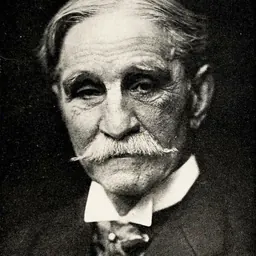
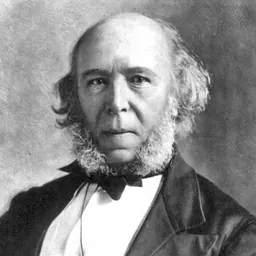
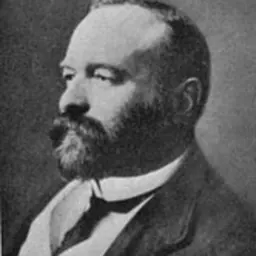




Related people
Same field, nearest in time

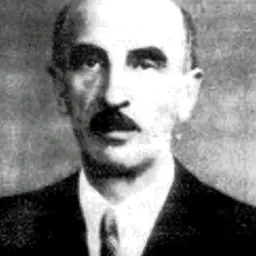
Contemporaries
People whose lives overlapped Charles Cooley's

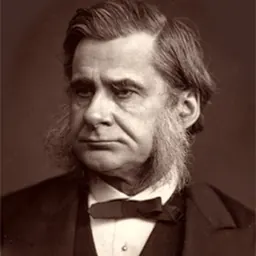

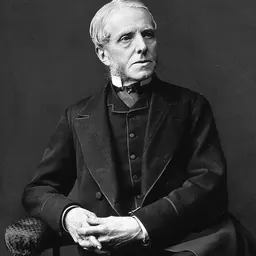


Frequently asked questions
Who was Charles Cooley?
American sociologist (1864–1929)
When was Charles Cooley born?
Charles Cooley was born on 17 August 1864 in Ann Arbor.
When did Charles Cooley die?
Charles Cooley died on 8 May 1929 in Ann Arbor.
What was Charles Cooley's occupation?
Charles Cooley was a sociologist and economist.
What nationality was Charles Cooley?
Charles Cooley was American.
Sources & further reading
· DBpedia: Charles Horton Cooley
Cite this page
APA: Biography.guide. (2026). Charles Cooley. https://biography.guide/charles-cooley/
MLA: "Charles Cooley." Biography.guide, https://biography.guide/charles-cooley/.
Chicago: "Charles Cooley." Biography.guide. https://biography.guide/charles-cooley/.
Data last updated: 2026-09-23 · Spot an error? Report a correction.
Portrait: Wikimedia Commons · author & licence
Page generated 2026-09-27 05:04 UTC