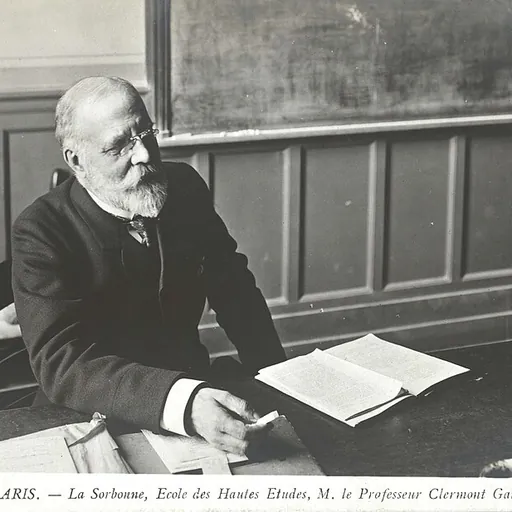
Charles Clermont-Ganneau
French orientalist and archaeologist
About Charles Clermont-Ganneau
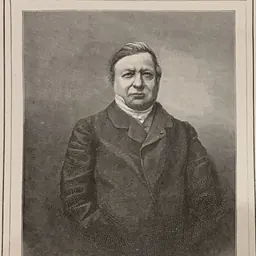
Lived 1846 – 1923 (aged 76). Charles Clermont-Ganneau was a French archaeologist, diplomat, professor, art historian, translator and dragoman.
Charles Simon Clermont-Ganneau (19 February 1846 – 15 February 1923) was a noted French Orientalist and archaeologist.
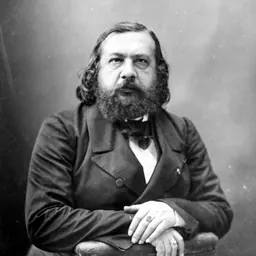
Biography Clermont-Ganneau was born in Paris, the son of Simon Ganneau, a sculptor and mystic who died in 1851 when Clermont-Ganneau was five, after which Théophile Gautier took him under his wing. After an education at the Institut national des langues et civilisations orientales, he entered the diplomatic service as dragoman to the consulate at Jerusalem, and afterwards at Constantinople. He laid the foundation of his reputation by his involvement with the Mesha Stele (Moabite Stone), which bears the oldest Semitic inscription known.
In 1871, Clermont-Ganneau identified the biblical city of Gezer (Joshua 16:11) with that of Abu Shusha, formerly known as Tell el Jezer. In the same year he discovered the Temple Warning inscription in Jerusalem. In 1874 he was employed by the British government to take charge of an archaeological expedition to Palestine. Among his discoveries there was the rock-cut tomb of the Biblical Shebna. He explored/discovered many tombs in Wady Yasul, a valley immediately south of Jerusalem, which he claimed served as an auxiliary cemetery for Jerusalem at some ancient . Based on geographic and linguistic evidence he theorized that this valley was Azal mentioned in Zechariah 14:5 in the Bible. He was the first to make archeological soundings at Emmaus-Nicopolis. He was subsequently entrusted by his own government with similar missions to Syria and the Red Sea. He was made chevalier of the Legion of Honour in 1875. After serving as vice-consul at Jaffa from 1880 to 1882, he returned to Paris as secrétaire interpréte for oriental languages, and in 1886 was appointed consul of the first class. He subsequently accepted the post of director of the École des Langues Orientales and professor at the Collège de France.
In 1889 he was elected a member of the Académie des Inscriptions et Belles Lettres, of which he had been a correspondent since 1880. In 1896 he was promoted to be consul-general, and was minister plenipotentiary in 1906.
Crusades against archaeological forgeries
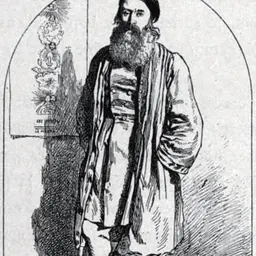
In 1873, after the Jerusalem antiquities dealer Moses Wilhelm Shapira offered a set of Moabite artifacts (known as the Shapira Collection) for sale, Clermont-Ganneau attacked the collection as a forgery. In 1883, Shapira offered the so-called "Shapira Strips," fragments of ancient parchment allegedly found near the Dead Sea, for sale to the British Museum, which exhibited two of the strips. Clermont-Ganneau attended the exhibition, and was the first person in England to attack their authenticity. A more recent re-litigation of the case by contemporary scholars inclines against the grain of the 19th century verdict, reconsidering the case of the scroll with arguments that "challenge the consensus forgery narrative." Some learned opinions, at least, consider that the scroll may be authentic after all. Etudes d'archéologie orientale (1880, etc.) Les Fraudes archéologiques en Palestine (Paris: Leroux, 1885) Recueil d'archéologie orientale (Paris: Leroux, 1885, etc.) Album d'antiquités orientales (Paris: Leroux, 1897, etc.) (1896): Archaeological Researches in Palestine 1873-1874, [ARP], translated from the French by J. McFarlane, Palestine Exploration Fund, London. Volume 1 (1896): Archaeological Researches in Palestine 1873-1874, [ARP], translated from the French by J. McFarlane, Palestine Exploration Fund, London. Volume 2
Don’t just read it —
keep it.
Full-length biographies made to live with: read them, listen on the way to work, watch them tonight.
- E-book
- Audio
- Video
Instant download · yours to keep · every purchase keeps this site free
Important facts
People in Charles Clermont-Ganneau's life
Named in this biography and alive at the same time
Related people
Same field, nearest in time



Contemporaries
People whose lives overlapped Charles Clermont-Ganneau's



Frequently asked questions
Who was Charles Clermont-Ganneau?
French orientalist and archaeologist (1846–1923)
When was Charles Clermont-Ganneau born?
Charles Clermont-Ganneau was born on 19 February 1846 in Paris.
When did Charles Clermont-Ganneau die?
Charles Clermont-Ganneau died on 15 February 1923 in Paris.
What was Charles Clermont-Ganneau's occupation?
Charles Clermont-Ganneau was an archaeologist, diplomat, professor, art historian, translator and dragoman.
What nationality was Charles Clermont-Ganneau?
Charles Clermont-Ganneau was French.
Sources & further reading
· Wikipedia: Charles Clermont-Ganneau
· DBpedia: Charles Simon Clermont-Ganneau
Cite this page
APA: Biography.guide. (2026). Charles Clermont-Ganneau. https://biography.guide/charles-clermont-ganneau/
MLA: "Charles Clermont-Ganneau." Biography.guide, https://biography.guide/charles-clermont-ganneau/.
Chicago: "Charles Clermont-Ganneau." Biography.guide. https://biography.guide/charles-clermont-ganneau/.
Data last updated: 2026-09-24 · Spot an error? Report a correction.
Portrait: Wikimedia Commons · author & licence
Page generated 2026-09-27 05:08 UTC