
About Charles C. Lockwood
Lived 1877 – 1958 (aged 81). Charles C. Lockwood was an American lawyer, politician, judge and new York State Supreme Court, known for New York City.
Charles Clapp Lockwood (September 2, 1877 – September 21, 1958) was an American lawyer and a Republican Party politician from New York. He was a member of the New York State Senate from 1915 to 1922 (4th District 1915–1918, 7th District 1919–1922) and a justice of the New York Supreme Court 2nd District from 1932 to 1947. He is probably best known for presiding over the Joint Legislative Committee on Housing, also known as the Lockwood Committee (1919–1922), investigating rents and housing in New York City after World War I.
Early life Lockwood was born on September 2, 1877, in Brooklyn, the son of James K. P. Lockwood (1845–1922) and Katherine Marshall Lockwood. After working in a drugstore in his boyhood and in a lumber yard, he attended evening high school and eventually graduated in 1900 from the New York Law School. Prior to his graduation he worked as an office boy and clerk in the law office of Jasper W. Gilbert, a former justice of the New York Supreme Court. Eventually, he became an associate of the firm and would remain for 14 years.
Lockwood was a prolific legislator. According to The Brooklyn Daily Eagle, as a senator he "sponsored and passed more big legislation than any two members of that body put together during the corresponding period". Because of a nervous breakdown, he was unable to defend the bill in the Senate. The bill advanced nevertheless. He also introduced a bill to sponsor the establishment of kindergartens in public schools. These efforts earned him the support of teachers' unions and the female vote.
Lockwood Committee
Tenants standing outside a building in Harlem where all tenants went on strike in September 1919.
Lockwood headed the Joint Legislative Committee on Housing, better known as the Lockwood Committee, which was set up in 1919 to investigate renting and building conditions in New York City and end a spate of rent increases resulting from the housing shortage after World War I. From April 1919 to March 1920, amid a series of rent strikes, lengthy hearings and investigations were conducted.
Investigations and findings The committee found that housing conditions at the time constituted a serious menace to public health in New York. There was a shortage of around 80,000 low-priced homes. Some 400,000 persons were directly affected by the scarcity of affordable dwellings and the poor quality of the existing ones. The proportion of dwellers per square foot was three to four times that of the pre-war level and considered a "menace to lives, health, morals and safety of the entire community."
The committee uncovered corruption and wrongdoing at every level of the housing industry at a series of hearings and investigations. At the outset, landlords who charged tenants usurious rents were in the committee's spotlight, but subsequently labor unions and building material suppliers were found implicated in a racket that inflated housing costs. Banking and insurance practices in the real estate market were also examined and deemed inadequate.
Legislative response In April 1920, the committee issued a series of recommendations to diminish the rent spiral, resulting in the passage of twelve laws in the Anti-Rent Profiteering Bill. Property owners opposed the bill because it decreased landlords' unlimited control over property and introduced courts into the—up to that time—private landlord–tenant relationship. The new laws required that tenants receive 30 days' notice before eviction and also introduced certain strict conditions for eviction. In 1923, he was considered for a federal judgeship in Brooklyn, but the business and labor interests that had been under scrutiny of the Lockwood Committee effectively opposed his nomination. Lockwood tried to unify the subway system under municipal authority and was a strong proponent of the five-cent fare, a contentious issue which in New York City had become a fundamental right that no politician could oppose without severe political consequences. In the 1928 New York state election, he ran on the Republican ticket for Lieutenant Governor of New York with Albert Ottinger for governor, but was defeated by Democrat Herbert H. Lehman, who ran with Franklin D. Roosevelt. After his retirement he continued to act as an official referee for the court, handling complicated land acquisition cases in which the City of New York was defrauded of millions of dollars each year by corrupt officials and crooked lawyers.
In his final years, Governor Thomas E. Dewey appointed Lockwood along with New York City's construction coordinator Robert Moses and former Secretary of War Robert P. Patterson as a member of the Temporary Long Island Railroad Commission, installed after the Richmond Hill train crash on November 22, 1950, which claimed 79 lives. The commission recommended the state purchase and operation of the railway service by a non-profit public authority.
In 1954, he served as chairman of the Special Legislative Committee on Integrity and Ethical Standards in Government after it was discovered that influential politicians acquired substantial blocks of stock in harness racing tracks and racing associations. The committee proposed the first generally applicable state ethics law in New York.
Lockwood was associated with the Guggenheimer & Untermyer law firm and was president of the Board of Trustees of the Brooklyn Law School.
Death and legacy Lockwood died of a heart attack on September 21, 1958, in Brooklyn, New York City, at the age of 81. He was survived by his second wife, Hilda Bisset Lockwood, and a son, John Marshall Lockwood. His first wife, Patricia Bleiler Lockwood, whom he had married in 1906, died in 1957.
Don’t just read it —
keep it.
Full-length biographies made to live with: read them, listen on the way to work, watch them tonight.
- E-book
- Audio
- Video
Instant download · yours to keep · every purchase keeps this site free
Important facts
People in Charles C. Lockwood's life
Named in this biography and alive at the same time





Related people
Same field, nearest in time
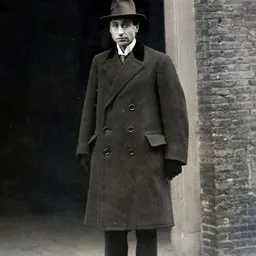
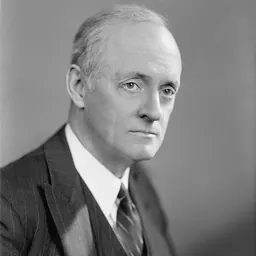
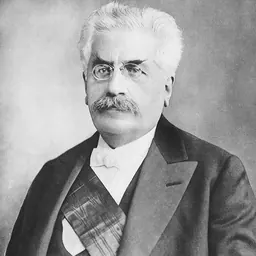
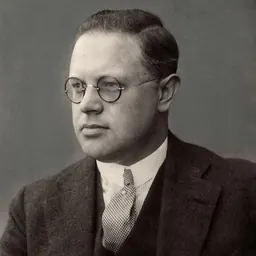
Contemporaries
People whose lives overlapped Charles C. Lockwood's



Frequently asked questions
Who was Charles C. Lockwood?
American politician (1877-1958)
When was Charles C. Lockwood born?
Charles C. Lockwood was born on 2 September 1877 in Brooklyn.
When did Charles C. Lockwood die?
Charles C. Lockwood died on 21 September 1958 in Brooklyn.
What was Charles C. Lockwood's occupation?
Charles C. Lockwood was a lawyer, politician, judge and new York State Supreme Court.
What was Charles C. Lockwood known for?
Charles C. Lockwood was known for New York City.
What nationality was Charles C. Lockwood?
Charles C. Lockwood was American.
Sources & further reading
· Wikipedia: Charles C. Lockwood
· DBpedia: Charles C. Lockwood
Cite this page
APA: Biography.guide. (2026). Charles C. Lockwood. https://biography.guide/charles-c-lockwood/
MLA: "Charles C. Lockwood." Biography.guide, https://biography.guide/charles-c-lockwood/.
Chicago: "Charles C. Lockwood." Biography.guide. https://biography.guide/charles-c-lockwood/.
Data last updated: 2026-09-22 · Spot an error? Report a correction.
Page generated 2026-09-27 05:16 UTC