
About Charles C. Deam
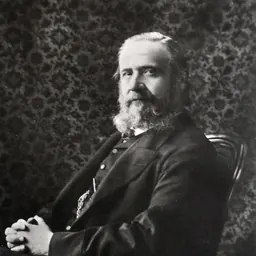
Lived 1865 – 1953 (aged 87). Charles C. Deam was an American botanist, writer, botanical collector, scientific collector and forester.
Charles Clemon Deam (August 30, 1865 – May 29, 1953) was the first state forester of Indiana. His interest in botany began at a young age and grew to include categorization and sustainable practices. He discovered 25 new species, 48 plants are named after him and his herbarium includes 78,000 specimens, still preserved at IU Bloomington.
Early life Charles C. Deam was born on August 30, 1865, on his family farm near Bluffton in Wells County, Indiana. Growing up on a farm, he learned the value of hard work. He earned money through odd jobs such as building fences for another farmer. He spent his savings on a poem book by Henry Wadsworth Longfellow. A young Deam was always curious and collected Indian relics he found on the farm. Deam's other interests included the natural world, something his father showed him through farm produce, garden plants, and herbal remedies. When he was sixteen, he became deathly ill from typhoid fever. He received a herbal remedy of milk and old field balsams or cudweed to gradually nurse him back to good health. His mother, also sick, died despite the medicine. Eventually, he was introduced to the Indiana Academy of Sciences (IAS) in 1899 by Williamson. The organization focused on gathering scientific minds within Indiana to share their knowledge. Their journal, Proceedings, featured Deam's first botany article, and soon he began to do an annual report on “Plants Rare or New in Indiana”.
By 1897, Deam obtained a botanical library and began working with other botanists, like Stanley and John Merle Coulter who wrote Forest Trees of Indiana in 1891. Through his trips, he collected detailed knowledge on Indiana's plant life, and in 1911, he published his first book titled Trees of Indiana. It was so successful that copies sold out and required reprinting on several occasions. Deam's Shrubs of Indiana (1924) included numerous pictures from specimens at his herbarium and identification keys. Weatherwax spoke of Deam's published efforts as:"...of critical significance to plant taxonomy and ecology in Indiana and the entire Midwest. Great natural areas of the native vegetation were yielding to axe, plow, fire, and drainage; and a host of migrant species were coming in by way of railroads, highways, and agricultural practices. Deam's particular service was to leave an accurate and detailed record of what plants were here and what was happening to them." In addition, his collection efforts amounted to 78,000 plants throughout his career, documented in his herbarium.
Forester Indiana experienced 70 years of deforestation, beginning in 1830. By 1900, only 7% of Indiana's forests remained, compared to the height frontier settlers saw of 87%. Deam was one of few people who cared. Considered the father of Indiana forestry, he contributed notably to sustainable development. The loss of trees affected soil erosion on plots with many new farms and lumber operations.
This dramatic change led to more focus on Indiana's forests. In 1901 the Indiana legislature passed House Bill 192, establishing the Indiana State Board of Forestry. Governor Winfield Durbin signed the bill into law. Deam was appointed State Forester in 1909. As part of his job, he moved to Clark State Forest in Clark County. He remained there until 1913, taking a hiatus due to his dislike of political inquiries and campaign contributions. This was when Samuel M. Ralston was elected governor. He resumed the position in 1917 with the election of James P. Goodrich. The State Board of Forestry became the Department of Conservation in 1919, headed by Richard Lieber. Ultimately, this allowed him to invest more time into his books and revisions.
In 1903, the State Board of Forestry purchased 2,028 acres (8.21 km2) of worn land in Clark County near Henryville, Indiana, adding to state forests under Deam's direction. Deam investigated which species were suitable for reforestation, concluding that the poor soil supported conifers and pines best, leading to much of Indiana's new forests populated by conifers. He traveled through all 1016 townships in Indiana, discovered 25 new plants and has 48 plants named for him. Deam's herbarium collection of 78,000 plants is now housed at Indiana University in Bloomington, one of the largest private collections of plants in the state. Furthermore, the work he and his associates contributed led to better sustainability practices. In 1900, 1.5 million acres were wooded in Indiana. That number is currently 4.5 million with timber harvesters planting more than they use.
Published works Charles Deam wrote four books about plants in Indiana.
Trees of Indiana - 1911 Shrubs of Indiana - 1924 Grasses of Indiana - 1929 Flora of Indiana - 1940
Don’t just read it —
keep it.
Full-length biographies made to live with: read them, listen on the way to work, watch them tonight.
- E-book
- Audio
- Video
Instant download · yours to keep · every purchase keeps this site free
Important facts
more
Charles Clemon, CC Deam, CC, Ch.C. Deam, Charles C., Ch.C., C. C., Charlie Deam, Charles Clemons DeamPeople in Charles C. Deam's life
Named in this biography and alive at the same time


Related people
Same field, nearest in time


Contemporaries
People whose lives overlapped Charles C. Deam's



Frequently asked questions
Who was Charles C. Deam?
American forester & botanist (1865-1953)
When was Charles C. Deam born?
Charles C. Deam was born on 30 August 1865 in Wells County.
When did Charles C. Deam die?
Charles C. Deam died on 29 May 1953 in Bluffton.
What was Charles C. Deam's occupation?
Charles C. Deam was a botanist, writer, botanical collector, scientific collector and forester.
What nationality was Charles C. Deam?
Charles C. Deam was American.
Sources & further reading
Cite this page
APA: Biography.guide. (2026). Charles C. Deam. https://biography.guide/charles-c-deam/
MLA: "Charles C. Deam." Biography.guide, https://biography.guide/charles-c-deam/.
Chicago: "Charles C. Deam." Biography.guide. https://biography.guide/charles-c-deam/.
Data last updated: 2026-09-22 · Spot an error? Report a correction.
Page generated 2026-09-27 05:30 UTC