
About Charles Brenner
Lived 1913 – 2008 (aged 94). Charles Brenner was an American psychiatrist, psychoanalyst and psychologist.
Charles Brenner (November 18, 1913 – May 19, 2008) was an American psychoanalyst, educator, and author. He was regarded as one of the last major system-builders of American psychoanalysis, first codifying Freud’s structural model, and later dismantling it to develop what is now known as modern conflict theory.
A central figure at the New York Psychoanalytic Society and Institute for more than six decades, Brenner is best known for reshaping Freud’s ideas into a streamlined model of psychic conflict. His Elementary Textbook of Psychoanalysis (1955) introduced generations of students and clinicians to psychoanalytic thought.
Early life and education Brenner was born in Boston to a lawyer father and schoolteacher mother in a household that prized scholarship and debate.
Career Brenner completed psychoanalytic training in New York in 1946 and became a training and supervising analyst in 1957.
Psychoanalytic Concepts and the Structural Theory (1964) Co-authored with Jacob Arlow, the book defended the primacy of structural theory (id, ego, superego) over the earlier topographic model. Initially controversial, it became standard institute reading.
Later revisions From the 1970s onward, Brenner challenged assumptions about affect theory, anxiety, and depressive affect. In The Mind in Conflict (1982) and Psychoanalysis or Mind and Meaning (2006), he abandoned structural theory altogether, arguing that all mental phenomena are compromise formations—negotiations between pleasure-seeking wishes and the avoidance of unpleasure.
Brenner also clashed with classical Freudian theory by rejecting the dictum that dreams are the “royal road to the unconscious,” maintaining instead that dreams were simply one form of compromise formation among many.
This framework, known as modern conflict theory, became a dominant orientation in American psychoanalytic training in the late 20th and early 21st centuries.
Clinical approach Brenner insisted that psychoanalysis was a branch of the natural sciences, grounded in observation and theory testing. He rejected analytic “pluralism” as unscientific and downplayed the privileged status of classic psychoanalytic constructs like “defense mechanisms” or “the self.”
He also opposed separating transference from the so-called working alliance, stressing that both were compromise formations. His teaching emphasized precision and theoretical clarity.
Brenner was also known for his provocations in everyday professional life. His psychoanalytic couch, along with all furniture and rugs in his consulting room, were completely white and kept in pristine condition. When asked for the reason for this choice, he would reply: “Oh, no theoretical reason, I just like the white color.”
Reception and criticism Brenner was widely respected for the clarity of his thought, but his uncompromising theoretical stance drew criticism. Colleagues noted his tendency to adopt a solitary, self-directed approach, habitually at the expense of dialogue with alternative schools of thought.
Supporters saw his work as a rigorous, science-based reformulation of Freud; critics viewed it as overly reductive, neglecting object relations, relational, and developmental perspectives.
Despite controversies, his formulations remain influential in analytic curricula and continue to define the “conflict theory” tradition in American psychoanalysis.
Personal life Brenner married Erma Brenner, with whom he shared a deep love of chamber music, literature, and the arts. Friends and colleagues recalled evenings of four-hand piano, canoeing in Maine, and his generosity in mentoring younger analysts.
Even in his nineties, he kept up with technological changes. He manually converted his extensive CD collection into digital audio files, carefully researching methods to preserve the highest possible sound quality.
Brenner died in New York City on May 19, 2008, at age 94, from complications of diverticulitis.
Legacy and influence Brenner’s influence endures in both training curricula and analytic debates. An Elementary Textbook remains a standard introduction, while his later writings reshaped theory courses in many American institutes. The Brenner Award at the New York Psychoanalytic Society honors contributions to theory and technique that continue his legacy of rigor and clarity.
For many clinicians trained after the 1980s, Brenner’s modern conflict theory offered a pragmatic, scientifically framed alternative to more pluralistic or relational models. His insistence that psychoanalysis be treated as a natural science continues to shape discussions on the discipline’s identity and future.
Quotations “If an analyst is pretty much on the right track with a patient, even an imperfect interpretation is likely to be useful.” “Analysis cannot do what is impossible, i.e., to eradicate or eliminate psychic conflict. But it can make the difference between crippling inhibition and successful functioning, between misery and happiness, or between life and death.” “Every aspect of mental functioning that we are able to observe is a compromise formation—an attempt to achieve pleasure while avoiding unpleasure.”
Selected bibliography An Elementary Textbook of Psychoanalysis (1955) Psychoanalytic Concepts and the Structural Theory (with Jacob Arlow, 1964) Psychoanalytic Technique and Psychic Conflict (1976) The Mind in Conflict (1982) Psychoanalysis or Mind and Meaning (2006)
Don’t just read it —
keep it.
Full-length biographies made to live with: read them, listen on the way to work, watch them tonight.
- E-book
- Audio
- Video
Instant download · yours to keep · every purchase keeps this site free
Important facts
People in Charles Brenner's life
Named in this biography and alive at the same time


Related people
Same field, nearest in time
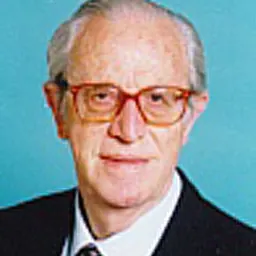


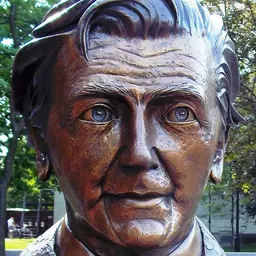
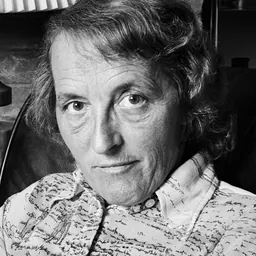

Contemporaries
People whose lives overlapped Charles Brenner's



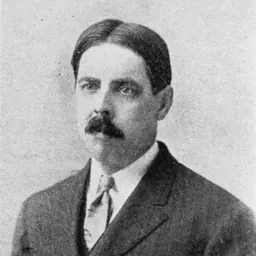
Frequently asked questions
Who was Charles Brenner?
American psychoanalyst (1913–2008)
When was Charles Brenner born?
Charles Brenner was born on 18 November 1913 in Boston.
When did Charles Brenner die?
Charles Brenner died on 20 May 2008 in New York City.
What was Charles Brenner's occupation?
Charles Brenner was a psychiatrist, psychoanalyst and psychologist.
What nationality was Charles Brenner?
Charles Brenner was American.
Sources & further reading
· DBpedia: Charles Brenner (psychiatrist)
Cite this page
APA: Biography.guide. (2026). Charles Brenner. https://biography.guide/charles-brenner/
MLA: "Charles Brenner." Biography.guide, https://biography.guide/charles-brenner/.
Chicago: "Charles Brenner." Biography.guide. https://biography.guide/charles-brenner/.
Data last updated: 2026-09-20 · Spot an error? Report a correction.
Page generated 2026-09-27 05:13 UTC