
Charles B. Pierce
Director, screenwriter, producer, set decorator, cinematographer, and actor
About Charles B. Pierce
Lived 1938 – 2010 (aged 71). Charles B. Pierce was an American screenwriter, film producer, film director, actor and cinematographer.
Charles Bryant Pierce (June 16, 1938 – March 5, 2010) was an American film director, screenwriter, producer, set decorator, cinematographer, and actor. Pierce directed thirteen films over the span of 26 years, but is best known for his cult hits The Legend of Boggy Creek and The Town That Dreaded Sundown (1976).
An Arkansas resident most of his life, Pierce made his directorial debut with Boggy Creek, a faux documentary-style film inspired by the legend of the Bigfoot-like Fouke Monster. Pierce followed that with several inexpensive, regional films set in the southern United States, including The Town That Dreaded Sundown, based on the true story of the Phantom Killer murders in Texarkana.
Pierce continued directing films into the 1980s. He is credited with co-writing the story for the Clint Eastwood film Sudden Impact (with Earl E. Smith). After years of pressure from producers, Pierce directed a Boggy Creek sequel, Boggy Creek II: And the Legend Continues, which he considered the worst film of his career. It was later riffed on by the comedy television series Mystery Science Theater 3000.
Early life
Charles B. Pierce was born in Hammond, Indiana, on June 16, 1938, one of the three sons of Mack McKenny Pierce and Mayven Bryant Pierce. His family moved to the southwestern Arkansas city of Hampton when he was just a few months old. There he was a childhood friend and neighbor of future film and television director Harry Thomason, His first professional foray into media entertainment was in the mid-1960s as an art director at KTAL-TV in Shreveport, Louisiana. He later became a weatherman and hosted a children's cartoon show for that channel.
Pierce continued working in production jobs at television stations in Arkansas, Louisiana and Texas until 1969, when he moved to Texarkana, bought a 16 mm camera and started an advertising agency. He started a contract with Ledwell & Son Enterprises, a Texarkana-based firm that built 18-wheel trailers and farm equipment. Pierce developed commercials for the company that played throughout the Southwestern United States, using mostly footage he shot of trucks on the highway and farming equipment being used. He said the reputation he developed with those commercials later helped him launch his film career. Pierce launched his independent film career in the early 1970s, when he sought funding from L.W. Ledwell, the owner of Ledwell & Son Enterprises. Ledwell was skeptical of the idea, Prior to his directorial debut, Pierce worked as a set decorator for television shows like the Western series Hondo and for films like Waco (1966) and Coffy (1973).
The Legend of Boggy Creek Pierce's directorial debut was The Legend of Boggy Creek, which was inspired by the Fouke Monster, a seven-foot-tall Bigfoot-like creature said to live in the swamps near Fouke, Arkansas. Pierce said he did not necessarily believe in the legend, but was fascinated with the stories. After interviewing Fouke residents who said they encountered the monster, Pierce became impressed with their authenticity and down-to-earth qualities. He approached Earl E. Smith, an acquaintance from the advertising business, to adapt those eyewitness tales into a screenplay. The film was shot at locations in Fouke, Texarkana and Shreveport, using a camera Pierce built himself at home. Like Pierce, the film's financial backers and many of the actors had never been involved in a film before.
Pierce cast the actors by approaching customers at a local gas station whenever he saw somebody that looked like they fit one of the parts. He hired high school students as crew members who helped load and move equipment. For the creature itself, he limited the sightings to shadowy figures because he felt the film would be more frightening if the creature was left to the viewer's imagination. Pierce sang the theme song featured in the film. Once the film was completed, he put the reel into the trunk of his car and drove to Los Angeles seeking post-production services. He met Jamie Mendoza-Nava, who owned a small post-production company and agreed to work on the film for limited up-front pay and a small percentage of the film's box-office receipts. Pierce could not find a major studio willing to distribute it, so he rented a local movie theater in Texarkana for one week to screen the film. It became a hit at drive-in movie theaters, eventually gaining a cult status and bringing Pierce a modicum of fame. At the time of the film's release, Pierce incorrectly predicted to newspapers that it would win several Academy Awards. Several similarly styled films about strange and allegedly true phenomena were released in subsequent years due to success of The Legend of Boggy Creek. Julius E. "Smokey" Crabtree, a Fouke resident who appeared as himself in the film, became disgruntled with the production company and filed a lawsuit against Pierce and his financial supporters. Pierce declined to speak to the media about the suit. His family said Pierce liked to be continuously working and would start a new film immediately after finishing the last. However, according to Pierce, Winterhawk was more widely seen than The Legend of Boggy Creek. His second Western was Winds of Autumn. and Pierce himself performed minor roles in both Winterhawk and Winds of Autumn. The name "Spark Plug" was a real-life nickname given to the director due to his energy. Pierce described The Town That Dread Sundown as a very easy and enjoyable shoot with no major problems on the set. He then wrote and directed The Norseman (1978), which starred Lee Majors as a Viking prince who traveled to America to rescue his father from Indians. Working with a multimillion-dollar budget, Pierce shot the film in the Florida locations Hillsborough River State Park and New Port Richey. The next year he co-wrote and directed The Evictors (1979), another documentary-style horror film about a young couple who move into a rural Louisiana farmhouse and find their lives endangered by a series of strange events. Pierce was inspired to write the script after reading a true story in a detective magazine about a Kansas family who murdered somebody trying to evict them from the property. In order to match the late-evening sunlight in his cinematography at the farmhouse set, Pierce set up reflectors outside and deflected the sunlight through the windows, which were fitted with sheer white curtains to give the actors an eerie glow. The Evictors was little-seen and did not do financially well, which was a disappointment to distributor American International Pictures, but Pierce believed it one of his better films. He also considered it his most downbeat film, and said of the unhappy ending, "I probably just didn't have any other way to end it." Pierce was given a writer's credit for the story along with Earl E. Smith. Joseph C. Stinson is credited with the screenplay. Pierce claims to have written the phrase, "Go ahead, make my day," the film's most famous line, which went on to be identified as one of the ten best movie quotes of all time by the American Film Institute. The phrase was inspired by something his father once told Pierce in his youth while encouraging his son to mow the lawn: "When I come home tonight and the yard has not been mowed, you're going to make my day." However, whether Pierce truly invented the phrase has been brought into question, since the same line was used in the action-drama film Vice Squad (1982) the previous year.
Death and legacy He really did change the face of filmmaking. With his model, many filmmakers became successful with the drive-in creature feature, so to speak. source = Christopher CraneArkansas Film Commissioner On September 2, 2010, Pierce was inducted into the Arkansas Entertainers Hall of Fame in a ceremony at the Arkansas Governor's Mansion in Little Rock.
Pierce is part of the plot of the 2014 film The Town That Dreaded Sundown, a meta-sequel to Pierce's 1976 film of the same name. The 2014 film is not a remake, but rather features the original film as part of its storyline: it is set in Texarkana, and includes a series of murders committed by someone posing as the Phantom Killer as depicted in the 1976 film. The new film opens with a brief summary mentioning Pierce and the impact of his original The Town That Dreaded Sundown. Pierce briefly married Cindy Butler, who appeared in several of his movies - The Town That Dreaded Sundown, Grayeagle and Boggy Creek II: And the Legend Continues; they also later divorced. He later married Beth Pulley, gaining two stepdaughters: Betsy Mathis Gillespie and Melissa Mathis Daley, and three step-grandchildren. Pierce was a fan of the Arkansas Razorbacks, the University of Arkansas college sports teams.
Selected filmography + Film Year Title Role Notes 1966 Waco Set decorator 1966 An Eye for an Eye Set decorator 1970 The Strawberry Statement Set decorator 1970 The Phantom Tollbooth Set decorator 1970 Dirty Dingus Magee Set decorator 1971 Pretty Maids All in a Row Set decorator 1972 The Legend of Boggy Creek Director, cinematographer, producer 1973 Coffy Set decorator 1973 Dillinger Set decorator 1974 Bootleggers Homer Dodd Director, writer, producer 1974 Black Belt Jones Set decorator 1976 Winterhawk Director, writer 1976 The Winds of Autumn Director 1976 The Town That Dreaded Sundown Patrolman A.C. Benson Director, producer 1977 Grayeagle Mad Bugler Director, writer 1978 The Norseman Director, writer 1978 The Cheap Detective Set decorator 1979 The Triangle Factory Fire Scandal Set decorator 1979 The Evictors Director, producer, writer 1983 Sacred Ground Director, cinematographer 1985 Boggy Creek II: And the Legend Continues Professor Brian C. "Doc" Lockart Director, producer, writer 1987 Hawken's Breed Noel Hickman as an old man Director, producer, writer 1996 Renfroe's White Christmas Director 1998 Chasing the Wind Director
Don’t just read it —
keep it.
Full-length biographies made to live with: read them, listen on the way to work, watch them tonight.
- E-book
- Audio
- Video
Instant download · yours to keep · every purchase keeps this site free
Important facts
People in Charles B. Pierce's life
Named in this biography and alive at the same time

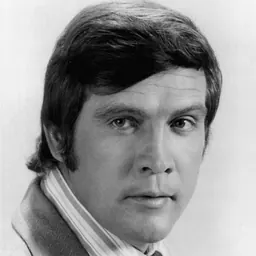


Related people
Same field, nearest in time
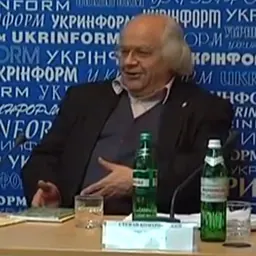



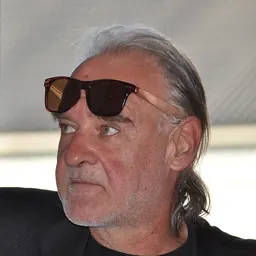

Contemporaries
People whose lives overlapped Charles B. Pierce's
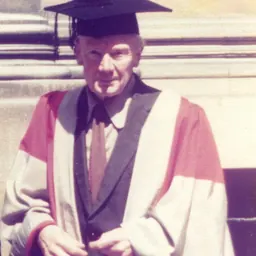


Frequently asked questions
Who was Charles B. Pierce?
Director, screenwriter, producer, set decorator, cinematographer, and actor (1938-2010)
When was Charles B. Pierce born?
Charles B. Pierce was born on 16 June 1938 in Hammond.
When did Charles B. Pierce die?
Charles B. Pierce died on 5 March 2010 in Dover.
What was Charles B. Pierce's occupation?
Charles B. Pierce was a screenwriter, film producer, film director, actor and cinematographer.
What nationality was Charles B. Pierce?
Charles B. Pierce was American.
Sources & further reading
· Wikipedia: Charles B. Pierce
Cite this page
APA: Biography.guide. (2026). Charles B. Pierce. https://biography.guide/charles-b-pierce/
MLA: "Charles B. Pierce." Biography.guide, https://biography.guide/charles-b-pierce/.
Chicago: "Charles B. Pierce." Biography.guide. https://biography.guide/charles-b-pierce/.
Data last updated: 2026-09-22 · Spot an error? Report a correction.
Page generated 2026-09-27 05:29 UTC