
About Charles B. Cochran
Lived 1872 – 1951 (aged 78). Charles B. Cochran was a British actor, theatre manager and director.
Sir Charles Blake Cochran (25 September 1872 31 January 1951), professionally known as C. B. Cochran or Charles B. Cochran, was an English impresario, known for popularising the genre of revue, hitherto unfamiliar, in Britain. Apart from revue, his major theatrical successes included The Miracle in 1911, noted for its spectacular staging, The Better 'Ole, This Year of Grace (1928), Bitter Sweet (1929), Cavalcade (1931) and Bless the Bride (1947). He also promoted a range of other entertainments, including professional boxing, tennis, wrestling, circus and a zoo. He published four volumes of memoirs about his life and work.
After beginning his career as an actor in the US in 1891, Cochran became a manager and press agent for theatrical and other entertainments. He returned to England in 1899 managing entertainers and eventually was producing theatre, sporting events, variety shows and revues. As a theatrical producer he was responsible for West End and some Broadway productions of shows by Noël Coward, Cole Porter, Vivian Ellis and Rogers and Hart as well as a wide range of plays by writers including Henrik Ibsen, James Barrie, Sean O'Casey, A. P. Herbert and Eugene O'Neill.
Cochran was a leading impresario of his generation. Some of his productions were unsustainably lavish and expensive, leaving him bankrupt twice. Nevertheless, by the end of his career he had been honoured with a knighthood in Britain and the Legion of Honour in France.
Life and career
Early years Cochran was born on 25 September 1872 in Brighton, Sussex, the fourth of the nine children of James Elphinstone Cochran, a tea and cigar importer, and his wife, Matilda Arnold née Walton, the daughter of a merchant navy officer. In December 1879, at the age of seven, the boy saw the pantomime Sinbad the Sailor at the Theatre Royal, Brighton, starring Arthur Roberts. This experience inspired a lifelong passion for the theatre. At Brighton, Hove and Sussex Grammar School between 1883 and 1888 he shared a study with Aubrey Beardsley; they shared an enthusiasm for acting and appeared at the Brighton Pavilion in a play written by Beardsley. With Beardsley, Cochran saw a West End production of As You Like It in July 1890 given by Augustin Daly's visiting Broadway company, led by John Drew and Ada Rehan. Cochran determined to pursue a stage career in New York. After briefly working as a clerk in Brighton, he absconded with some of his employer's money and sailed to the US in 1891.
He secured engagements in small roles in adaptations of Around the World in Eighty Days and Rip Van Winkle, but was otherwise so unsuccessful that he was forced to take what work he could get, ranging from selling fountain-pens at the Chicago World's Fair to serving as assistant to the Anglican chaplain at New York harbour. Eventually, he was employed by the actor-manager Richard Mansfield, who thought he would never be a good actor (and told him so) but foresaw a managerial career for him, and appointed him as his private secretary at a salary ten dollars higher than he had enjoyed as an actor. After a disagreement with Mansfield, Cochran set up an acting school in New York in partnership with the actor E. J. Henley (brother of the poet W. E. Henley) and began producing serious drama in 1897, with Ibsen's John Gabriel Borkman, at Hoyt's Theatre in New York with Henley in the title role. he was convinced that Mansfield should play the part in New York. Cochran's biographer Vivian Ellis comments that this was one of the earliest instances of Cochran's ability to star an actor in the right vehicle. He was reconciled with Mansfield and returned to the US as his manager, organising his nationwide tour of Cyrano de Bergerac.
First London productions Cochran returned to London in 1899 and set up business in Chancery Lane as a theatrical agent. Gradually he gained success in management, representing Mistinguett, Ethel Levey, Harry Houdini, Odette Dulac and the wrestler George Hackenschmidt, the last of whom he matched at Olympia in 1904 against Ahmed Madrali, the "Terrible Turk". His first theatrical venture in London production, a farce called Sporting Simpson at the Royalty Theatre in 1902, was a failure. His second attempt, at the same theatre, Lyre and Lancet – an adaptation by F. Anstey and Kinsey Peile of the former's articles in Punch – also failed and in 1903 he was declared bankrupt. In 1905 Cochran married Evelyn Alice Dade, the daughter of a captain in the merchant navy. The marriage was lifelong and devoted, despite occasional infidelities on Cochran's part; they had no children. The play opened at Olympia on 23 December 1911. Initially, box-office takings were disappointing, but Hamilton Fyfe of The Daily Mail wrote of his astonishment "that so wonderful a spectacle as The Miracle" was drawing so few people, after which the Mail's proprietor, Lord Northcliffe, had his other papers extolling the play, and it became a success. Ellis comments that subsequently "the eulogies Cochran received from the Northcliffe press were offset by his more critical reception by other popular newspapers". A London newspaper reported in January 1914 that the show "has broken all records for Olympia. Gigantic as the place is, it is difficult to find room for all who wish to see what a first-class circus is really like".
Revue
In May 1914 Cochran took a lease of the Ambassadors, one of the West End's smaller theatres, with a capacity of 490 seats. The outbreak of war brought what The Times described as "something like a theatrical 'boom' as the prevailing mood, of troops and public alike, called for gaiety, lightness, and colour to offset the grim business in hand". |group=n and had a conspicuous box-office success in October 1914 with what the biographer James Ross Moore calls a "bare-bones" production, Odds and Ends. This show, with words by Harry Grattan and music by Edward Jones, starred Cochran's discovery Alice Delysia. Her song "We don't want to lose you, but we think you ought to go", encouraging young men to join the army, was a particular hit. The revue dispensed with spectacular décor and a large cast in favour of a more intimate style with modest staging – one critic commented that Cochran had spared no economy in mounting the show. The revue appealed to the public and the show ran for more than 500 performances. Another musical comedy was Houp La! (1916), which Cochran produced at London's new St Martin's Theatre, where he had signed a 21-year lease, starring Gertie Millar.
After several more revues and musical comedies, Cochran produced two sociological plays by Eugène Brieux – Damaged Goods and The Three Daughters of M. Dupont . In 1917, at the Oxford Music Hall, London, he put on Bruce Bairnsfather's comedy The Better 'Ole, which ran for 817 performances. (The piece was adapted from a French revue, Plus ça change, by "Rip" refn|Cochran later became disillusioned with the corruption of professional boxing and in 1927 he turned to tennis, signing Suzanne Lenglen, Dora Köring, Evelyn Dewhurst, Karel Koželuh and Howard Kinsey for a seven-stop professional head-to-head tour of the United Kingdom.) It was not a great financial success.
Quickly discharged from bankruptcy, "penniless but ebullient" in Ellis's phrase, Cochran wrote his first book of memoirs, The Secrets of a Showman (1925). With the proceeds and financial backing from supporters, he began his association with Noël Coward with the revue On with the Dance (1925) at the London Pavilion (the first show to feature "Mr Cochran's Young Ladies"). The show, with sketches by Coward and musical numbers by Coward and Philip Braham, ran for 229 performances after which a revised version was presented. In 1926 he booked Lew Leslie's Blackbirds of 1926 revue with an all-black cast, including Florence Mills, which ran for 279 performances at the Pavilion. The show was a financial and artistic success, and historians later noted that "Blackbirds mania" took hold in London for a while, with Blackbirds-themed society parties being given. The show was taking in at least $12,500 a week at the box office, setting house records for several nights. Young members of the British royal family took an interest in the show, especially Edward, the Prince of Wales, which contributed greatly to its popularity. By the time the revue finished its run, the prince, who had admired Mills since her first appearance in London in 1923, had seen it at least eleven times. Mills became "the sensation of the season".
Cochran managed Royal Albert Hall from 1926 to 1938. Cochran and Coward worked together again in 1928 on This Year of Grace, which ran for 316 performances in the West End and 157 performances on Broadway. Away from revue, Cochran produced Coward's 1929 operetta Bitter Sweet, which ran at His Majesty's for 697 performances. In between the Coward shows Cochran presented a Pirandello season, Sean O'Casey's The Silver Tassie (1929), the Lunts in Sil-Vara's play Caprice (1929), Cole Porter's revue Wake up and Dream (1929) which also went to Broadway, and Rodgers and Hart's Ever Green (1930), with Jessie Matthews.
Later years
In 1930 Cochran produced Coward's comedy of manners Private Lives, which at the author's insistence played for a limited three-month season. It sold out within a week and was still playing to packed houses when it closed, despite, in Coward's words, "the gratifying knowledge that we could have run on for another six [months]". Coward and Cochran next collaborated with the spectacular family epic Cavalcade, which ran at Drury Lane for 405 performances from October 1931. After that, Coward ended the professional relationship, feeling that Cochran benefited disproportionately from their collaboration, although James Harding in The Oxford Dictionary of National Biography comments that Coward's subsequent musical shows "never prospered as had those which enjoyed Cochran's magic touch". This was the last of his successes for several years: there followed what Ellis calls "the lean years". while his Broadway transfer of Escape Me Never (1935) managed only 96. The Boy David (1936), James Barrie's last play, starring Elisabeth Bergner, failed at the box-office as did the coronation revue, Home and Beauty and Franz Lehár's Paganini, starring Richard Tauber. Ellis writes that "a trip to America proved financially abortive". One day in January 1951 he misjudged the temperature of the water and was badly scalded, dying in hospital a week later on 31 January. He was cremated at Golders Green Crematorium on 3 February. |group=n A bust of Cochran was placed in the foyer of the Adelphi Theatre and a memorial panel to him was unveiled in St Paul's, Covent Garden (known as "the actors' church") in 1953.
Publications Secrets of a Showman (1925) C.B.C.'s Review of Revues and Other Matters (ed., 1930) I Had Almost Forgotten (1932) Cock-a-Doodle-Do (1941) Showman Looks On (1945)
Notes, references and sources
Don’t just read it —
keep it.
Full-length biographies made to live with: read them, listen on the way to work, watch them tonight.
- E-book
- Audio
- Video
Instant download · yours to keep · every purchase keeps this site free
Important facts
People in Charles B. Cochran's life
Named in this biography and alive at the same time


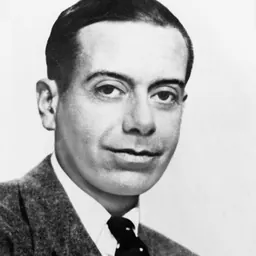

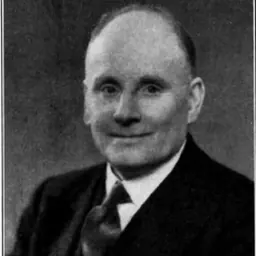


Related people
Same field, nearest in time

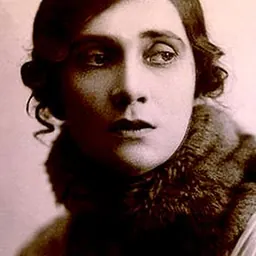
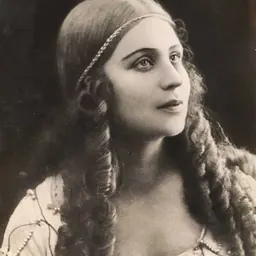
Contemporaries
People whose lives overlapped Charles B. Cochran's



Frequently asked questions
Who was Charles B. Cochran?
British theatre manager (1872-1951)
When was Charles B. Cochran born?
Charles B. Cochran was born on 25 September 1872 in Lindfield.
When did Charles B. Cochran die?
Charles B. Cochran died on 31 January 1951 in London.
What was Charles B. Cochran's occupation?
Charles B. Cochran was an actor, theatre manager and director.
What nationality was Charles B. Cochran?
Charles B. Cochran was British.
Sources & further reading
· Wikipedia: Charles B. Cochran
Cite this page
APA: Biography.guide. (2026). Charles B. Cochran. https://biography.guide/charles-b-cochran/
MLA: "Charles B. Cochran." Biography.guide, https://biography.guide/charles-b-cochran/.
Chicago: "Charles B. Cochran." Biography.guide. https://biography.guide/charles-b-cochran/.
Data last updated: 2026-09-20 · Spot an error? Report a correction.
Page generated 2026-09-27 05:20 UTC