
About Charles Avison
Lived 1709 – 1770 (aged 60–61). Charles Avison was a British composer, music critic, musicographer, organist, music educator and conductor.
Charles Avison (; 16 February 1709 (baptised)9 or 10 May 1770) was an English composer during the Baroque and Classical periods. He was a church organist at St John The Baptist Church at St John the Baptist Church, in Newcastle. According to The New Grove Dictionary, he was also born in this city. while others claim that he was the seventh of ten children. Regardless, Avison was born into a family with a high rate of infant mortality, as many of his siblings died at a young age. His education may have included an apprenticeship with a local merchant named Ralph Jenison, a patron of the arts, and later a Member of Parliament, as well as further study of music. The local composer William Shield, who was born south of the River Tyne in Swalwell, County Durham, studied under Avison.
Avison was married to Catherine Reynolds on 15 January 1737. The couple had nine children, of whom only three – Jane, Edward, and Charles – survived to adulthood. Edward succeeded his father as both the director of the Newcastle Musical Society and the St Nicholas's organist after his father's death. Charles was also an organist and composer.
Compositions
Description
Avison's best-known compositions are his concerti grossi. They are similar in style to those of Geminiani and change very little across his career. Some were based on existing works by the Italian composer Domenico Scarlatti. However, some of his concertos were reissued versions of previous works (often with one or more movements replaced and original material reworked extensively). Avison's style changed little throughout his career.
Avison also wrote chamber music. His trio sonatas are modelled after the Baroque style. His later chamber works were inspired by Rameau and are keyboard pieces with accompaniment by flute, violin and other instruments. Avison composed a small amount of sacred music including a verse anthem, a hymn and a chant, and a collaborative oratorio with Felice Giardini entitled Ruth. It is likely he also compiled and arranged the Six Concertos in Seven Parts (1740) attributed to Scarlatti.
In 2001 and 2002, two of Alison's workbooks containing over 600 manuscript pages came to light after more than two centuries when they were put up for auction at Sotheby's in London. Both were purchased by the Alison Charitable Trust.
Orchestral Op. 2 Six Concertos (g, Bb, e, D, Bb, D) Two Concertos Op. 3 Six Concertos – With General Rules for Playing (D, e, g, Bb, D, G) Op. 4 Eight Concertos (d, A, D, g, Bb, G, D, c) Op. 6 Twelve Concertos (g, Bb, e, D, Bb, D, G, G, D, C, D, A) Op. 9 Twelve Concertos: Set 1: (G, D, A, g/G, C, e), Set 2: (Eb, Bb, c, F, A, D) Op. 10 Six Concertos (d, F, c, C, Eb, d) Twelve Concerti Grossi after Geminiani (without opus number, manuscripts discovered 2000-02, based on Geminiani's op 1 violin sonatas) Twelve Concerti Grossi after Scarlatti (1743–44) (without opus number, based on Scarlatti’s keyboard sonatas)
Chamber Op. 1 VI Sonatas (chromatic dorian, g, g, dorian, e, D) Op. 5 Six Sonatas (G, C, Bb, Eb, G, A) Op. 7 Six Sonatas (G, g, Bb, d, a, A) Op. 8 Six Sonatas (A, C, D, Bb, g, G)
Other "Hast thou not forsaken us" (verse anthem) "Glory to God" (Christmas Hymn/Sanctus) "Ruth" (oratorio) collab. Giardini (1773) "Psalm LVII", chant, Cantico ecclesiastica
Critical appraisal
In the 1935 edition of Charles Burney's General History of Music (1776–1789), with later critical and historical notes added by Frank Mercer, Mercer commented that Avison's compositions "want force, correctness, and originality, sufficient to be ranked very high among the works of masters of the first class".
Writings Avison was a bold and controversial author. He is said to have had no fear in expressing his strong ideas with elaborate language, an incredible understanding of music, and a sense of humour. One of the ideas which receives much criticism is his preference for Geminiani and Marcello and his lack of preference for Handel. Although he did praise Handel for his genius, he was not afraid to criticise him either.
Don’t just read it —
keep it.
Full-length biographies made to live with: read them, listen on the way to work, watch them tonight.
- E-book
- Audio
- Video
Instant download · yours to keep · every purchase keeps this site free
Important facts
People in Charles Avison's life
Named in this biography and alive at the same time
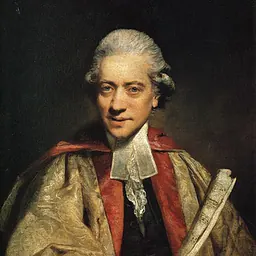
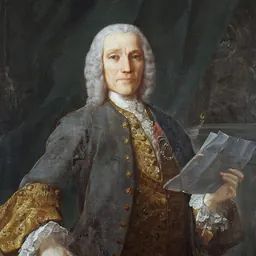

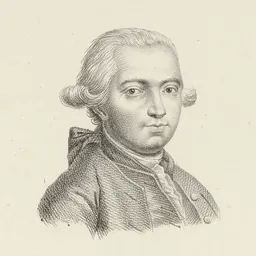

Related people
Same field, nearest in time
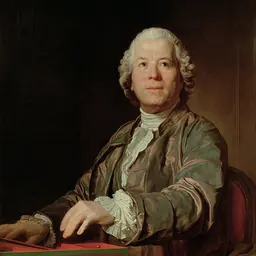
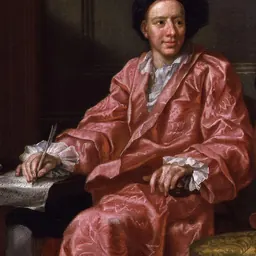
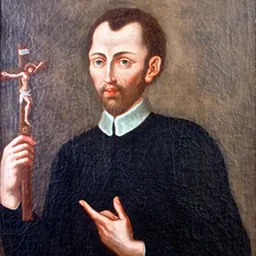

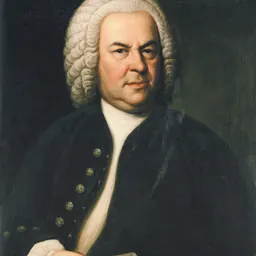
Contemporaries
People whose lives overlapped Charles Avison's

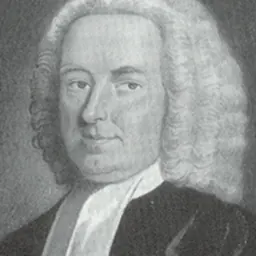



Frequently asked questions
Who was Charles Avison?
English composer
When was Charles Avison born?
Charles Avison was born in 1709 in Newcastle upon Tyne.
When did Charles Avison die?
Charles Avison died on 10 May 1770 in Newcastle upon Tyne.
What was Charles Avison's occupation?
Charles Avison was a composer, music critic, musicographer, organist, music educator and conductor.
What nationality was Charles Avison?
Charles Avison was British.
Sources & further reading
Cite this page
APA: Biography.guide. (2026). Charles Avison. https://biography.guide/charles-avison/
MLA: "Charles Avison." Biography.guide, https://biography.guide/charles-avison/.
Chicago: "Charles Avison." Biography.guide. https://biography.guide/charles-avison/.
Data last updated: 2026-09-26 · Spot an error? Report a correction.
Page generated 2026-09-27 05:14 UTC