
Charles Arden-Clarke
British colonial administrator
About Charles Arden-Clarke
Lived 1898 – 1962 (aged 64). Charles Arden-Clarke was a British administrator of the government, colonial administrator and governor-general.
Sir Charles Noble Arden-Clarke (25 July 1898 – 16 December 1962) was a British colonial administrator who served in several territories under British rule, including Bechuanaland, Basutoland, Sarawak, Brunei, and the Gold Coast (the territory that became Ghana). He is particularly noted for his role as the last Governor of the Gold Coast and the first Governor-General of independent Ghana.
Early life and education Arden-Clarke was born on 25 July 1898 and educated at Rossall School in Lancashire, England.
Colonial Service
Bechuanaland Protectorate From 1937 to 1942, Arden-Clarke served as Resident Commissioner of the Bechuanaland Protectorate (now Botswana). His tenure coincided with tensions between the British authorities and Tshekedi Khama, the regent of the Bamangwato people.
Basutoland In August 1942, he was appointed Resident Commissioner of Basutoland (modern-day Lesotho), a position he held until November 1946.
Sarawak In 1946, following the cession of Sarawak by the Brooke dynasty to the British Crown, Arden-Clarke became the first Governor of the new colony. His appointment coincided with the rise of the Anti-cession Movement, a local resistance to British rule. Opposition to cession remained strong during his administration, and the movement later culminated in the assassination of his successor, Duncan Stewart, in 1949. He played a significant role in the transition toward independence. On 12 February 1951, he authorised the release of Kwame Nkrumah from prison in James Fort, an act which helped to facilitate political dialogue and reduce tensions.
When the Gold Coast achieved independence as Ghana in 1957, Arden-Clarke became the country's first Governor-General of Ghana, representing Queen Elizabeth II. His working relationship with Nkrumah and his relatively conciliatory approach are often credited with contributing to a relatively peaceful independence process.
Later life and death Arden-Clarke retired from colonial service after leaving Ghana in 1957. He died on 16 December 1962, aged 64.
Honours
Knight Grand Cross of the Order of St Michael and St George (GCMG) Knight of Grace of the Order of St John (GCStJ)
Don’t just read it —
keep it.
Full-length biographies made to live with: read them, listen on the way to work, watch them tonight.
- E-book
- Audio
- Video
Instant download · yours to keep · every purchase keeps this site free
Important facts
People in Charles Arden-Clarke's life
Named in this biography and alive at the same time

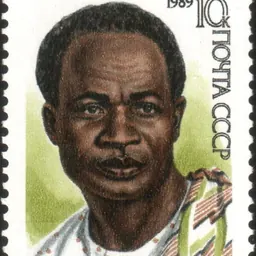

Related people
Same field, nearest in time




Contemporaries
People whose lives overlapped Charles Arden-Clarke's


Frequently asked questions
Who was Charles Arden-Clarke?
British colonial administrator (1898-1962)
When was Charles Arden-Clarke born?
Charles Arden-Clarke was born on 25 July 1898 in Bournemouth.
When did Charles Arden-Clarke die?
Charles Arden-Clarke died on 16 December 1962 in Suffolk.
What was Charles Arden-Clarke's occupation?
Charles Arden-Clarke was an administrator of the government, colonial administrator and governor-general.
What nationality was Charles Arden-Clarke?
Charles Arden-Clarke was British.
Sources & further reading
· Wikipedia: Charles Arden-Clarke
· DBpedia: Charles Arden-Clarke
Cite this page
APA: Biography.guide. (2026). Charles Arden-Clarke. https://biography.guide/charles-arden-clarke/
MLA: "Charles Arden-Clarke." Biography.guide, https://biography.guide/charles-arden-clarke/.
Chicago: "Charles Arden-Clarke." Biography.guide. https://biography.guide/charles-arden-clarke/.
Data last updated: 2026-09-26 · Spot an error? Report a correction.
Page generated 2026-09-27 05:13 UTC