
About Charles A. Spring
Lived 1800 – 1892 (aged 91). Charles A. Spring was an American politician.
Charles A. Spring (July 25, 1800 – January 17, 1892) was an American merchant and religious leader. He had a profound impact on Presbyterianism in the Northwest Territory, helping to establish at least six churches in Iowa and Illinois, and acted as a delegate in the General Assembly of 1861, which voted on the Gardiner Spring Resolutions, named after his brother Gardiner, and thus gave the assent of the Presbyterian Church to Abraham Lincoln's moves to keep the Union together.
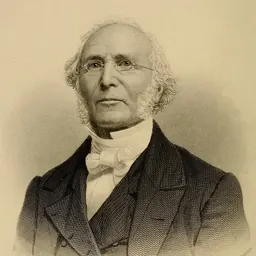
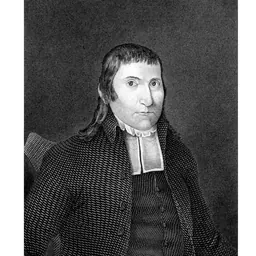
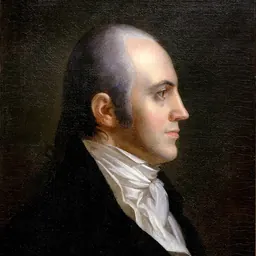
Early life in the East Charles A. Spring was the second youngest of the children of the Rev. Samuel Spring Sr., the Revolutionary War chaplain of Benedict Arnold's army. Born in the Manse of the Congregationalist Church in Newburyport, Massachusetts on July 25, 1800, he was a descendant of Rev. Solomon Stoddard, a brother of Rev. Gardiner Spring, and a relative of Rev. Jonathan Edwards and Vice-president Aaron Burr.
After his father's death in 1819, Charles moved south to Boston, and went to work as a merchant, dealing in silk goods and textiles. In 1823, he married Dorothy B. Norton of Maine. Three of their children were born in Boston: Frances Eliza, Charles A. Spring Jr., and Winthrop Norton. Sometime before 1830, the family moved to Brooklyn, where daughters Edwina and Gertrude, as well as son George Hopkins, were born.
Life in the Old Northwest
In 1837, the Springs went west as part of the Great Migration, and settled first at Rock Island, Illinois on the Mississippi River. At the time, the journey from New York to Illinois took one month, and was made by the way of the Erie Canal and then the Ohio and Mississippi Rivers.
Charles helped lay out and survey the town of Rock Island, where he settled into farming. By the 1840s, he was an elder in the Presbyterian Church in Rock Island, and was the sole layman on the committee that organized, in November 1844, the First Presbyterian Church of Sterling, Illinois. The Spring farm at Rock Island, in 1850, was spread over 100 acres, and had in the way of livestock 2 horses, 16 milch cows, 20 other cattle, and 20 swine, which produced 400 lbs of butter. The produce included 1600 bushels of Indian Corn, 100 bu. of oats, 100 of Irish potatoes, 20 of sweet potatoes, and 50 tons of hay.
By 1851, Charles Spring and family had moved to Chicago; in November of that year, his wife Dorothy died. Charles pere et fils went into the boot and shoe business under the name C. A. Spring & Sons, locating at 188 Lake St. They lived in Hyde Park for a time, but by 1855 were in West Chicago, living on Fulton between Union and Halsted. By 1858, Charles took to farming again in Manteno, just south of Chicago.
Relationship with Cyrus McCormick and church work
While in Chicago, Charles Sr. became superintendent of the Sunday school at the North Presbyterian Church, and there met the inventor Cyrus Hall McCormick, whose mechanized reaper did for the Midwest what the cotton gin had done for the South. The two remained close friends and kept up an extensive correspondence until McCormick's death in 1884. Spring and McCormick established the South Church in what is now The Loop in Chicago, although they returned to the North Church when they were able to retain their favoured pastor, Rev. Dr. Nathan Rice.
During the 1850s, Charles was instrumental in the founding of what eventually became the McCormick Theological Seminary. McCormick was a conservative Democrat who had been born in Virginia, and although he was no apologist for slavery, was intent on holding together both the Old School Presbyterian Church and the Union (he considered the Presbyterian Church and the Democratic Party to be the “two hoops that hold the barrel of the Union together." His great-great-grandson, Charles A. Spring IV, was a bridge engineer for United States Steel in Pittsburgh.
Don’t just read it —
keep it.
Full-length biographies made to live with: read them, listen on the way to work, watch them tonight.
- E-book
- Audio
- Video
Instant download · yours to keep · every purchase keeps this site free
Important facts
Family & relationships
People in Charles A. Spring's life
Named in this biography and alive at the same time





Related people
Same field, nearest in time


Contemporaries
People whose lives overlapped Charles A. Spring's






Frequently asked questions
Who was Charles A. Spring?
American merchant
When was Charles A. Spring born?
Charles A. Spring was born on 25 July 1800 in Newburyport.
When did Charles A. Spring die?
Charles A. Spring died on 17 January 1892.
What was Charles A. Spring's occupation?
Charles A. Spring was a politician.
What nationality was Charles A. Spring?
Charles A. Spring was American.
Sources & further reading
· Wikipedia: Charles A. Spring
Cite this page
APA: Biography.guide. (2026). Charles A. Spring. https://biography.guide/charles-a-spring/
MLA: "Charles A. Spring." Biography.guide, https://biography.guide/charles-a-spring/.
Chicago: "Charles A. Spring." Biography.guide. https://biography.guide/charles-a-spring/.
Data last updated: 2026-09-20 · Spot an error? Report a correction.
Page generated 2026-09-27 05:15 UTC