
About Charles A. Prince
Lived 1869 – 1937 (aged 67–68). Charles A. Prince was an American bandleader, conductor and conductor (music).
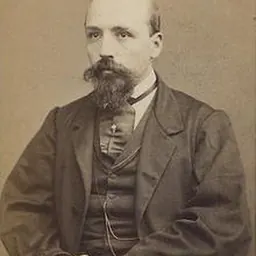
Charles Adams Prince (December 27, 1868; October 08, 1937) was an American conductor, bandleader, pianist and organist known for conducting the Columbia Orchestra and, later, Prince's Band and Orchestra. He made his first recordings, as a pianist, in 1891 for the New York Phonograph Company. Later in the 1890s he worked as a musical director for Columbia Records. He also conducted the Columbia Orchestra and Columbia Band starting in 1904 as the successor of the cornetist Tom Clark.
Prince's Band was the first to record many compositions that became jazz standards. Their version of W. C. Handy's "Saint Louis Blues" in 1915 is the first known recording of the song. It took the band two sessions to record a successful take, which was considered unusual considering the talent of the band and its leader. Another song by Handy, "The Memphis Blues", was recorded by Prince's Band in 1914, a week after its first recording by the Victor Military Band. Other standards introduced by the band are Porter Steele's "High Society" (1911) and Lew Pollack and Ray Gilbert's "That's a Plenty" (1914). His band also played the popular instrumental "Too Much Mustard" released by Columbia and Sears's Oxford Records.
Prince recorded as a solo celeste player under the name Charles Adams. As such, his recording of "Silver Threads Among the Gold" was popular.
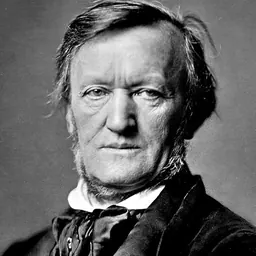
At Columbia, Prince also showed initiative in expanding the company's "classical" orchestral catalogue and in experimenting with the size of ensembles that acoustic recording equipment could capture. In October 1910 he conducted an abbreviated version of Franz Schubert's Symphony No. 8 in B Minor, popularly known as the Unfinished Symphony, on two sides of a 12-inch disc (released as Columbia A 5267), which was the first orchestral recording of any part of a symphony. He assembled a 90-piece orchestra to record the overture to Richard Wagner's opera Rienzi in February 1917 (released as Columbia A 6006 ), which was the largest ensemble commercially recorded to that date. Prince's last recording for Columbia was in 1922. He then changed labels to Puritan Records and later to Victor Records, where he worked as associate musical director.
Don’t just read it —
keep it.
Full-length biographies made to live with: read them, listen on the way to work, watch them tonight.
- E-book
- Audio
- Video
Instant download · yours to keep · every purchase keeps this site free
Important facts
People in Charles A. Prince's life
Named in this biography and alive at the same time






Related people
Same field, nearest in time



Contemporaries
People whose lives overlapped Charles A. Prince's





Frequently asked questions
Who was Charles A. Prince?
American musician
When was Charles A. Prince born?
Charles A. Prince was born in 1869.
When did Charles A. Prince die?
Charles A. Prince died on 10 October 1937.
What was Charles A. Prince's occupation?
Charles A. Prince was a bandleader, conductor and conductor (music).
What nationality was Charles A. Prince?
Charles A. Prince was American.
Sources & further reading
· Wikipedia: Charles A. Prince
Cite this page
APA: Biography.guide. (2026). Charles A. Prince. https://biography.guide/charles-a-prince/
MLA: "Charles A. Prince." Biography.guide, https://biography.guide/charles-a-prince/.
Chicago: "Charles A. Prince." Biography.guide. https://biography.guide/charles-a-prince/.
Data last updated: 2026-09-20 · Spot an error? Report a correction.
Page generated 2026-09-27 05:27 UTC