
About Changanassery Parameswaran Pillai
Lived 1877 – 1935 (aged 57–58). Changanassery Parameswaran Pillai was an Indian judge, known for Nair Service Society.
Changanassery Parameswaran Pillai (March 1877 – 30 June 1940), popularly known as Changanassery, was an Indian social reformer, lawyer, judge, attorney general and freedom fighter from the Kingdom of Travancore. He served as the second president of the Nair Service Society (NSS) from 1917 to 1928 and was one of its co-founders. He was elected four times to the Sree Moolam Popular Assembly and served as a member of the Travancore Legislative Council. A prominent figure in the Vaikom Satyagraha, he led the delegation that presented a memorial signed by over 25,000 upper-caste Hindus to the Regent Maharani Sethu Lakshmi Bayi, demanding the abolition of untouchability. He worked closely with Mahatma Gandhi during the latter's visits to Travancore and served as the Central Committee member of the Harijan Seva Sangham and Chairman of its Kerala branch.
Legal and legislative career
Legal practice After completing his legal education, Pillai began practising law and established himself as a prominent advocate. He practised for two years at the Travancore High Court and was one of the founders of the Kollam Bar Association.
Member of the Sree Moolam Popular Assembly Pillai was elected to the Sree Moolam Popular Assembly, the first popularly elected legislature in the history of India, and served as a member from 1906 to 1913. He was elected to the Assembly a total of four times during his career. He used his position in the legislature to advocate for civil liberties, accountability of the Travancore government, and reform of the marumakkathayam (matrilineal) system of inheritance that prevailed among the Nairs.
A significant development during the Vaikom Satyagraha was the Savarna Jatha (upper-caste march), organised at the suggestion of Mahatma Gandhi. On 1 November 1924, Mannathu Padmanabhan led a procession of about five hundred upper-caste Hindus from Vaikom to Trivandrum to express solidarity with the satyagrahis and to submit a memorandum to the Regent Maharani. The marchers received rousing receptions along the way, halted at Sivagiri to receive the blessings of Sree Narayana Guru, and by the time they reached Trivandrum on 12 November 1924, the procession had swelled to nearly 5,000 men.
On 13 November 1924, a delegation headed by Changanassery Parameswaran Pillai met the Regent Maharani Sethu Lakshmi Bayi and presented a memorial signed by more than 25,000 upper-caste Hindus requesting that all roads and public institutions be opened to all classes of people regardless of caste or creed.
Kallamaala Samaram Pillai was also involved in the resolution of the Kallamaala Samaram (Stone Necklace Protest), a social uprising by the Pulayar community that took place in October 1915 at Perinad and nearby villages in Kollam district. On 21 December 1915, a meeting was convened under the joint chairmanship of Ayyankali, Changanassery Parameswaran Pillai, and British officials at Peeranki Maidan, bringing together the conflicting groups. At this meeting, women of the Pulaya community threw away their kallamaala (stone bead necklaces that symbolised their enslaved status) and proclaimed that they would henceforth wear only gold or metal ornaments.
Harijan welfare Pillai served as the Central Committee member of the Harijan Seva Sangham, the organisation founded by Mahatma Gandhi for the welfare of Harijans (oppressed castes), and was the Chairman of its Kerala branch. Through his efforts, 82 Harijan offices were established across Kerala.
Don’t just read it —
keep it.
Full-length biographies made to live with: read them, listen on the way to work, watch them tonight.
- E-book
- Audio
- Video
Instant download · yours to keep · every purchase keeps this site free
Important facts
People in Changanassery Parameswaran Pillai's life
Named in this biography and alive at the same time
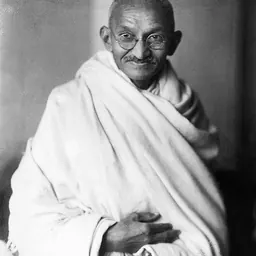

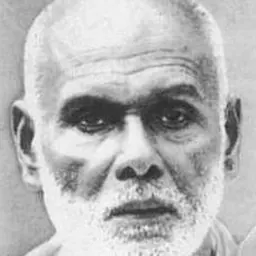
Related people
Same field, nearest in time
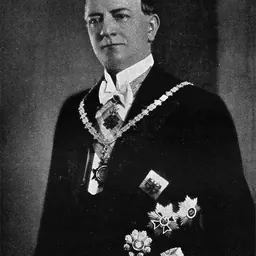

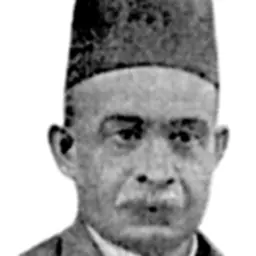

Contemporaries
People whose lives overlapped Changanassery Parameswaran Pillai's



Frequently asked questions
Who was Changanassery Parameswaran Pillai?
social reformer, lawyer and judge
When was Changanassery Parameswaran Pillai born?
Changanassery Parameswaran Pillai was born in 1877 in Changanassery.
When did Changanassery Parameswaran Pillai die?
Changanassery Parameswaran Pillai died on 30 June 1935.
What was Changanassery Parameswaran Pillai's occupation?
Changanassery Parameswaran Pillai was a judge.
What was Changanassery Parameswaran Pillai known for?
Changanassery Parameswaran Pillai was known for Nair Service Society.
What nationality was Changanassery Parameswaran Pillai?
Changanassery Parameswaran Pillai was Indian.
Sources & further reading
· Wikipedia: Changanassery Parameswaran Pillai
· DBpedia: Changanassery Parameswaran Pillai
Cite this page
APA: Biography.guide. (2026). Changanassery Parameswaran Pillai. https://biography.guide/changanassery-parameswaran-pillai/
MLA: "Changanassery Parameswaran Pillai." Biography.guide, https://biography.guide/changanassery-parameswaran-pillai/.
Chicago: "Changanassery Parameswaran Pillai." Biography.guide. https://biography.guide/changanassery-parameswaran-pillai/.
Data last updated: 2026-09-20 · Spot an error? Report a correction.
Page generated 2026-09-27 05:19 UTC